Short answer: in 2026, the rule that matters is no longer "will it fit?" but "is it a lithium battery?". Power banks and laptops are accepted everywhere, on trains as on buses, with no paperwork at all. Electric scooters and hoverboards, on the other hand, are now refused by a growing number of carriers — FlixBus bans them from the luggage hold, Eurostar bans them outright, and so do several British and Dutch urban networks — while electrically assisted pedal cycles (e-bikes) remain accepted on most European trains under the same conditions as a conventional bike, provided the battery is attached to the machine and undamaged. On planes, the line is clear-cut: every lithium battery travels in the cabin only, and above 100 Wh you need the airline's approval.
Micromobility has changed the way we arrive at the station. You no longer step off the train to look for a taxi: you unfold a scooter, get back on your folding bike, pull a unicycle out of your bag. Except that carriers have spent three years tightening their rules — not out of principle, but because lithium-ion battery fires in confined spaces have become a genuine concern for safety departments. The result: a patchwork of rules that nobody explains when you buy your ticket, and boarding refusals that land at the worst possible moment.
Here is the 2026 overview, mode by mode and operator by operator.

1. Why the rules have tightened
The problem is not the battery itself: it's thermal runaway. A lithium-ion cell that is damaged, poorly designed or charged with a non-compliant charger can self-heat until it catches fire, releasing toxic gases and re-igniting after being put out. In a rail tunnel, a coach's luggage hold or a packed carriage, that's the scenario every operator dreads.
The warning signs are a matter of public record. In the United Kingdom, the London Fire Brigade has for several years run an explicit campaign on fires linked to e-bikes and e-scooters, and Transport for London has banned electric scooters and unicycles across its entire network (Underground, Overground, DLR, Elizabeth line) after several onboard fires. On the standards side, the European Union Aviation Safety Agency (EASA) and ICAO govern the air transport of lithium batteries through the technical instructions on dangerous goods, which all European airlines apply.
Rail, for its part, has no single European rule: onboard safety is a matter for each operator. Hence the differences from one country to the next.
Key point: there is no harmonised European regulation on electric mobility devices on trains. Regulation (EU) 2021/782 on rail passengers' rights requires operators to publish their conditions for carrying bicycles, not to standardise them.
2. The three categories that decide everything
Before looking at individual operators, classify your gear. Everything hinges on that.
| Category | Examples | General status in Europe, 2026 |
|---|---|---|
| Batteries built into an electronic device | Phone, tablet, laptop, camera, e-reader | Accepted everywhere, no formalities |
| Spare batteries / power banks | Power bank, camera battery, portable charger | Accepted on trains and buses; on planes, cabin only |
| Powered personal mobility devices (PMDs) | Electric scooter, hoverboard, electric unicycle, self-balancing scooter | Highly variable: from acceptance in a cover to an outright ban |
| Electrically assisted bicycles | Folding or non-folding e-bike | Treated as bicycles, with constraints on the battery |
Capacity in watt-hours (Wh) is the reference unit. It is almost always printed on the battery. If only mAh and volts are shown, the maths is simple:
Wh = (mAh ÷ 1000) × V
Example: a 20,000 mAh power bank at 3.7 V works out to around 74 Wh — below the 100 Wh threshold, so you're fine. A scooter battery rated 36 V and 10 Ah, by contrast, comes to 360 Wh: out of the question on a plane, and firmly on the radar of plenty of rail operators.
3. On trains: what the major operators say
Scooters and electric mobility devices
- Eurostar: a clear ban on electric scooters, hoverboards, electric unicycles and segways, including when folded or in a bag. It's one of the strictest policies on the continent, linked to the Channel Tunnel.
- SNCF: scooters, including electric ones, are allowed on board when folded and stowed within the permitted luggage dimensions (the reference size is 90 × 70 × 50 cm on TGV INOUI and Intercités since the baggage rules were overhauled). A device folded inside a cover is therefore just another piece of luggage — one left unfolded in the aisle is not.
- Deutsche Bahn: foldable e-scooters are carried as free hand luggage; non-foldable models fall under the bicycle rules, with a reservation required on the trains concerned.
- ÖBB, SBB/CFF, NS: broadly similar approach — foldable and stowed = luggage, non-foldable = bicycle space. Note that several Dutch and British regional networks apply a total ban, independently of the main-line rules.
- Renfe, Trenitalia, Italo: accepted in a cover within luggage dimensions, battery undamaged.
The approach that works everywhere, with one exception (Eurostar): the device must be folded, fully covered and handled by you alone. A scooter carry bag costs less than a ticket bought on the spot, protects the carriage interior and radically changes how the conductor sees you. It's the single best-value purchase on this list.
Electrically assisted bicycles
Good news: e-bikes are very widely treated as ordinary bicycles. The constraint isn't the motor, it's the weight (often 22 to 28 kg) and the vertical suspension hooks used by ÖBB, DB or SNCF on certain trainsets, which cope poorly with a heavy frame.
What most operators require:
- a mandatory reservation for a bicycle space on long-distance trains (€6 to €12 depending on the network, sometimes €20 on international services);
- the battery attached to the bike, or removed and carried with you;
- no charging on board from the carriage sockets — this is forbidden by virtually every operator;
- a visibly intact battery: a cracked or swollen casing is legitimate grounds for refusal.
For a folding e-bike, the rule is far more relaxed: folded and in a cover, it becomes luggage and escapes the bicycle reservation. A reinforced folding bike cover saves you both the space fee and the argument on the platform.

4. On long-distance coaches: the most restrictive zone
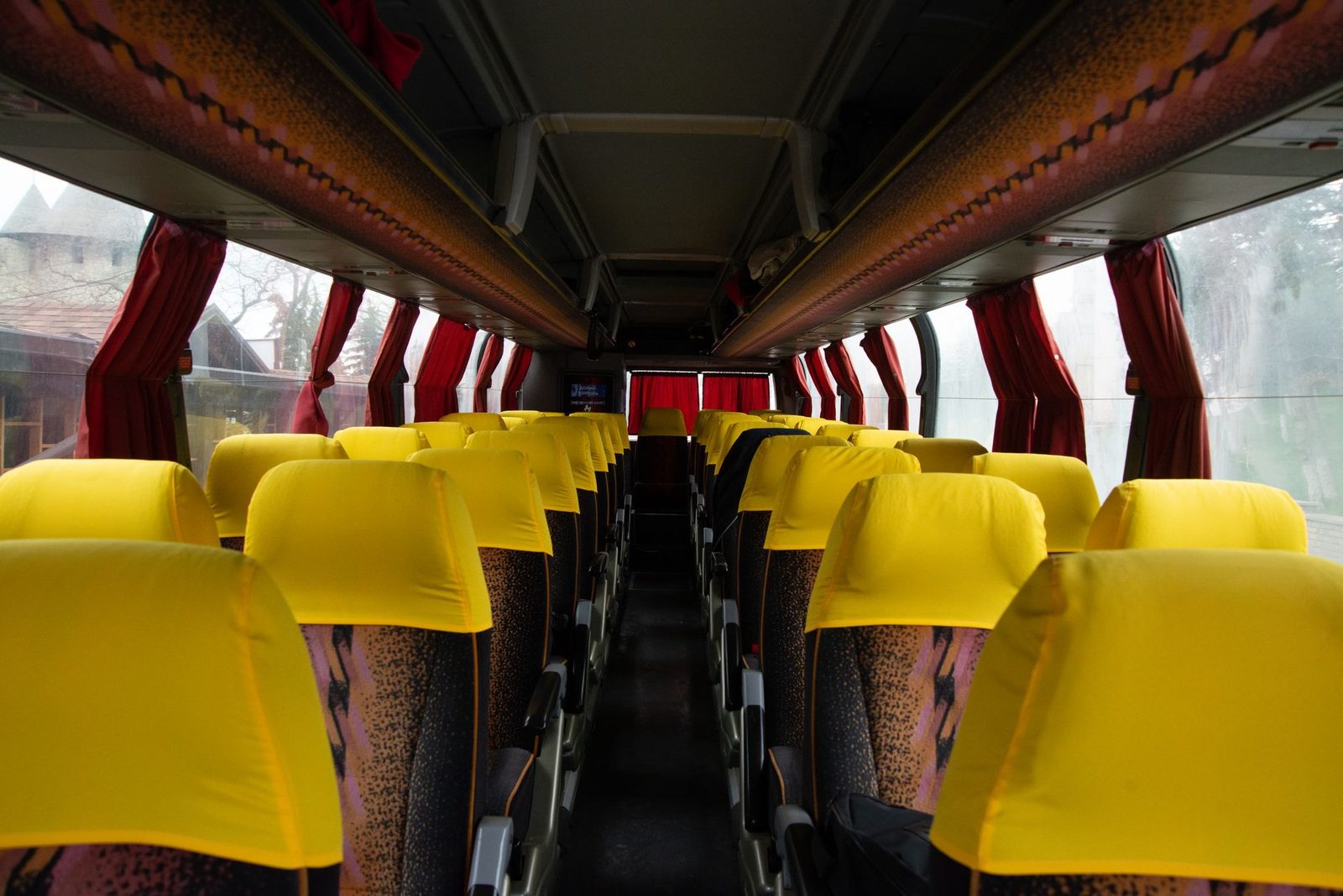
This is where travellers are most often turned away, because a coach's luggage hold is an enclosed space, unmonitored and with no accessible fire suppression during the journey.
- FlixBus: scooters, hoverboards and similar lithium-battery devices are not accepted in the hold. Electric bikes are also excluded from the bicycle spaces, which remain reserved for pedal-powered bikes, and are in any case only available on some routes and with a paid reservation.
- BlaBlaCar Bus: the brand is winding down — its closure has been announced and its routes have gradually been taken over by other operators. Always check the conditions of the carrier actually named on your ticket, not those of the original brand.
- ALSA, Eurolines/national partners, Student Agency/RegioJet: policies vary widely, generally refusing battery-powered PMDs while tolerating folding bikes, cover included.
Power banks, meanwhile, pose no problem at all on a coach — just keep them with you on board, never in a suitcase in the hold. It's also the right move on an overnight bus, where seat USB sockets are often weak or out of order: a 20,000 mAh power bank will keep two phones going on a Paris–Barcelona run without ever hunting for a working socket.
5. On planes: the simplest and strictest rule
No ambiguity here: the rules flow from the ICAO technical instructions and EASA regulations, applied by every European airline (Air France, Lufthansa, Ryanair, easyJet, Transavia, Vueling, Iberia and the rest).
| Capacity | Cabin baggage | Checked baggage |
|---|---|---|
| Up to 100 Wh | Yes, no prior approval needed | No, not for spare batteries |
| 100 to 160 Wh | Yes, with airline approval, usually 2 maximum | No |
| Over 160 Wh | No | No |
Practical consequences:
- an electric scooter almost always exceeds 160 Wh: it is banned on virtually all European flights, including in the hold;
- an e-bike battery too, except via specialist freight;
- power banks must be in the cabin with terminals protected, and several airlines now forbid using or recharging them in flight — a rule that spread after a series of incidents, notably at Asian carriers, and that European airlines have adopted;
- electric wheelchairs benefit from a specific regime protected by Regulation (EC) 1107/2006 on the rights of disabled passengers: they do travel, but the airline must be notified, generally 48 hours in advance.
One detail that saves journeys: store your batteries in a fireproof lithium battery pouch and tape over the terminals. It isn't mandatory in Europe, but airlines explicitly recommend it and it instantly settles any discussion at security.
6. The smart strategy: arrive without your device
On many itineraries, the least painful solution isn't carrying your scooter — it's not carrying it at all.
- Pedal-powered folding bike: accepted everywhere, no reservation, no questions about the battery. It's still the only truly universal form of mobility on a European train.
- Renting on arrival: bike- and scooter-share schemes now cover most mid-sized European cities. Reckon on €1 to €3 to unlock and €0.15 to €0.30 per minute.
- Ridesharing for the last leg: this is often where an electric device travels without debate, a car boot being the only "hold" whose rules are negotiated between humans. Tell the driver before you book.
- Separate shipping: for an e-bike on a long trip, specialist bike courier services (dedicated service, rigid box, battery shipped separately as dangerous goods) cost €60 to €150 depending on distance — still cheaper than a wasted round trip.
If you do travel with a device, three accessories make all the difference for next to nothing: a compact folding lock to secure it when you can't keep an eye on it, a set of ratchet straps to lash it against a luggage rack or bunk support, and a multi-socket European travel adapter to charge up in stations without playing musical chairs with the wall outlets.
7. Refused at boarding: what are your rights?
Bad news: a refusal for non-compliant luggage triggers no compensation whatsoever. Neither Regulation (EU) 2021/782 (rail), nor Regulation (EU) 181/2011 (bus and coach), nor Regulation (EC) 261/2004 (air) covers a passenger who fails to comply with the published conditions of carriage. You are deemed not to have met your obligations.
What remains negotiable:
- Rebooking the ticket. Many carriers will accept a free or low-cost exchange if you travel without the device. Ask at the counter straight away, not through a form after the fact.
- Station left luggage. Major European stations offer lockers (€5 to €12 per day) that let you leave the device behind and board your train.
- A refund of the bicycle reservation if the space wasn't provided even though you met the conditions: there you are within your rights, and it's customer service's job to sort it out.
And the basic precaution: print out or photograph your operator's conditions of carriage page before you leave. An argument on a platform is won with a dated screenshot, not with a recollection.
8. Pre-departure checklist
- I've identified the capacity in Wh of every battery I'm carrying.
- My power banks are in my hand luggage, terminals protected.
- My electric device is folded and fully covered, or I've left it at home.
- I've checked the conditions of the actual carrier on my ticket (not just the sales brand).
- For a non-folding e-bike: bicycle space reserved and confirmed.
- Flight involved: all batteries in the cabin, none in the hold.
- I'm not counting on charging on board: I've planned for the range I need.
In summary
Electric mobility has taken over European cities faster than carriers' rulebooks. In 2026, the upshot fits in one sentence: your device batteries travel without trouble, your powered machines travel with strings attached, and the more confined the space — tunnel, luggage hold, aircraft cabin — the more firmly the door closes. The pedal-powered folding bike and renting on arrival remain the two answers that are never refused.
Sources and references
- Regulation (EU) 2021/782 on rail passengers' rights and obligations
- Regulation (EU) 181/2011 concerning the rights of passengers in bus and coach transport
- Regulation (EC) 1107/2006 on the rights of disabled persons in air transport
- ICAO technical instructions for the transport of dangerous goods; EASA rules on lithium batteries
- Conditions of carriage published by Eurostar, SNCF, Deutsche Bahn, ÖBB, NS, Renfe, Trenitalia and FlixBus
- Fire prevention campaigns by the London Fire Brigade and Transport for London conditions of carriage