Short answer: from late October to March, Interrail becomes an entirely different product. Trains are empty, compulsory reservations — the pass's real hidden cost — can still be found the day before instead of selling out three weeks ahead, and flexible last-minute travel is within reach again. The Interrail Global Pass comes in a "flexi days" version (4, 5, 7, 10 or 15 travel days to be used within 1 to 2 months) and a continuous version (15 days, 22 days, 1, 2 or 3 months). The value rule is simple: the pass wins as soon as you string together long, loosely planned journeys in countries where reservations are free or optional — Germany, Austria, Switzerland, the Netherlands, Poland, the Czech Republic, Hungary, Scandinavia. It almost always loses to point-to-point tickets if your route runs through France, Spain and Italy on high-speed services, where every TGV, AVE or Frecciarossa demands a seat supplement of €10 to €35 per leg. Youth (under 28) and senior (60 and over) discounts apply all year round, and Interrail's flash sales traditionally land around Black Friday, in late November.
There is one moment in the year when Europe's railways belong to those in the know. It isn't July, when Nightjet couchettes sell out two months ahead and the platforms at Milano Centrale look like a festival. It's November. Austrian regional trains are half empty, you can find a window seat on a Railjet without booking, and a return trip from Vienna to Prague costs less than dinner in town.
That leaves the question everyone asks and nobody answers honestly: is an Interrail pass really worth it? The answer depends less on the sticker price than on three very concrete variables: how long your journeys are, which countries you cross, and how much planning you can stomach. Here is the full calculation, country by country, for the 2026–2027 season.
What Interrail actually is in 2026
The Interrail Pass is sold by Eurail B.V., a Dutch company owned by a consortium of European rail operators. Two names, one product: Interrail for European residents, Eurail for everyone else. It covers around thirty countries and the vast majority of domestic trains, high-speed services included.
Two families of pass:
- The Global Pass, covering the entire network. Flexi version: a set number of travel days to be used within a window (for example 7 days within 1 month). Continuous version: unlimited travel for 15 days, 22 days, 1, 2 or 3 months.
- The One Country Pass, limited to a single country, mainly worth it for Italy, Spain, Norway or Sweden, where distances are long and tickets expensive.
Three points that change everything and that travel blogs routinely forget:
- The pass is not a ticket. It's a right to board. On many trains you have to add a paid seat or couchette reservation.
- Travel days are calendar days. A night train departing after 7 p.m. uses up only one day, the day of departure, thanks to the famous "7 p.m. rule" (pass bridge) — a detail that can save two or three pass days on a two-week itinerary.
- The pass is digital, held in Eurail's Rail Planner app, which works offline for timetables but needs a connection to activate a travel day. On a long trip, a 20,000 mAh power bank becomes a survival tool rather than a gadget: without a charged phone, you no longer hold a valid ticket.
Why winter changes the equation
In high season, the pass suffers from a structural flaw: trains requiring compulsory reservations are full. You hold the right to travel on a Paris–Barcelona TGV, but the quotas of seats set aside for pass holders are limited and go weeks in advance. The result: you pay for a pass and a full-fare ticket on another operator.
Off-season, that problem all but vanishes. In practice, between mid-October and the end of March, outside the Christmas and February holidays:
- Pass quotas on French, Spanish and Italian trains stay open until a few days before departure.
- Night-train couchettes — ÖBB's Nightjet, European Sleeper, Snälltåget in Sweden — can still be booked one to two weeks ahead, versus two months in summer.
- Reservation prices, however, don't fall: they are fixed fees, not dynamic fares. Good news in summer, neutral in winter.
The trade-off is real: some lines close. Seasonal scenic services, several night trains to southern Europe and certain mountain regional lines drop to a reduced timetable. In Norway, the Flåm line runs at a slower tempo; in Scotland and Scandinavia, five hours of daylight make long daytime journeys less rewarding.
Working out the value, without the mythology
Forget theoretical comparisons. The method that works comes down to four steps.
Step 1 — List your journeys and look up the real point-to-point fare for your dates, on the operator's website or through a multimodal comparison tool. Note the lowest fare available in advance (a DB Sparpreis, an ÖBB Sparschiene, a Trenitalia Super Economy).
Step 2 — Add up the compulsory reservations the pass doesn't include. Ballpark figures for the 2026 season:
| Type of train | Reservation | Indicative cost per leg |
|---|---|---|
| Regional trains in Germany, Austria, Switzerland, the Netherlands, Poland, Czechia | None | €0 |
| ICE (Deutsche Bahn), Railjet (ÖBB) | Optional | €0 or ~€5 |
| Trenitalia Frecciarossa / Italo | Compulsory | €10–13 |
| Renfe AVE (Spain) | Compulsory | ~€10–20 |
| TGV Inoui, Lyria, Eurostar | Compulsory, limited quota | €10–35 |
| Nightjet seat / couchette / cabin | Compulsory | ~€15 to €100+ |
| Hungarian, Czech and Polish international trains | Often optional | €0–5 |
Step 3 — Compare. If the total of point-to-point tickets exceeds the price of the pass plus reservations, the pass wins. Otherwise it doesn't. There is no other magic.
Step 4 — Put a value on flexibility. A €29 DB Sparpreis ticket is name-bound and tied to a specific train; the pass lets you change your mind that same morning. If your trip is exploratory, that freedom is worth several tens of euros.
Routes where the pass almost always wins
- Central and German-speaking Europe: Germany, Austria, Switzerland, Czechia, Hungary, Poland, Slovakia. Reservations are all but non-existent, distances are substantial, full-fare tickets expensive. This is Interrail's natural playground.
- Scandinavia: Oslo–Bergen, Stockholm–Narvik and the long Swedish and Norwegian lines are ruinous on point-to-point fares.
- Itineraries covering more than three countries in two weeks, with frequent changes of plan.
Routes where it loses
- A high-speed return trip France–Spain or France–Italy. Between the supplements and Trenitalia France or Renfe promotions, separate tickets are often cheaper.
- Short loop trips: Paris–Brussels–Amsterdam works perfectly well on Eurostar tickets or long-distance coaches.
- An itinerary planned entirely three months ahead: operators' promotional fares then beat the pass almost every time.
The real budget for a month of off-season Interrail
The pass is never the only line in the budget. A month-long trip in November–December, at a reasonable pace of three nights per city, breaks down like this:
- The pass: the main item, priced according to duration, age and class. Youth (under 28) and senior (60 and over) fares offer a significant discount, with 1st class costing roughly a third more than 2nd.
- Reservations: from €0 to €300 depending on the countries crossed. This is where the value is won or lost.
- Accommodation: off-season, European hostels and hotels charge their lowest rates of the year — except during the Christmas markets (Strasbourg, Vienna, Nuremberg, Prague from late November through December: prices double).
- Urban transport and food: onboard catering remains the classic budget trap. An insulated stainless steel water bottle refilled at the fountains in German and Swiss stations, plus a few supplies bought at a supermarket before departure, easily save €10 to €15 per travel day.
For long days in a seat, seasoned travellers always pack three things: a pair of noise-cancelling headphones — Central European regional trains are noisy and the announcements never stop — a universal travel adapter, because the UK, Switzerland and Italy don't share the same socket formats, and a steel cable lock to secure your bag to the luggage rack while you nap.
Night trains: the pass's best ally in winter
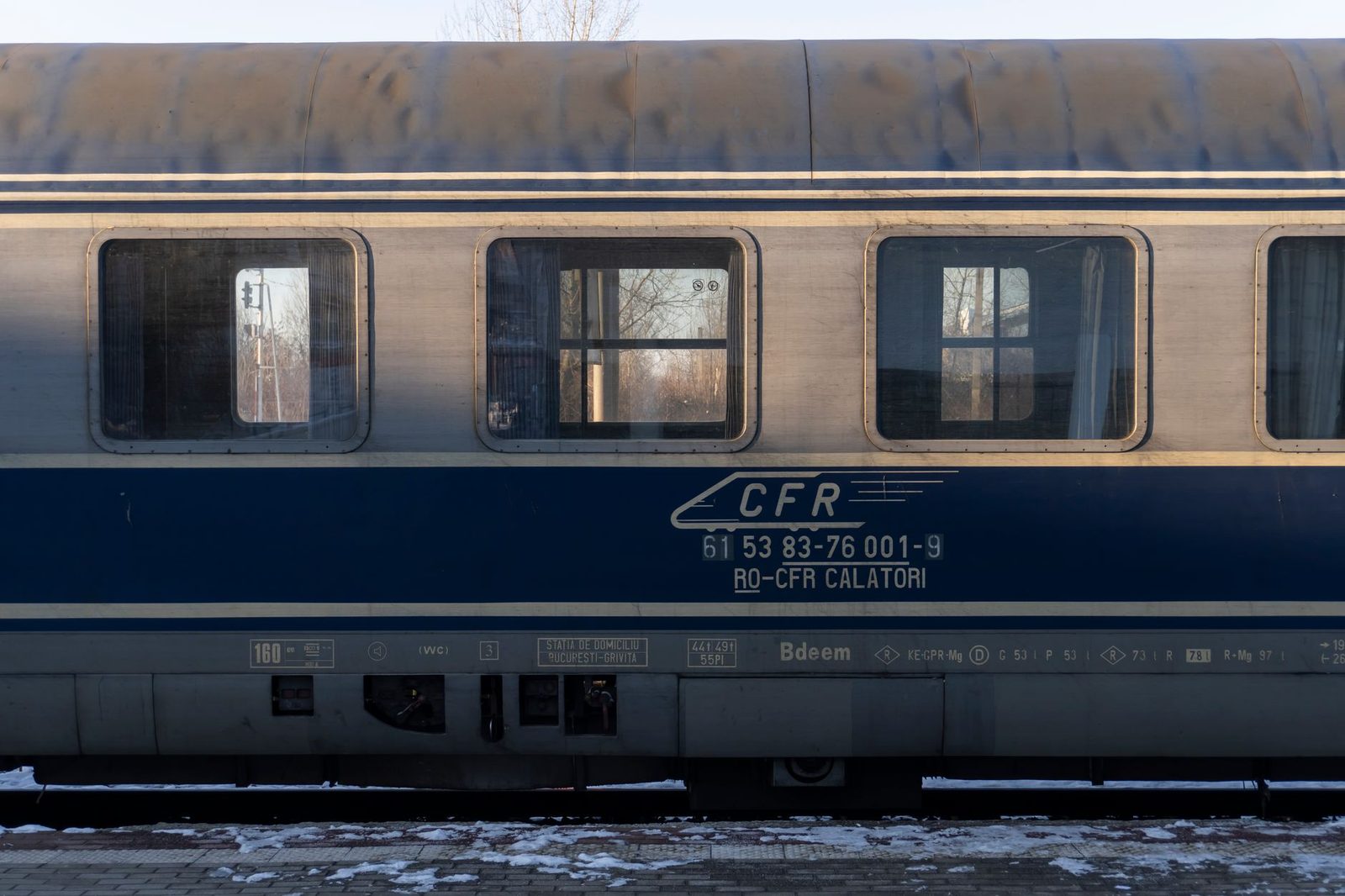
This is the smartest way to use a Global Pass off-season. Europe's night-train network has expanded markedly since 2023 and now counts some forty regular lines, driven by ÖBB (Nightjet), the Belgian-Dutch cooperative European Sleeper, Sweden's SJ and Snälltåget, and the Czech operators ČD and RegioJet.
Two compounding advantages:
- You save a hotel night — the calculation that makes the night train economically unbeatable, especially where accommodation is expensive (Zurich, Copenhagen, Amsterdam).
- The 7 p.m. rule: a departure after 7 p.m. uses only one pass day, even if you arrive at 9 a.m. the next morning. On a 7-day pass, three well-placed night trains free up three extra travel days.
The drawback is well known: the couchette reservation remains compulsory and not included, and it is the heaviest expense attached to the pass. Budget a modest supplement for a reclining seat, more for a berth in a six-person couchette compartment, and hotel-level rates for a private cabin with shower. In winter these berths stay available far longer — but they disappear abruptly around 20 December.
To actually sleep on board, regulars always name the same kit: a blackout sleep mask, earplugs, and a lightweight sleeping-bag liner when travelling in a couchette compartment rather than a sleeping-car cabin.
Your rights don't vanish because you hold a pass
A widely misunderstood point: an Interrail pass holder is a passenger like any other under EU Regulation (EU) 2021/782 on rail passenger rights, applicable since June 2023. In the event of a significant delay on arrival on an international journey, you can claim compensation: 25% of the ticket price for a delay of 60 to 119 minutes, 50% beyond 120 minutes.
The genuine caveat: compensation is calculated on the price of the travel document. For a pass, operators generally apply a pro-rata calculation based on the travel day concerned, which produces small amounts. Two other rights, however, carry far more weight and apply in full:
- Assistance: in case of disruption, the operator must offer you re-routing and, if night falls, accommodation.
- Re-routing: your pass remains valid on replacement trains run by the same operator or a partner operator, at no extra cost.
Always keep a delay certificate and a record of your reservations in the app. In case of a dispute, each country has a national complaints body — in France, the médiateur du tourisme et du voyage; official information on passenger rights is published by the European Commission and, for France, by the ministry responsible for Transport.
Five costly off-season mistakes
- Not checking engineering works. Autumn and winter are construction season: entire sections replaced by buses, particularly in Germany and Switzerland. The Rail Planner app's Live updates feature and the national websites (DB, ÖBB, SBB) are essential the day before.
- Forgetting that the pass doesn't cover every operator. Spain's low-cost private trains (Ouigo Spain, Iryo) and some German regional operators outside DB do not accept Interrail.
- Underestimating school holidays. Christmas week and the February breaks (skiing in Austria, Switzerland, Savoie) recreate high-season conditions on the Alpine corridors.
- Activating a travel day unnecessarily for a 20-minute hop. Group your long legs onto the same days.
- Neglecting insurance. A lost pass or a stolen phone means losing your travel document. Baggage and cancellation cover, often included with credit cards, settles the matter — provided you checked it before leaving.
Should you buy now?
Two favourable windows. The first: Interrail's promotional sales, historically around Black Friday in late November, with regular discounts on the Global Pass. The second: national operators' campaigns, often more generous than the pass on a single corridor — Trenitalia France promotions, Renfe offers, DB Sparpreis fares.
An Interrail pass is valid for 11 months after purchase: you can buy it on sale and activate it later, within that window. It's the year's smartest trade-off for anyone still undecided about their dates.
Our decision rule, tested across dozens of itineraries: beyond four long journeys in two weeks, in countries without compulsory reservations, the pass wins. Below that, or if your route is packed with TGVs and AVEs, point-to-point tickets remain unbeatable. Do the maths before you buy — it takes twenty minutes and is often worth more than a hundred euros.