Short answer: in Italy, the bus is almost always the cheapest way to get from the airport to the city centre, and often the most convenient too. Budget €6–7 and 55 min between Bergamo-Orio and Milano Centrale (Orio Shuttle, Terravision, FlixBus), €7–11 and 50–70 min between Milan-Malpensa and Milano Centrale, €6–7 and 45–55 min between Rome-Fiumicino and Termini, €6 and 45–60 min from Ciampino, €5 and 20 min on the Alibus in Naples, and €1.30–2 and 10 min on the LAM Rosso in Pisa. Tickets can be bought online, at the terminal counter or directly from the driver, depending on the operator.
Italy has one peculiarity: unlike Germany or Switzerland, very few Italian airports sit on a city-centre rail line with a train every ten minutes. As a result, the road shuttle has kept a role the train never managed to take from it. In Bergamo, it's the only option. In Rome, it costs three to four times less than the Leonardo Express. In Naples, it does the trip in twenty minutes for the price of a coffee on a terrace.
This guide reviews the seven Italian airports most used by travellers, covering for each one: who runs the service, how much it costs, how long it takes, and the detail that makes people miss their bus.
Rome-Fiumicino: the bus versus the Leonardo Express
Fiumicino (FCO) is 32 km from central Rome. Two different worlds meet in the same arrivals hall.
Trenitalia's Leonardo Express links the airport to Roma Termini in 32 minutes non-stop, departing every 15 minutes, for €14. It's fast and reliable, but it's also the most expensive airport journey in Italy per kilometre.
Facing it, half a dozen road operators — SIT Bus Shuttle, Terravision, TAM / Fiumicino Express, Rome Airport Bus (Schiaffini), FlixBus — cover the same route to the Terminal Bus on Via Giolitti, alongside Termini, for €6–7 one way when booked online (sometimes €8 at the counter) and 45 to 60 minutes depending on traffic on the Roma-Fiumicino motorway.
| Route | Operators | One-way fare | Duration |
|---|---|---|---|
| Fiumicino → Termini (bus) | SIT, Terravision, Fiumicino Express, Schiaffini, FlixBus | €6–7 | 45–60 min |
| Fiumicino → Termini (train) | Leonardo Express | €14 | 32 min |
| Fiumicino → Trastevere/Ostiense | FL1 Trenitalia | €8 | 30–45 min |
| Ciampino → Termini (bus) | Terravision, SIT, Schiaffini | €6 | 45–60 min |
The decision comes down to three things: the time of day, your luggage and the number of travellers. For two or three people, the bus saves €15–25, which pays for a meal. With a flight landing after 11 pm, however, the train stops running (the last Leonardo Express is around 11.23 pm) while the buses keep going through part of the night — a genuine argument for delayed low-cost flights.
The pitfall: at Fiumicino, the bus stops are on the outer roadway of Terminal 3, a good five minutes' walk from the baggage belts. Allow for that. And on the way back, double-check the exact departure address: "Termini" can mean Via Giolitti, Via Marsala or Piazza dei Cinquecento depending on the company — three points several hundred metres apart.
Ciampino, the airport with no train
Rome-Ciampino (CIA), the long-standing base for Ryanair and Wizz Air, has no direct rail link at all. Either you take a bus to Termini (€6, 45–60 min), or a short shuttle to Ciampino station to pick up a regional train. Operators schedule departures around flight arrivals, which is handy in case of delays: you won't be left standing on the pavement at 1 am. A small rechargeable head torch is worth its weight in poorly lit secondary terminals where you're hunting for a stop number.
Milan: Malpensa, Linate, Bergamo
Milan is the most confusing airport city in Western Europe for a first-time visitor, because three airports are marketed under the name "Milan" when one of them is in another province altogether.
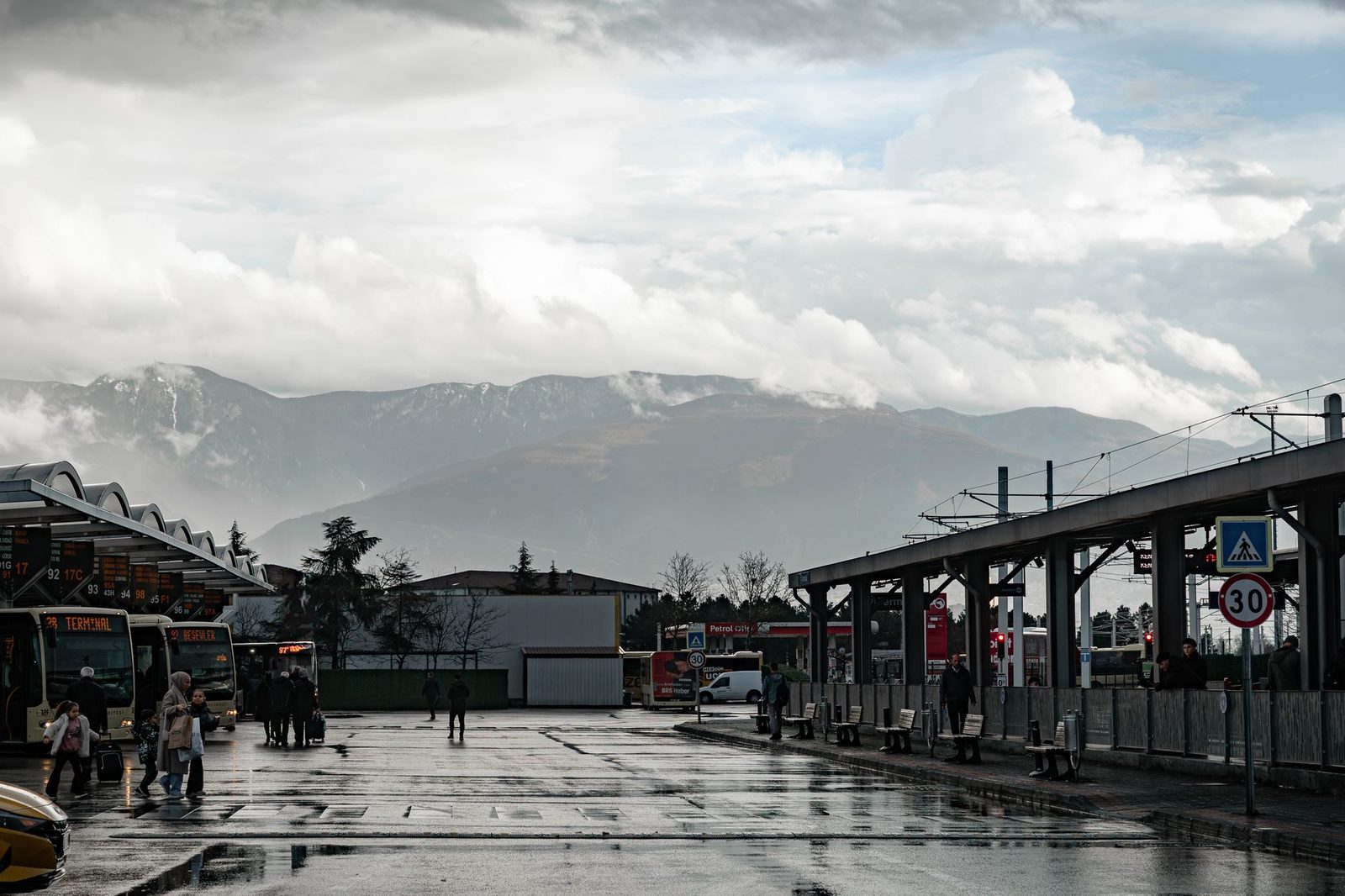
Malpensa (MXP), 50 km to the north-west: the Malpensa Express (Trenord) links Terminals 1 and 2 to Milano Cadorna or Milano Centrale in 37 to 52 minutes for €13. Road shuttles — Malpensa Shuttle (Air Pullman), Terravision, Autostradale, FlixBus — serve Milano Centrale (Piazza Luigi di Savoia) in 50 to 70 minutes for €7–11 depending on how far ahead you book. Departures every 20 minutes at peak times, with night service running.
Linate (LIN), 7 km from the Duomo: since late 2022, metro line M4 runs directly to the airport. €2.20 for an urban ticket, about 15 minutes to San Babila. In this particular case, forget the bus: the metro has won outright.
Bergamo-Orio al Serio (BGY), 45 km from Milan and 5 km from Bergamo: no train serves the airport in 2026 (the rail connection is under construction, not in service). So the bus is your only option.
- To Milano Centrale: Orio Shuttle, Terravision, FlixBus and Autostradale, around €6–7 one way online, 50 to 60 minutes, very frequent departures, including broad overnight coverage.
- To central Bergamo and the station: urban line ATB no. 1, about €2.60, 10 to 15 minutes. It's the best deal at the airport, and the ideal starting point if you're heading on to Brescia, Verona or Lake Como by regional train.
In Bergamo, taking the ATB 1 city bus to the station and then a Trenord regional train to Milan often works out cheaper than the direct shuttle, but takes 20 to 30 minutes longer. With an evening flight, take the direct shuttle.
One underrated logistical detail: the Bergamo shuttles stow luggage in the hold without name tags. A TSA combination padlock and a strip of coloured tape on the handle will save you grabbing the wrong suitcase during a late-night unloading at Milano Centrale, where thirty people are helping themselves at once.
Naples: the Alibus, unbeatable
Naples-Capodichino (NAP) is 7 km from the centre. ANM's Alibus links the airport to Napoli Centrale (Piazza Garibaldi) and then to the Molo Beverello port for €5 (€6 on board), in 20 to 30 minutes, every 15–20 minutes from around 6 am to 11.40 pm.
It's the most efficient airport link in Italy if you're connecting onto a ferry to Capri, Ischia or Procida: the bus drops you a hundred metres from the ticket offices. FlixBus and Itabus also serve Capodichino directly from several towns in Campania and the south, which means you can reach the airport without going through the centre — useful at times when Naples traffic grinds to a halt.
If you're then continuing to the Amalfi Coast or Puglia by coach, our comparison of Itabus, FlixBus or MarinoBus sets out who serves what and at what price.
Pisa, Florence, Venice, Bologna: the four special cases
Pisa (PSA) is the only Italian airport whose terminal is within walking distance of a city: 2.5 km from the centre. Two options:
- The PisaMover, a driverless automated metro linking the terminal to Pisa Centrale in 5 minutes for €5.
- The LAM Rosso city bus (CPT/Autolinee Toscane), €1.30–2, 10 to 15 minutes, which also serves Piazza dei Miracoli. Three times cheaper for five minutes more.
For Florence, direct coaches (Autostradale, FlixBus) run from Pisa for €10–15 in about 1 hr 20, but the Pisa–Florence regional train (€9.20, 50 min to 1 hr) is generally better for frequency.
Florence-Peretola (FLR): tram line T2 links the airport to Santa Maria Novella in 20 minutes for €1.70. As at Linate, urban rail has made the bus redundant.
Venice-Marco Polo (VCE): the ATVO Venezia Express and ACTV line 5 connect the terminal to Piazzale Roma in 20–25 minutes for €10 (ATVO) or €10 (ACTV, airport ticket). For Mestre, reckon on €10 as well. The Alilaguna water shuttle takes 1 hr to 1 hr 15 for €15–18: pricier, slower, but you arrive at St Mark's by water, which is priceless if it's your first time. Treviso (TSF), the other "Venice" used by low-cost carriers, is 40 km away: ATVO runs to Piazzale Roma in 1 hr 10 for about €12.
Bologna-Guglielmo Marconi (BLQ): the Marconi Express, an automated monorail, links the terminal to Bologna Centrale in 7 minutes for €12.80. There's been no serious bus competition since it opened; it's expensive, but unbeatable on journey time and handy for connecting onto a Frecciarossa or an Italo.
Luggage, validation, timetables: the rules that trip people up
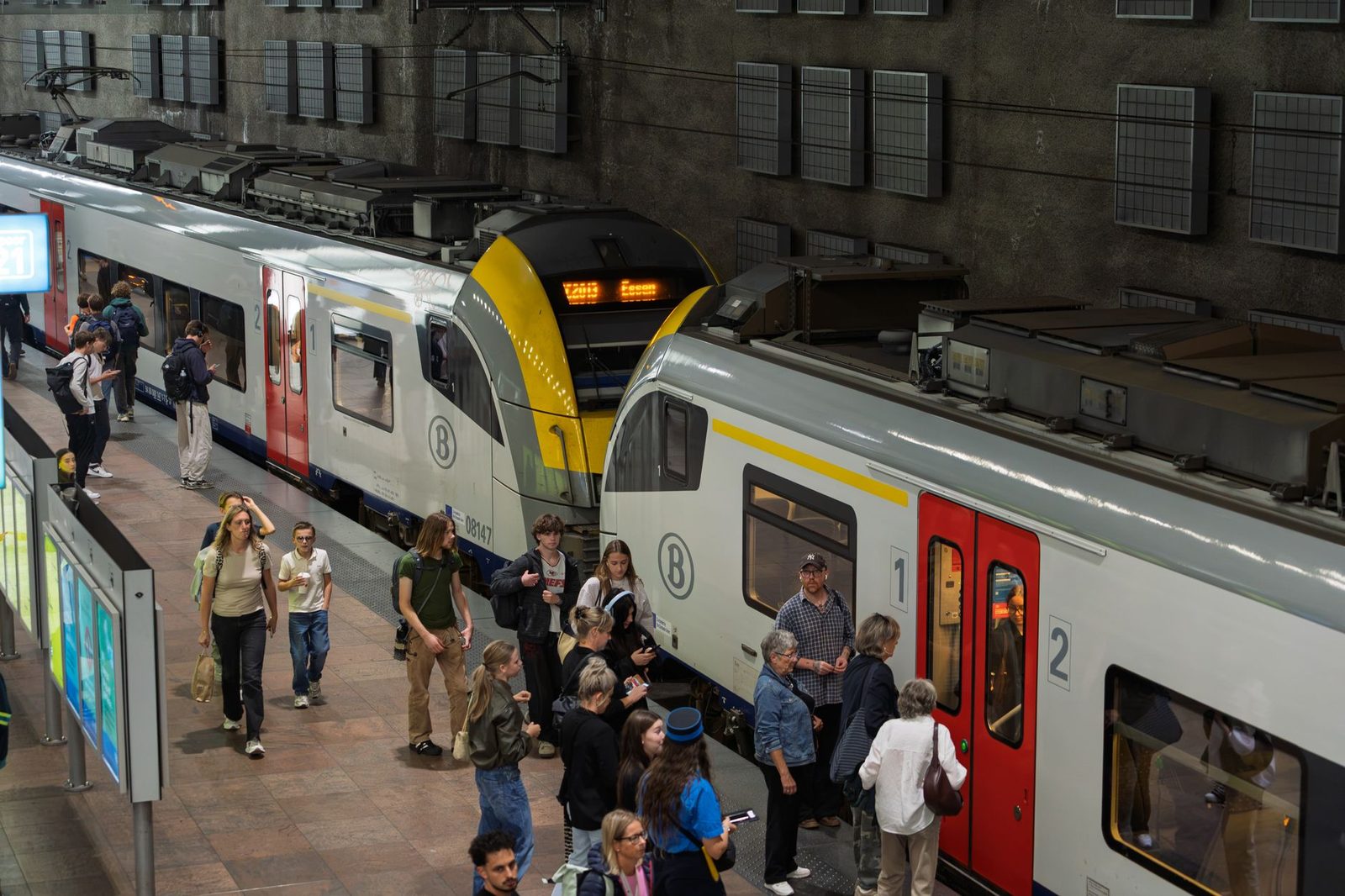
Italian airport shuttles don't follow the same rules as long-distance coaches.
Luggage. Most operators (Orio Shuttle, Terravision, ATVO, Malpensa Shuttle) include one hold suitcase + one piece of hand luggage in the fare. Beyond that, a €2–5 surcharge may be requested on board, in cash. On city routes (ATB 1 in Bergamo, LAM Rosso in Pisa, Alibus in Naples) there's no hold: your big suitcase travels upright next to you, which gets athletic at rush hour. A 40×20×25 cabin backpack radically changes the experience on those lines.
Validation. This is the costliest mistake in Italy. A paper ticket bought at a kiosk or tobacconist must be stamped in the machine on board. An unvalidated ticket = an invalid ticket, and inspections on the Naples Alibus and on Bergamo's ATB lines are very real. Fines start at around €50. Digital tickets bought online or in the operator's app are activated in the app: do it before boarding, as mobile coverage is unreliable in terminal basements. To check timetables without draining your battery, a 10,000 mAh power bank makes all the difference over a day in transit.
Timetables and night service. Road shuttles are the only night-time option in most cases. At Fiumicino, Malpensa and Bergamo, there are departures between 1 am and 5 am. The metros, trams and monorails (M4 Linate, T2 Florence, Marconi Express, PisaMover) all close overnight. For a flight landing at 1.30 am, the bus isn't the budget choice: it's the only choice.
Strikes. Italy regulates transport strikes strictly: the Commissione di Garanzia publishes the calendar of industrial action and the protected time bands. Before travelling, a quick look at the Transport Ministry website (MIT, "scioperi" section) avoids nasty surprises. Our pointers on your rights in the event of disruption also apply to road shuttles, with one important caveat: an airport shuttle is not a long-distance service under EU regulations, and compensation is far more limited.
How much should you really budget?
For a return airport–city centre trip, here are realistic ballpark figures for 2026, per person:
| Airport | Cheapest option | Return |
|---|---|---|
| Rome-Fiumicino | Bus to Termini | €12–14 |
| Rome-Ciampino | Bus to Termini | €12 |
| Milan-Malpensa | Shuttle to Centrale | €14–20 |
| Milan-Linate | M4 metro | €4.40 |
| Bergamo-Orio | ATB 1 (Bergamo) / shuttle (Milan) | €5.20 / €12–14 |
| Naples | Alibus | €10 |
| Pisa | LAM Rosso | €2.60–4 |
| Florence | T2 tram | €3.40 |
| Venice-Marco Polo | ATVO / ACTV | €20 |
| Bologna | Marconi Express | €25.60 |
In other words: apart from Bologna and Venice, an airport transfer in Italy rarely costs more than €20 return. It's often the easiest line item to optimise on an Italian weekend break — and the easiest to overpay for by accepting the first taxi offered in the arrivals hall.
One practical tip: book the outbound leg in advance (you know your landing time, and online fares are the lowest), but leave the return open if your operator sells tickets on board. Setting off early to beat a traffic jam beats holding a time-stamped ticket you can't use. A recent Italy travel guide is still useful for checking local connections where operator apps are still Italian-only.
To compare prices for the journeys that follow — Rome–Naples, Milan–Venice, Bologna–Florence — compare on Gopaxo for train and coach options before you book.
Frequently asked questions
Do you need to book your airport bus in advance in Italy?
Not necessarily, but it's cheaper. Private shuttles (Terravision, Orio Shuttle, Malpensa Shuttle, ATVO) charge online fares €1–3 below the counter price, and departures are almost never full. On city routes (Alibus Naples, ATB 1 Bergamo, LAM Rosso Pisa), reservations don't exist: you buy a ticket at a tobacconist, from a machine or on board.
Bus or train from Fiumicino?
The bus if you're travelling as a group, arriving late, or if every euro counts: €6–7 against €14 for the Leonardo Express, for 15 to 25 minutes more. The train if you have a tight connection at Termini or you're travelling at peak road-traffic times.
How do you get to Milan from Bergamo-Orio al Serio?
By road only: Orio Shuttle, Terravision, FlixBus or Autostradale to Milano Centrale, around €6–7 and 50–60 minutes, with departures day and night. The airport has no station in 2026.
Do airport shuttles take large suitcases?
Private shuttles do, with one hold suitcase included in the base fare. City buses have no hold: a large suitcase stays with you in the aisle, which is doable but uncomfortable at rush hour.
What happens if my flight is delayed?
Airport shuttles timed to arrivals (Ciampino, Bergamo, Fiumicino) run very frequently: an undated or open ticket remains valid for the next departure. A time-stamped ticket on a private shuttle, on the other hand, is often lost — check the operator's policy before buying a fixed-time one-way for a low-cost flight.
In summary
- The bus is still the cheapest option at every Italian airport, except at Linate, Florence and Bologna where urban rail has taken over.
- Bergamo-Orio and Ciampino have no train: the shuttle is compulsory.
- Fiumicino: €6–7 by bus against €14 on the Leonardo Express, for 15–25 minutes more.
- Naples Alibus: €5, 20 minutes, right through to the port — the best airport link in Italy.
- Always validate a paper ticket in the on-board machine: the fine far exceeds the fare.
- Road shuttles are the only night-time option: metros, trams and monorails all close.