Short answer: from December 2026, a direct Munich–Rome high-speed train will run for the first time, operated jointly by Deutsche Bahn (DB), Trenitalia and Austria's ÖBB. Italy's red Frecciarossa will cover the roughly 900 km from Munich to Rome in about 8h30, and Munich to Milan in around 6h30, crossing the Alps via the Brenner Pass with no change of train.
One of Europe's longest-standing rail gaps is about to close. For decades, travelling by train between southern Germany and Italy meant changing trains in Austria and patching together separate tickets. From the December 2026 timetable change, a single high-speed train will link the two countries directly — and it will be a Frecciarossa, the sleek red flagship of Italian rail.
A new direct Munich–Rome high-speed train
The headline is simple: two new direct services, Munich–Milan and Munich–Rome, both running without a change of train. The Munich–Rome high-speed train is the more ambitious of the pair, covering around 900 km and linking the Bavarian capital with the Italian capital in roughly 8 hours 30 minutes. The shorter Munich–Milan route, about 600 km, is timed at around 6 hours 30 minutes.
Both will be operated with Frecciarossa trainsets — the same family of high-speed trains, capable of up to 300 km/h on suitable lines, that already run the length of Italy from Turin to Naples. Putting an Italian high-speed train on a cross-border route into Germany is itself a notable first.
Who runs it: DB, Trenitalia and ÖBB
The service is the product of a three-way partnership between Deutsche Bahn (Germany), Trenitalia (Italy) and ÖBB, the Austrian federal railway whose network the trains cross on the way south. Pooling the three operators means passengers buy one journey rather than juggling separate national tickets — the kind of seamless cross-border booking that European rail has long promised but rarely delivered on this corridor.
It also reflects a wider push to make long-distance rail a real alternative to short-haul flights between major European cities. Munich, Verona, Bologna, Florence, Milan and Rome are all served by busy airports today; a comfortable single-seat train ride changes the calculation for many travellers.
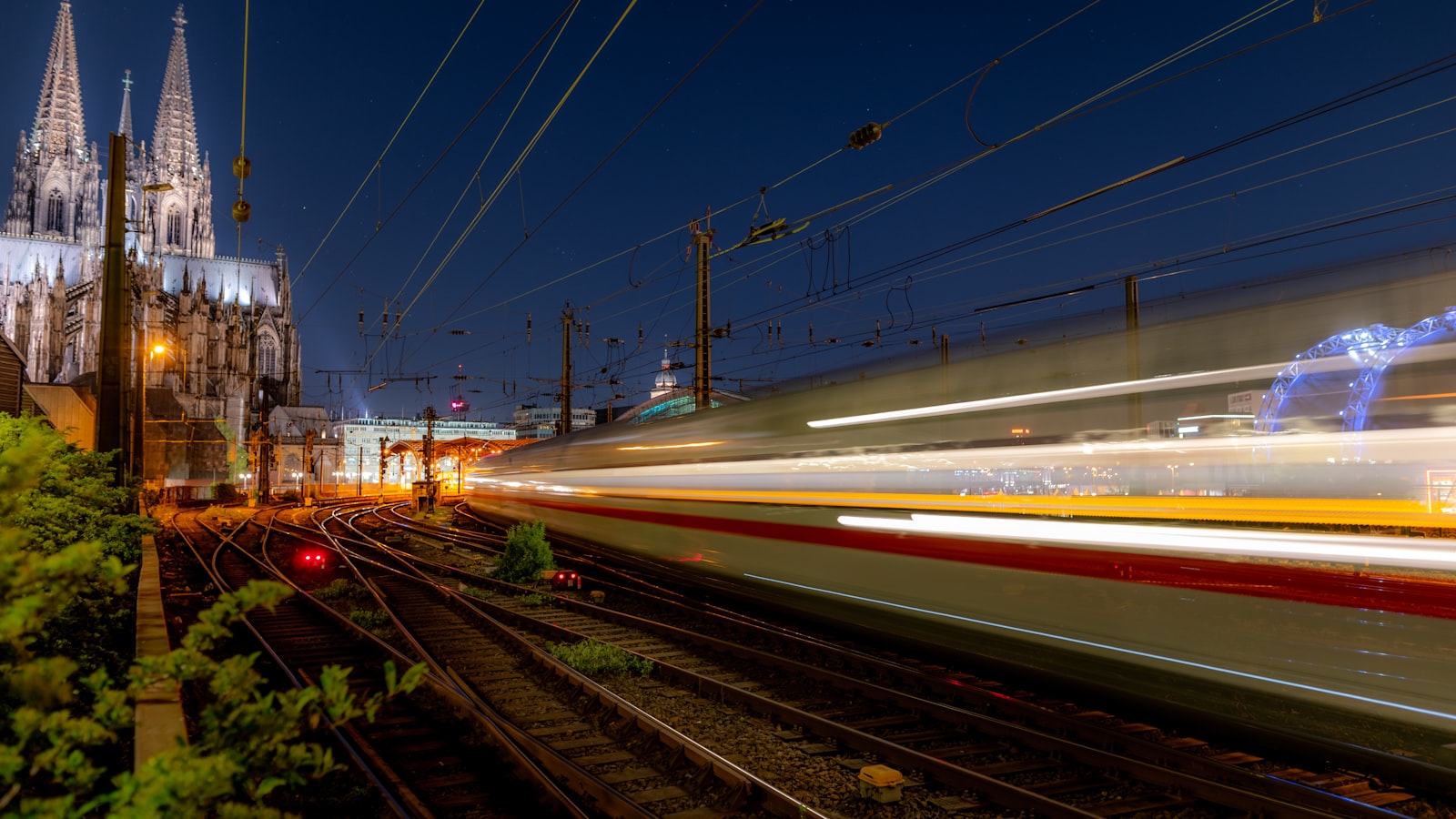
Routes, stops and journey times
The two services share the same Alpine spine before splitting toward their final destinations.
The Munich–Milan train is planned to call at Bolzano, Trento, Rovereto, Verona and Brescia — a roll-call of northern Italian cities that are destinations in their own right, from the vineyards around Verona to the Dolomites near Bolzano.
The Munich–Rome train runs deeper into Italy, with planned stops at Innsbruck, Bolzano, Trento, Rovereto, Verona, Bologna and Florence before reaching Rome. That means a single train connecting the Austrian Tyrol, the South Tyrol, Verona, the food capital of Bologna and Renaissance Florence — a remarkable string of stops for one ticket.
Every service crosses the Brenner Pass, the historic Alpine corridor between Austria and Italy that has carried traffic between northern and southern Europe for centuries.
Why it matters for travellers
For anyone planning a trip across the Alps, the change is significant. A direct train removes the friction that used to push travellers toward flying: no airport transfers at either end, no separate tickets, no anxious connection in Austria with a heavy bag. You board in a city centre and step off in another city centre.
It is also a flexible new building block for longer European itineraries. You could ride the Munich–Rome high-speed train as far as Verona or Florence, break your journey, and continue another day. Pairing it with an overnight option is easy too — see our guide to the comeback of night trains in Europe for ideas on travelling while you sleep.
What comes next: 2028 and the Brenner Base Tunnel
December 2026 is only the first step. From December 2028, the partners plan to extend the network further north, with services linking Milan with Berlin and Naples with Berlin — stitching together the German and Italian high-speed networks end to end.
The bigger leap comes with infrastructure. The Brenner Base Tunnel, a 55 km rail tunnel under the Alps, is expected to open around the end of 2032. Once trains run through the mountain rather than climbing over the pass, journey times on this corridor are expected to fall by roughly one hour, making a Munich–Italy day trip genuinely realistic.
How to get the best fare
Cross-border high-speed tickets, like domestic Frecciarossa fares, are usually cheapest when booked early and at off-peak times. A few simple habits help:
- Book as soon as the timetable opens. The lowest fare buckets sell first, so early booking on a fixed date is where the savings are.
- Travel mid-week and off-peak. Tuesday to Thursday departures, and trains outside Friday and Sunday peaks, tend to be cheaper.
- Compare the whole journey, not just the train. Against a flight, factor in airport transfers, baggage fees and the time lost at each end.
- Check connecting cities. Verona, Bologna or Florence may be cheaper entry points than Rome for part of the year.
Gopaxo compares trains, buses, carpooling and flights side by side, so you can see how the new Frecciarossa stacks up against every other way of crossing the Alps. Start by comparing routes on Gopaxo, look up the operator on the Trenitalia carrier page, or browse more ways to travel cheaper by train.
Quick recap
- A direct Munich–Rome high-speed train (and Munich–Milan) launches with the December 2026 timetable.
- Operated by DB, Trenitalia and ÖBB, using Frecciarossa trains via the Brenner Pass.
- Munich–Rome ≈ 8h30; Munich–Milan ≈ 6h30, with no change of train.
- Stops include Innsbruck, Bolzano, Verona, Bologna and Florence (Rome route).
- Milan–Berlin and Naples–Berlin planned from December 2028; the Brenner Base Tunnel (~2032) should cut about an hour.
Frequently asked questions
When does the direct Munich–Rome train start?
The direct Munich–Rome and Munich–Milan Frecciarossa services are scheduled to launch with the December 2026 timetable change.
How long does the Munich–Rome high-speed train take?
About 8 hours 30 minutes from Munich to Rome, and around 6 hours 30 minutes from Munich to Milan, with no change of train.
Which cities does the train stop at?
The Munich–Rome route is planned to call at Innsbruck, Bolzano, Trento, Rovereto, Verona, Bologna and Florence. The Munich–Milan route stops at Bolzano, Trento, Rovereto, Verona and Brescia.
Who operates the new service?
It is a joint service run by Deutsche Bahn (DB), Trenitalia and Austria's ÖBB, using Italian Frecciarossa high-speed trains.
Will the journey get faster in the future?
Yes. The Brenner Base Tunnel is expected to open around the end of 2032, which should cut roughly one hour off journey times on this corridor.
Planning to cross the Alps by rail? Compare the Munich–Italy route on Gopaxo and see how the new Frecciarossa compares with buses, flights and night trains in a single search.