Short answer: A new Deutsche Bahn ICE 3neo service from Cologne Hauptbahnhof to Brussels Airport launches on 7 September 2026, running two daily round trips in roughly two hours via Aachen, Liège, Leuven and Antwerp. It is sold under a Brussels Airlines codeshare, so a single booking covers the train, the connecting flight and onward travel to 180+ destinations.
A direct rail link from Germany's Rhineland to the check-in desks of Brussels Airport has been missing from the timetable for years. From 7 September 2026 it returns — and this time, the train ticket and the boarding pass live in the same reservation. For travellers in Cologne, Aachen, Liège and Leuven, that reframes the airport as a stop on the high-speed network rather than a separate journey.
What the new DB ICE service offers
The route is a short, dense cross-border corridor, designed to drop air travellers at the airport in time for morning long-haul departures. The headline numbers, drawn from the operator and the airport:
- Launch date: 7 September 2026, first departure from Cologne at 06:11.
- First arrival at Brussels Airport: 08:29, timed for long-haul transfers.
- Route: Cologne Hbf → Aachen → Liège → Leuven → Brussels Airport → Antwerp.
- Frequency: two daily round trips (trains ICE 310 and ICE 312).
- Journey time: about 2 hours end-to-end Cologne–Brussels Airport.
- Rolling stock: ICE 3neo, DB's latest-generation high-speed trainset.
- Sales channel: on sale since 26 February 2026 via brusselsairlines.com and travel agents.
In plain terms: leave Cologne in the morning, be in Brussels Airport well before the long-haul banks, with one ticket and one check-in. For Belgian travellers in Leuven or Liège, the same works in reverse — board at a city-centre station, arrive airside.
The Brussels Airlines codeshare, explained
This is not just a new train; it is an intermodal product. Under a codeshare with Brussels Airlines — part of the Lufthansa Group intermodal strategy — the ICE carries an SN flight number and the entire journey is managed as a single reservation. It is the first time a German high-speed train has been folded into a Belgian airline's main inventory at this scale, mirroring the same Lufthansa Group playbook already running in Austria and Switzerland with Railjet and SBB.
The benefits written into the codeshare are concrete:
- One ticket for train and flight, with guaranteed protection if a delay causes a missed connection.
- Seat reservation in a fixed carriage.
- Miles & More miles on the rail leg for status customers.
- Access to DB lounges in Cologne and other major German stations for Lufthansa Group frequent flyers.
- Local public transport in Germany included in the rail portion.
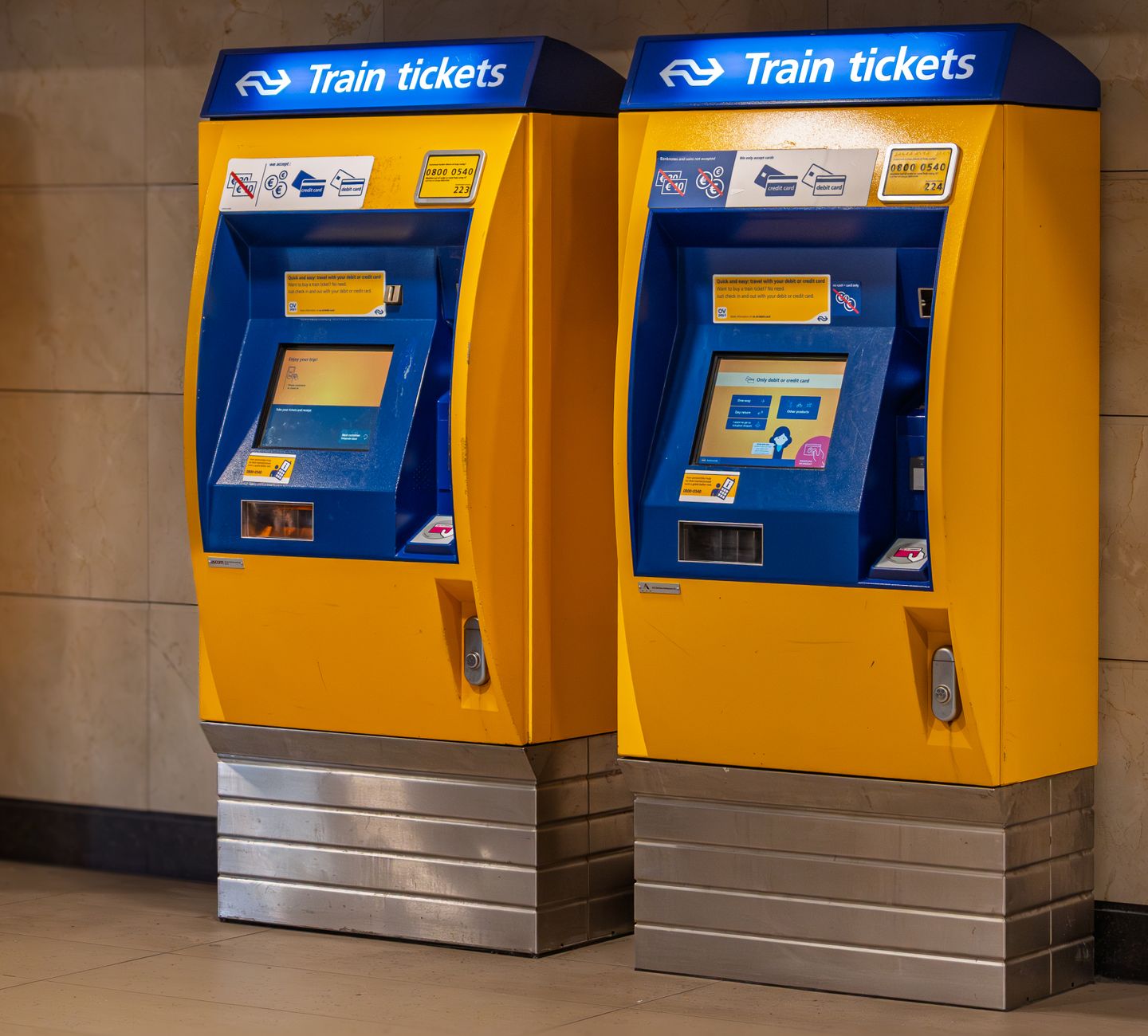
For most passengers, the codeshare replaces a multi-step booking with a single one. You pick a destination served by Brussels Airlines — a sub-Saharan African capital such as Dakar, Accra, Kigali or Kinshasa, a North American city, or a European regional connection — and the system books the ICE leg from Cologne, Aachen or Liège and the flight leg together. Baggage is checked through to the final destination. If you only need the train, the same ICE services are also available standalone through DB's own channels (bahn.de, the DB Navigator app, station ticket machines).

Why western Germany, and why now
The press materials spell out the customer target. Brussels Airlines CEO Dorothea von Boxberg pointed to the African diaspora in western Germany as a core market — communities in Cologne, Düsseldorf and the surrounding cities with strong family and business ties to sub-Saharan Africa, which is exactly the long-haul network Brussels Airlines has been rebuilding. The train pulls that catchment inside a two-hour rail radius of the airport.
DB management board member Michael Peterson framed the codeshare as a response to "more and more people choosing climate-friendly ways to get to their flights", part of Germany's broader modal-shift strategy. With short-haul flights under political pressure in both Germany and Belgium, an intermodal rail-plus-air product is also a hedge against future flight restrictions.
How it compares with the alternatives
For Belgian and German travellers, the new ICE is one of three ways to connect Cologne with Brussels and its airport. The other two are worth weighing on price and time:
- Eurostar / Thalys (city-centre to city-centre): the fastest end-to-end option Cologne–Brussels-Midi, but does not serve the airport. Best when the destination is in Belgium or further along the Eurostar network via Brussels-Midi.
- Short-haul flight (CGN or DUS → BRU): the historical default, but loses most of its time advantage once airport access, security and boarding are added back. The codeshare ICE is structured to undercut this on door-to-door time.
- DB ICE to Brussels-Midi + local airport transfer: similar in price profile to the new codeshare but with a change to airport transport at the Belgian end.
You can see the three options lined up on a single screen — train, bus, carpooling and plane — when you run a search on Gopaxo. It is the quickest way to see whether the new ICE beats flying for your dates.
In short
- Deutsche Bahn launches a Cologne–Brussels Airport ICE 3neo service on 7 September 2026, with two daily round trips.
- The route runs via Aachen, Liège, Leuven and Antwerp, in roughly two hours end-to-end, timed for long-haul wave departures.
- Tickets are sold under a Brussels Airlines codeshare (Lufthansa Group), combining train and flight in a single booking with through-checked baggage.
- The service reconnects Brussels Airport to the high-speed network after several years without a direct rail link from western Germany.
- It is part of DB's wider 2026 European expansion, which adds around 40 cross-border services per day and brings 21 German cities to half-hourly high-speed frequencies.
Frequently asked questions
When does the DB ICE from Cologne to Brussels Airport start?
The service launches on 7 September 2026, with the first train leaving Cologne Hauptbahnhof at 06:11 and arriving at Brussels Airport at 08:29. A second daily round trip runs in the evening.
How long does the journey take?
End-to-end, Cologne Hauptbahnhof to Brussels Airport takes about two hours, with stops at Aachen, Liège, Leuven and Antwerp along the way.
How many trains run per day?
There are two daily round trips in each direction (trains ICE 310 and ICE 312). Frequencies may be increased in later timetable cycles if demand holds.
Can I book the train and the flight in one go?
Yes. The ICE is sold under a Brussels Airlines codeshare with through ticketing: one booking covers the train, the connecting Brussels Airlines flight and onward travel to 180+ destinations via Brussels Airport. Through baggage check-in is included.
Does the train also serve Brussels city centre?
No. The new ICE calls at Brussels Airport and Antwerp, but it does not stop at Brussels-Midi. For city-centre-to-city-centre travel between Cologne and Brussels, the existing Eurostar / Thalys services remain the best option.
What is the rolling stock?
The line uses ICE 3neo, Deutsche Bahn's latest-generation high-speed trainset, in service since summer 2024. It is fully step-free, with a bistro car and free Wi-Fi on board.
How do I compare prices against a flight?
You can see trains, buses, carpooling and flights side by side for your exact dates on Gopaxo. The platform surfaces the cheapest door-to-door option, which on the Cologne–Brussels Airport corridor is often the new ICE codeshare for combined bookings.
Planning a long-haul trip via Brussels Airport? Run a search on Gopaxo to see whether the new DB ICE codeshare beats a short-haul flight on price and on door-to-door time for your dates.