Short answer: if you leave something behind on a train or bus in Europe, act within two hours: contact the operator's lost-property service first (not the station), file a report online with the train number, carriage and seat, then follow up on day 3 and day 7, because items travel from the trainset to a sorting centre with a time lag. Retention periods range from 14 days at FlixBus to 90 days at SNCF and six months for valuables in Germany. Budget €10 to €35 in retrieval fees, plus shipping if you have already gone home. And the only truly effective measure remains preventive: a Bluetooth tracker in your suitcase, which turns a loss into a mere inconvenience.
There is a very precise moment when a train journey flips from pleasure to panic: the moment when, standing on the platform, you realise that the bag you put in the overhead rack above seat 42 is still on board — and the train has just pulled out for Milan. Europe's railway companies know that moment by the thousand. SNCF handles several hundred thousand lost items every year; Deutsche Bahn reports something in the order of 200,000; London's stations and the Dutch networks regularly publish inventories worthy of a cabinet of curiosities — prosthetics, musical instruments, funeral urns, live animals.
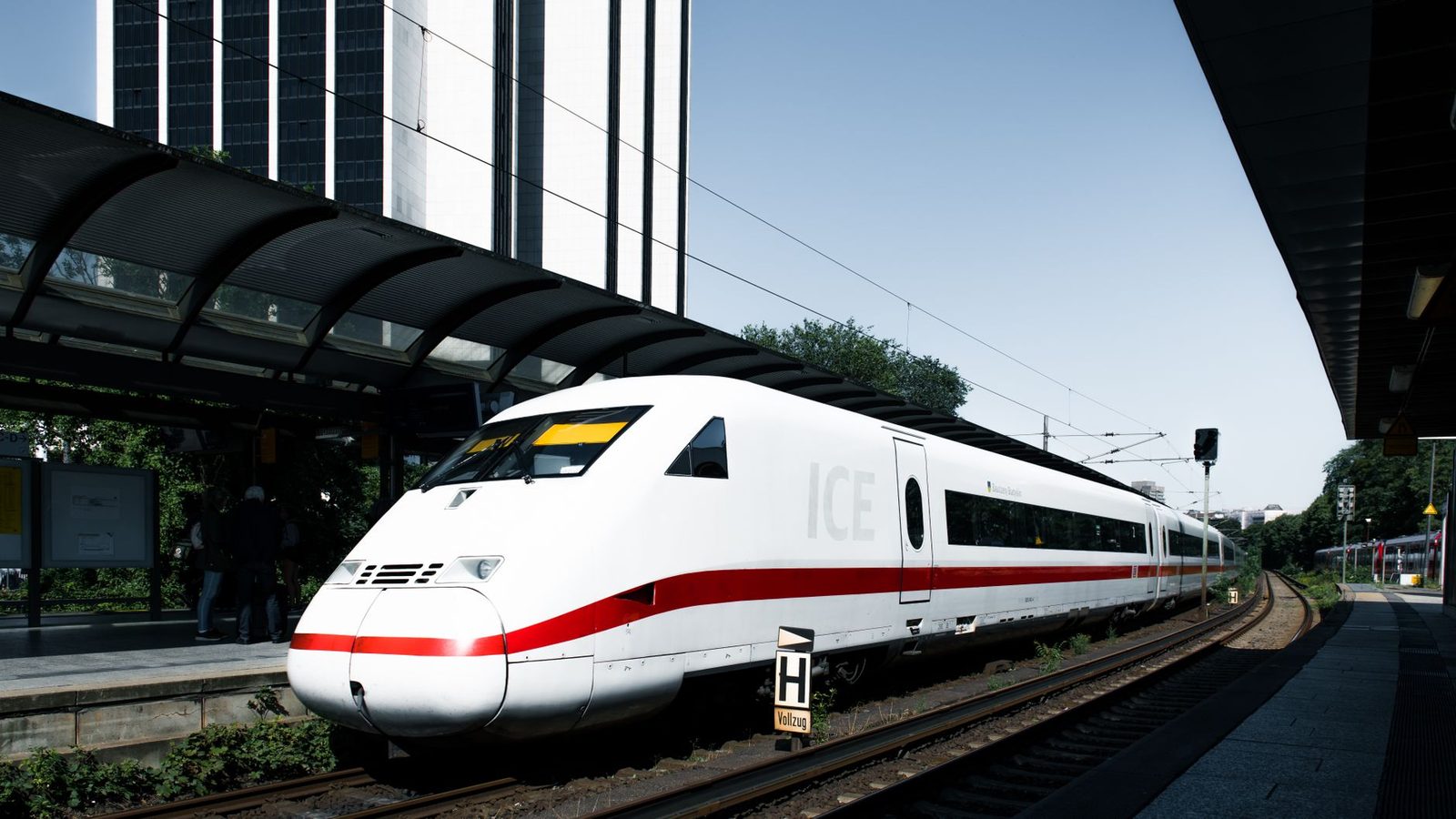
The good news: recovery rates are far better than the sector's reputation suggests, especially in northern and German-speaking Europe. The bad news: they depend almost entirely on what you do in the first few hours. Here is the method, the portals worth knowing, and the real costs.
The first two hours decide everything
An item left on a train follows a physical route. It first stays on board until the terminus, where a cleaning team collects it. It is then deposited in a station storeroom, before being transferred — often the next day, sometimes on day 3 — to a national or regional sorting centre where it is logged in a database. Between the moment you forget it and the moment your item becomes "searchable" online, 24 to 72 hours frequently elapse.
Hence the three golden rules:
- Don't search online straight away. Call or write immediately to the operator's lost-property service, flagging the train before it reaches its terminus if possible. In the best cases, the train manager can retrieve the item and set it aside under your name.
- Note the exact coordinates. Train number (not just "the 2 p.m. TGV"), date, carriage number, seat number, and the side (window/aisle, upper or lower luggage rack). That is what separates a report that gets processed from one that gets filed away.
- Follow up on day 3, then day 7. An item missing from the database on day one often shows up three days later. Most searches are abandoned out of premature discouragement.
Practical tip: photograph your suitcase and its main contents before you set off. A precise description ("hard-shell charcoal-grey suitcase, 65 cm, red ribbon on the handle, name tag reading…") hugely improves the chances of a match in a database holding several thousand entries. A luggage tag with a QR code — or simply your name, email and international phone number — is often enough to short-circuit the whole procedure: the agent calls you directly.
Operator by operator: where to report, for how long, and at what cost
Every network has its own set-up. Here are the cases travellers encounter most often.
France — SNCF
SNCF centralises its lost property on an online service accessible from its website, with a loss report to complete (date, train, station, description). Items collected on trains and in stations are logged there; the standard retention period stated is around 90 days, after which unclaimed items are destroyed, donated to charities or sold at auction. Collection takes place at a station, with storage and handling fees (generally in the €10 to €25 range depending on the nature of the item and how long it was stored), and home delivery available at your expense.
One important point: in Paris, items found outside trains — in public spaces, the metro, RATP buses — fall under the Police Prefecture's lost-property office on rue des Morillons. If you don't know where you lost your bag, you need to file a report in both places.
Germany, Austria, Switzerland — the champions of recovery rates
- Deutsche Bahn manages its lost property through its Fundservice, searchable online, with a search by journey. Items found on trains converge on a central sorting centre in Wuppertal. Retention is roughly three months in-house, then items are transferred to municipal lost-property offices (Fundbüro), where valuables can remain six months before going to auction. Retrieval and shipping fees vary, generally between €15 and €30.
- ÖBB in Austria uses a lost-property search portal and, for unclaimed items, the Austrian national system (fundamt.gv.at). The Nightjet services, with their sleeping berths, generate plenty of forgotten items: chargers, glasses, books.
- SBB/CFF in Switzerland posts a recovery rate often cited as one of the best in Europe, with an online service and moderate handling fees. SBB keeps items for a few weeks in a sorting centre before transferring them.
Italy, Spain, Benelux
- Trenitalia and Italo work largely through the stations themselves (ufficio oggetti smarriti) or via customer service. The useful instinct: contact your train's terminus station, not the one where you got off.
- Renfe has a lost-property form and station points; in Spain, unclaimed items end up with the municipal service (objetos perdidos) of the relevant city.
- NS in the Netherlands offers one of the most polished systems: an online search with photos of registered items, a short free collection window followed by fees, and home delivery. Luxembourg's CFL and Belgium's SNCB work via online forms or customer service.
Coaches and ride-sharing
- FlixBus states a short retention period — around two weeks — for items found on board, which must be reported via the customer service form, specifying the booking number and the route. After that, items are generally handed over to local organisations or destroyed. The urgency is real.
- BlaBlaCar operates no vehicles: everything goes through the app's messaging with the driver. Tip: if the conversation has been closed, customer service can reopen a channel of contact. Never leave a long-distance car share without checking the boot — it's the number one cause of items left behind on this mode.
- Eurostar and cross-border operators apply the law of the country where the item is collected, which can complicate recovering a bag left between London and Brussels. File a report on both sides.
Summary table
| Operator | Where to report | Indicative retention | Typical fees |
|---|---|---|---|
| SNCF | Online lost-property service | ~90 days | €10–25 + shipping |
| Deutsche Bahn | DB Fundservice, Wuppertal centre | ~3 months, then municipal Fundbüro (up to 6 months) | €15–30 |
| ÖBB | ÖBB lost-property portal, then fundamt.gv.at | several weeks, then national system | variable |
| SBB/CFF | SBB online service | a few weeks, then transfer | moderate |
| Trenitalia / Italo | Terminus station, customer service | depends on the station | variable |
| Renfe | Form + station points | then municipal service | variable |
| NS (Netherlands) | Online search with photos | short free period, then chargeable | ~€15 + shipping |
| FlixBus | Customer service form | ~14 days | shipping fees |
| BlaBlaCar | Messaging with the driver | no central system | none |
Amounts and timeframes are indicative and change over time: always check the operator's lost-property page at the time you make your claim.
What European law says (and what it doesn't)
Contrary to a widespread belief, the European regulation on rail passengers' rights — recast and applicable since 2023 — does not create any obligation to return items or any unified lost-property system. It covers delays, cancellations, assistance for disabled passengers and passenger information, but leaves luggage in the hands of operators and national law.
The practical consequences:
- A forgotten item is not lost luggage. On a train, you remain responsible for your belongings, unlike air travel, where checked baggage falls under the Montreal Convention and gives rise to compensation. No railway company will compensate you for the value of the bag you left behind.
- Your recourse is insurance. Many home contents policies cover personal items away from the home, and many premium bank cards include baggage cover for trips paid for with the card. Check the limits and deductibles before you leave, not after.
- Unclaimed items are sold. In Germany, Austria, the Netherlands and France, auctions of railway lost property are an institution. That is also why deadlines are strictly enforced: once the date has passed, the item no longer exists administratively.
Prevention: five minutes that beat three weeks of paperwork
Industry professionals are unanimous: items get left behind at three moments — arrival at the terminus when you wake up with a start, tight connections, and rushed exits at intermediate stations. A few habits take care of most of it.
Track what matters. Slipping a Bluetooth AirTag tracker into your suitcase lining and a second one into your backpack changes the situation radically: within minutes you know whether your bag is still on board and which way it is heading — valuable information to pass on to customer service. Crowd-sourced location networks work remarkably well in Europe's busy stations.
Label it physically. A personalised luggage tag with your name, email and phone number in international format (+33…) remains the most effective device on the market. An agent who finds a labelled bag contacts you directly; an anonymous bag goes to the sorting centre.
Keep small items together. Most reports concern not suitcases but chargers, earbuds, glasses, books and passports. A travel cable organiser, kept in the front pocket of your bag rather than on the tray table, eliminates most of that risk. Same logic for documents: an RFID passport holder kept on your person, never tucked into the seat-back pocket.
Lock in a disembarking ritual. Ten minutes before arrival: stand up, look at the overhead rack, hand on the tray table, glance at the floor under the seat, and check the seat-back pocket. That's where phones go to sleep. For overnight journeys, a combination TSA padlock on the main zip also deters opportunistic openings while you sleep and forces you into physical contact with your bag when you wake.
Plan for the worst without panicking. Regular travellers who keep a digital copy of their documents and a small cash reserve on them turn a mislaid bag into a minor incident. Conversely, anyone who has put everything in a single bag — passport, cards, keys, chargers — spends three days repairing fifteen seconds of inattention.
The procedure, in six steps
- Immediately: contact the operator's customer service (by phone if possible) with the train, carriage and seat numbers, plus a description.
- Within the hour: complete the online report. Keep the case reference number.
- Day 1: call the train's terminus station, not the one where you got off.
- Day 3: follow up and search the online database — the item has just been logged.
- Day 7: search again. If the item has been found, arrange collection or shipping and check the fees before agreeing.
- If nothing by day 15: file a claim with your insurer or your bank card's assistance service, attaching the operator's case reference — it serves as proof of due diligence.
An item left on a European train isn't lost: it has simply entered a logistics chain you didn't know existed. German-speaking and Dutch operators return a considerable share of what passes through their hands, and the difference between a bag recovered and a bag sold at auction almost always comes down to a report filed quickly, precisely, and followed up twice. For the rest, a tag and a tracker cost less than a single suitcase.