Short answer: in Europe, assistance for disabled passengers and those with reduced mobility is an enforceable right, written into Regulation (EU) 2021/782, which has applied since 7 June 2023: it is free of charge, and the maximum notice period an operator can require is 24 hours (down from 48 hours previously). In practice, everything comes down to three things: giving notice on time through the right channel (Accès Plus for SNCF, the Mobilitätsservice-Zentrale for Deutsche Bahn, Sala Blu for Trenitalia), checking that the wheelchair space on your chosen train is actually available — there are often only two to four per trainset — and knowing that if the promised assistance doesn't materialise, the operator must re-route you or compensate you. The weak points remain unstaffed intermediate stations, night trains (the new-generation Nightjet has just one wheelchair space per train) and connections between two companies, where nobody considers themselves responsible for the missing link.
There is a quiet injustice in European rail travel: the very same Paris–Vienna journey that takes an able-bodied passenger ten minutes to book can demand a week of preparation, three phone calls and two emails from a wheelchair user. Not because the law is absent — it is in fact rather generous — but because European rail remains a patchwork of 30 networks, differing platform heights and national procedures that don't talk to each other.

So here is what European law actually guarantees in 2026, how assistance works in concrete terms country by country, and the strategies that head off nasty surprises — from the TGV INOUI to the Scandinavian night train.
What Regulation (EU) 2021/782 guarantees
The key text is Regulation (EU) 2021/782 on rail passengers' rights and obligations. It replaced Regulation (EC) 1371/2007 and has applied since 7 June 2023 across all 27 member states. Its chapter on persons with disabilities and persons with reduced mobility (PRM) sets out four principles you can hold any European carrier to:
- No discrimination at the point of sale. A carrier cannot refuse to sell you a ticket or insist on an accompanying person, unless this is strictly necessary to comply with accessibility safety rules — and it must then justify the decision in writing within five working days.
- Free accompanying person. If the operator requires an accompanying person to be present, that person travels free of charge. This provision is widely unknown.
- Free assistance in stations and on board, in "staffed" stations, for boarding, connections and alighting.
- Maximum notice of 24 hours. This is one of the major advances of 2021/782: previously, 48 hours was the norm. Since June 2023, no EU operator may demand more than 24 hours. Many have in fact cut it to 12 hours on their domestic networks.
The regulation also includes a very useful rule for when things go wrong: if mobility equipment (wheelchair, walking frame, prosthesis) is lost or damaged by the carrier, it must repair, replace or compensate in full, with no financial ceiling. This is one of the few areas of transport law where liability is not capped.
Worth remembering: the regulation applies to domestic and international trains within the EU. The United Kingdom, outside the EU since 2020, applies its own rules (Passenger Assist, run by the Rail Delivery Group), but Eurostar continues to apply European standards on its continental services.
Booking assistance: the right channel, country by country
This is where European theory meets administrative reality. There is no single point of contact for assistance in Europe. Every network has its own service, phone number, opening hours and form.
| Country / operator | Assistance service | Notice required |
|---|---|---|
| France (SNCF) | Assistance Accès Plus / Assist'enGare | 24 h (48 h often advisable at smaller stations) |
| Germany (DB) | Mobilitätsservice-Zentrale | 24 h, until 8 p.m. the day before |
| Italy (Trenitalia / Italo) | Sala Blu (RFI) | 24 h, 12 h on main lines |
| Austria (ÖBB) | ÖBB Barrierefrei-Hotline | 24 h |
| Spain (Renfe) | Atendo | 24 h, 12 h at 18 major stations |
| Switzerland (SBB) | Call Center Handicap | 1 h at around a hundred equipped stations |
| Netherlands (NS) | NS Reisassistentie | 1 h at most stations |
| Eurostar | Eurostar Assist | 48 h recommended, 24 h minimum |
Two practical lessons here. First, the best-performing networks — Switzerland's SBB, the Dutch NS — come down to one hour's notice, because their stations have mobile ramps on site and their staff are trained on an ongoing basis. Second, an international journey often means calling two services, one per country, even though the European regulation in theory provides for information to be passed between operators. If you're travelling Paris–Milan via Lyon, check explicitly that the Sala Blu at Milano Centrale has received the information.
One logistical tip that saves hours: travel with a paper file gathering your assistance confirmations, booking references and a translated disability certificate. An A5 travel document holder tucked into the front pocket of your bag saves you hunting for an email on a phone with 4% battery on a platform in Frankfurt.
Wheelchair spaces: the real constraint
The right to assistance doesn't create a space on the train. And this is where most journeys come unstuck.
Modern trainsets have a very limited number of wheelchair spaces, usually in first class (at the second-class fare) and close to the accessible toilet:
- TGV INOUI / TGV M: two wheelchair spaces per trainset, in coach 1 or equivalent.
- Deutsche Bahn ICE 4: two spaces, plus a seat for an accompanying person.
- Frecciarossa 1000: two spaces, with level boarding from the platform.
- Eurostar: four spaces per train, in the Standard Premier coaches.
- New-generation ÖBB Nightjet: just one accessible compartment per trainset, with an adapted toilet.
In other words, on a full Nightjet there is one accessible space for roughly 250 passengers. On the busiest routes — Vienna–Paris, Zurich–Amsterdam — these spaces go weeks in advance, especially in July and August and around the May bank holidays. The realistic rule: for a summer trip, book as soon as sales open, which is 90 to 180 days before departure depending on the operator.
Platform height, the detail that decides everything
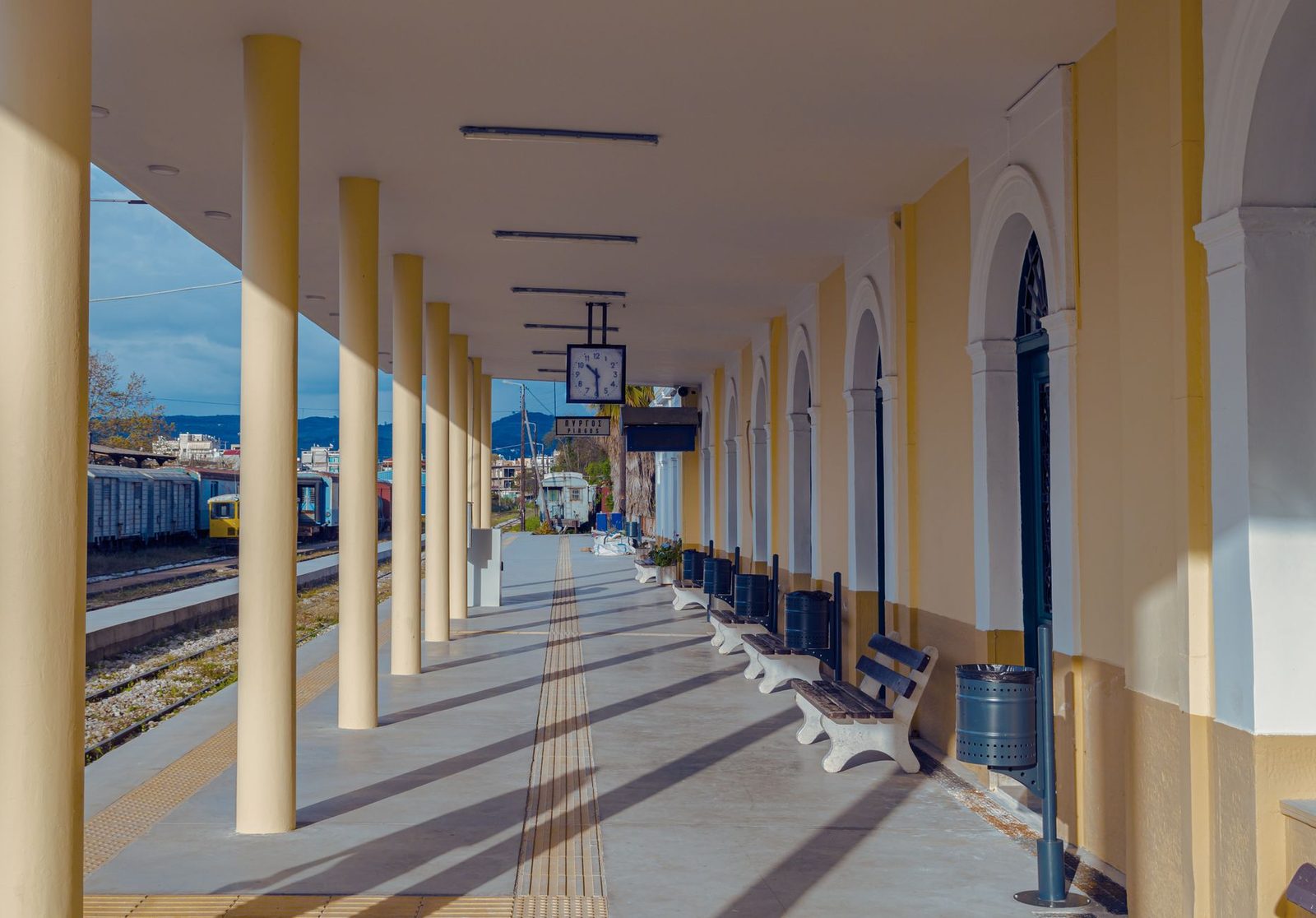
A train that is accessible on paper can still be inaccessible in practice if the platform is the wrong height. European rail lives with several standards: 550 mm in Germany and Austria, 760 mm on German high-speed lines, 550 mm in France for newer platforms, and 250 to 350 mm on many regional lines in central Europe and the Balkans.
The consequence: boarding is either level (ideal — the case for Frecciarossa trains at Rome Termini or ICEs at Berlin Hauptbahnhof), via a mobile ramp brought by a member of staff, or via a lift — and lifts only exist at major stations. At an unstaffed intermediate station, assistance may simply be refused. Regulation 2021/782 does in fact allow operators to restrict assistance to "staffed" stations, provided they publish a list of the stations concerned.
That's why an accessible itinerary is built from major station to major station, even if it means a detour. A connection at Mannheim or Lyon Part-Dieu will always be more reliable than at a regional halt handling 200 passengers a day.
Night trains, coaches, planes: accessibility compared
Accessibility is one of the few areas where rail retains a clear lead over its competitors.
The night train is improving, but slowly. European Sleeper, which operates refurbished second-hand carriages, acknowledges itself that its heritage rolling stock does not offer an accessible compartment on every formation: the operator asks you to get in touch beforehand on a case-by-case basis. ÖBB's new-generation Nightjets, by contrast, include an accessible compartment with an adapted bathroom as part of the original design — a genuine step up, limited only by the number of units in service. For a night in a sleeper, a blackout sleep mask and foam earplugs are hardly a luxury: accessible compartments are often located at the end of the carriage, near the doors and the staff thoroughfare.
The long-distance coach remains the most difficult mode. FlixBus does carry wheelchair users but requires several days' notice and cannot guarantee access on all its partners' vehicles, as the fleet is a mixed bag. Regulation (EU) 181/2011, which governs coach travel, also provides for free assistance, but with 36 hours' notice and only at "designated terminals" — far fewer in number than railway stations.
Air travel is governed by Regulation (EC) 1107/2006, with well-honed assistance at airports, but the major drawback is well known: your own wheelchair travels in the hold, with a real risk of damage. Disabled travellers' organisations have been saying so for years, and it is precisely what rail law avoids, since the wheelchair stays with its user.
Car-sharing largely falls outside the regulatory framework: BlaBlaCar simply puts private individuals in touch with one another, and accessibility depends entirely on the vehicle and the driver's goodwill. Best kept for short trips, with an explicit conversation before booking.
When assistance doesn't turn up: your remedies
It happens, and more often than people admit: the staff member doesn't show up, the ramp is broken, the information wasn't passed on to the connecting station. The European regulation then gives you concrete leverage.
- Get it recorded on the spot. Ask the train manager or the station agent for a written statement, or failing that note the time, the train number and the name of the service you contacted. A time-stamped photo of the platform carries a lot of weight with a complaints department.
- Insist on re-routing. If you miss your train for lack of assistance, that is a failure by the carrier: you are entitled to the next available train at no extra cost, or to a full refund.
- Claim the standard compensation. The thresholds in the regulation apply just as they do for any passenger: 25% of the ticket price for a delay of 60 to 119 minutes, 50% from 120 minutes.
- Claim for damaged equipment. Full repair or replacement, with no ceiling, plus temporary replacement equipment where possible.
- Escalate to the national body. In France, that means the Médiateur du Tourisme et du Voyage and then the Autorité de régulation des transports (ART); in Germany, the Schlichtungsstelle für den öffentlichen Personenverkehr (SÖP); at European level, the network of national enforcement bodies designated by each state.
Timing: most operators require a complaint within three months of the journey and must reply within one month (three months at most in complex cases).
Planning an accessible journey: the six-step method
- Map the stations, not just the cities. Before settling on an itinerary, check the facilities at your departure, arrival and connecting stations on the national websites (SNCF Gares & Connexions, bahnhof.de for Germany, rfi.it for Italy).
- Book the ticket and the wheelchair space together, as early as possible, ideally by phone with the dedicated service rather than online — web interfaces handle adapted spaces poorly.
- Allow generous connection times. Forty-five minutes minimum, an hour at hubs such as Frankfurt, Zurich or Milan. The regulation protects you, but a margin saves you having to use it.
- Confirm 48 hours beforehand. A reminder call to the assistance service in each country you pass through costs one phone call and eliminates 80% of failures.
- Pack what you need to stay self-sufficient. A high-capacity power bank to recharge an electric wheelchair or an infusion pump, since onboard sockets aren't always working, plus a medication case with labelled compartments, handy at border checks where you may need to account for a course of treatment.
- Arrive early. Operators generally ask you to check in 30 minutes before departure, 45 to 60 minutes for Eurostar because of UK border controls.
What's set to change in the coming years
Two European projects are worth following. The first is the PRM technical specification for interoperability (PRM TSI), which progressively requires standardised platform heights, duplicated audio and visual announcements and adapted toilets with every refurbishment of rolling stock or stations. Every new trainset ordered in Europe — SNCF's TGV M, Eurostar Celestia, the new-generation Nightjet — builds these requirements in from the design stage, which means the accessible fleet grows at the pace of fleet renewal, roughly 3 to 4% a year.
The second is integrated ticketing. As long as an international journey consists of two or three separate transport contracts, the assistance chain will remain fragile. The European Commission's work on the single ticket and multimodal booking explicitly covers the transfer of assistance requirements between operators — that is probably the development that will change life most for passengers with reduced mobility, far more than the rolling stock itself.
In the meantime, the best protection remains documentary: know Regulation (EU) 2021/782, cite it by number when you need to, and keep a written record of every request. An accessible travel handbook, read before you set off, often saves more time than an hour on the phone. European law is among the most protective in the world when it comes to rail mobility: all that's usually missing is informed passengers to enforce it.