Short answer: no European operator officially publishes its seat widths, but the general figures are known and wildly uneven: expect around 43 to 45 cm of seat width in second class on the most densely configured trainsets (Ouigo, some ICEs, Frecciarossa Standard) versus 50 to 53 cm in first class or in a lounge car. Yet real comfort isn't decided by those centimetres but by three details: the presence of a liftable centre armrest, the choice of an isolated seat (2+1 configurations in first class, solo seats facing the window) and legroom, which ranges from 70 cm on a densely packed TGV to more than 95 cm in a face-to-face bay with a table. On night trains, the critical factor is berth length: roughly 190 cm on an ÖBB Nightjet, slightly less on the older carriages leased by some private operators — above 1.90 m, you need to book a whole compartment or choose a single cabin rather than a bunk berth.
There's a blind spot running through all the literature on European rail travel. You'll find dozens of guides on passes, deals and your rights when trains are delayed — and almost nothing on a perfectly ordinary question: am I going to fit in this seat for seven hours? A question that concerns a great many people: tall travellers, larger travellers, people with broad shoulders, women in late pregnancy, anyone with a painful hip or knee who can't stay folded at 90 degrees.
The good news is that European rail still offers room to manoeuvre that aviation lost long ago: you can usually stand up, walk around, change carriages, settle in at the bar, and above all choose your seat when booking with a precision almost nobody actually makes use of. So here's what you need to know about the real dimensions of European trains in 2026, and how to turn a journey you dread into one that's merely long.
Why European train seats are so uneven
There is no European standard imposing a minimum seat width on passenger trains. The technical interoperability rules (the "Rolling stock" TSIs issued by the European Union Agency for Railways) cover safety, exits, accessibility for passengers with reduced mobility and fire resistance — not seating comfort. Each operator is therefore free to strike its own balance between number of seats and space per seat.
And that balance has shifted. Since the market opened to competition and low-cost rail offers arrived, the dominant logic has been densification: adding rows, removing face-to-face bays, reducing seat pitch. Three telling examples:
- SNCF's Ouigo trainsets are TGV Duplex units reconfigured to carry around 1,268 seats against ~510 to 630 on a conventional TGV Inoui of the same length. The gain comes from scrapping first class, the bar and the luggage space.
- Trenitalia's Frecciarossa 1000 offers four service levels (Standard, Premium, Business, Executive) within the same trainset: the same Milan–Rome run can be done in a narrow 2+2 seat or in a swivelling 1+1 armchair depending on what you pay.
- Deutsche Bahn, conversely, has been criticised in Germany for the seats on its ICE 4s, judged firmer and narrower than those of the 1990s ICE 1s. The operator revised the padding on later series.
The practical takeaway: comfort doesn't depend on the country, it depends on the trainset and the class. A brand-new ICE 3 in second class is more comfortable than an old InterCity in first.
The ballpark figures to know before booking
The figures below are approximate values cross-checked against manufacturers' technical data sheets (Alstom, Siemens Mobility, Stadler, Hitachi Rail) and the configurations published by operators. They vary by series and refurbishment: treat them as reference points, not guarantees.
| Seat type | Indicative seat width | Indicative legroom |
|---|---|---|
| Densified second class (Ouigo, Avlo, iryo Inicial) | 43–45 cm | 70–75 cm |
| Standard second class (TGV Inoui, ICE, Eurostar Standard) | 45–47 cm | 75–85 cm |
| First class / Comfort / Business | 50–53 cm | 90–100 cm |
| Executive / Prima / lounge car | 55 cm and above, individual armchair | 110 cm and above |
| Night train berth (Nightjet, European Sleeper) | 70–75 cm wide, ~190 cm long | — |
What to remember: moving from second to first class gains you 5 to 8 cm of seat width, but above all it changes the configuration — you go from 2+2 to 2+1, so a one-in-three chance of a seat with no immediate neighbour. It's often this change of configuration, rather than the centimetres, that makes the journey bearable.
The centre armrest: the real criterion
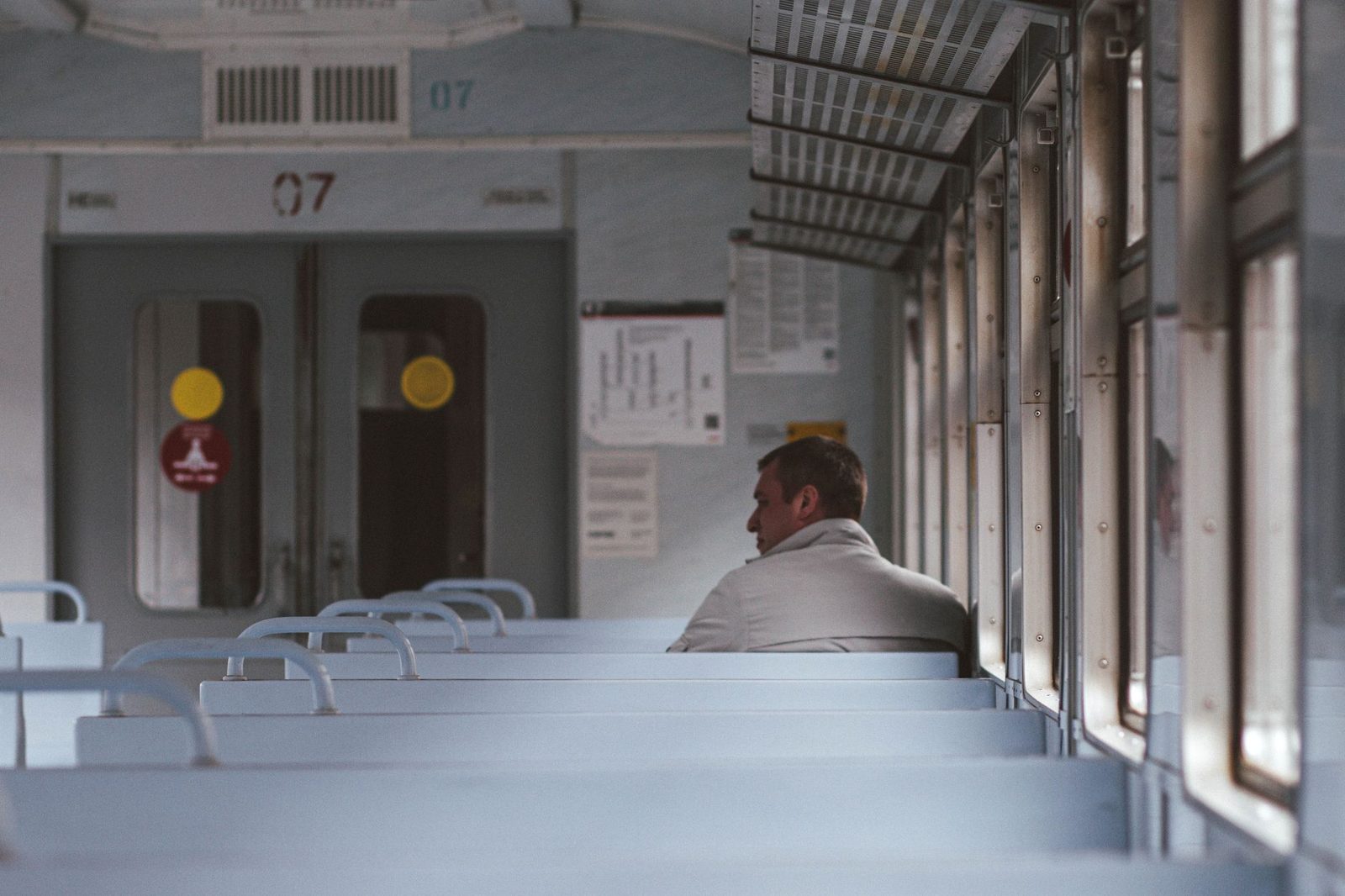
On a 2+2 seat, the centre armrest is the decisive element. If it's fixed, it mechanically reduces the usable width and can become painful on a long journey. If it's liftable, two travellers who know each other reclaim a shared space that's far more liveable.
- Liftable on most TGV Inoui, ICE, Frecciarossa Standard and ÖBB Railjet trains.
- Fixed or very short on certain regional trainsets and on several low-cost configurations.
- In 2+1 first class, the solo seat has no neighbour at all: it's the best option whenever it can be booked.
Booking tip: on SNCF Connect, DB Navigator, ÖBB and Trenitalia, the carriage plan appears when you choose your seat. The solo seats in first class, the window-facing seats in quiet areas and the seats at the end of the carriage near the doors (more clearance in front of you) go first. Booking ten days ahead rather than the day before does more for your comfort than any accessory.
Tall travellers: the legroom question
Above 1.85 m, the problem is no longer width but depth. Three configurations to go for, in this order:
- The face-to-face bay with a table, in second as well as first class. This is where you can genuinely stretch your legs — provided there aren't four of you. Book early and you can target these bays on TGVs, ICEs and Dutch or German InterCity trains.
- The seats at the end of the carriage, against the partition, which often give you 10 to 20 cm more.
- The seats facing the luggage area or the doors, common on Railjets and ICEs: mediocre view, superior comfort.
To avoid: the "back-to-back" seats in densified carriages, the seats above the bogies on double-deck trainsets (raised floor) and the upper deck of a TGV Duplex if you struggle with narrow stairs — the access staircase is one of the most underestimated friction points of high-speed travel.
For long runs like Paris–Barcelona or Frankfurt–Vienna, a travel lumbar cushion effectively compensates for a seat that's too deep or a backrest that's too upright: it pushes the pelvis back and saves you six hours with your knees against your neighbour's tray table. Same logic for your ankles: a simple inflatable footrest transforms a seat with nothing in front of it.
Night trains: berth length above all
This is where nasty surprises cost the most, because you're spending the night there and you can't change places at 2 a.m. The useful reference points for 2026:
- New-generation ÖBB Nightjet (the Siemens trainsets in service since late 2023): berths of around 190 cm, enclosed individual mini-cabins, cabins with 1, 2, 3 or 4 beds. The mini-cabins are an excellent option for solo travel, but they are tight on height: you can't sit fully upright in them.
- European Sleeper (Brussels–Berlin–Prague, plus the extension towards Hamburg and Italy announced for 2026): refurbished older stock, comfort varies by carriage. The 6-berth couchette compartments are the most densely packed on the European market.
- Snälltåget and the Swedish night services: 1980s carriages refurbished, 6-berth compartments or sleeper cabins.
- Trenitalia Intercity Notte: 1, 2 and 3-berth cabins with a washbasin in the "Comfort" carriages.
Three rules that save a night:
1. Above 1.90 m, aim for a sleeper cabin (sleeping car, Schlafwagen) rather than a couchette (Liegewagen): the bed is wider and longer, and the cabin can be booked for your exclusive use. 2. Book the lower berth. You gain headroom, avoid the ladder, and can sit up to put your shoes on. 3. If the budget allows, take the whole compartment (the "entire cabin" option exists at ÖBB and Trenitalia). It's often cheaper than you'd think for two people, and it settles the space question in one go.
A blackout sleep mask and earplugs remain the two best-value accessories on a night train, whatever your build: the lights of the stations you pass through and the technical stops at 3 a.m. are non-negotiable.
What European law says (and what it doesn't)
Let's be clear: Regulation (EU) 2021/782 on rail passengers' rights, applicable since 7 June 2023, does not guarantee a comfortable seat. It guarantees information, re-routing, compensation in the event of delay, and strengthened rights for disabled passengers and those with reduced mobility (free assistance, maximum notice period cut to 24 hours).
Two practical consequences:
- Body size is not in itself a recognised disability under the regulation. You cannot demand a wider seat on that basis. On the other hand, if a functional limitation is involved (joint pain, difficulty remaining seated, obesity with an impact on mobility), persons-with-reduced-mobility status may apply: it's the operator's assistance service that assesses this — Accès Plus for SNCF, the Mobilitätsservice-Zentrale for DB, Sala Blu for Trenitalia. Assistance is free and gives access to specific seats, often with more clearance.
- No European operator applies a "mandatory second seat" policy of the kind some airlines have. You can, however, voluntarily buy two adjacent seats on most ticketing sites: simply book two tickets, then select two seats side by side on the carriage plan. On trains with compulsory reservation (TGV, Eurostar, Frecciarossa, AVE), this is the most reliable method.
For journeys without compulsory reservation — German regional services, Switzerland, most of the Interrail offer in central Europe — the optional reservation costing a few euros remains the best comfort investment of the trip. Nothing is worse than a Munich–Zurich run standing in a corridor.
Coaches and ride-sharing: what to watch out for
Comparing modes makes sense when body size enters the equation, and the train isn't always the best placed.
- Long-distance coach (FlixBus, BlaBlaCar on its partner routes, RegioJet): seats are generally 2+2 with a width comparable to dense second class, but legroom is tighter and you can't get up and walk around. Beyond five hours, it's the hardest mode. The front seats on the upper deck of double-deck coaches and the aisle seats in the front row offer the most clearance.
- Ride-sharing: variability is total. The most useful information isn't on the trip listing but in the message exchange before departure — simply asking whether the front seat is available often settles the matter. Drivers who advertise "max 2 passengers in the back" are effectively stating a comfort policy.
- Flying: this is the mode where "extra seat" policies formally exist, but also the one with the narrowest widths (around 43–44 cm on European low-cost carriers).
On paper, the train remains the most accommodating mode: you can buy space by class, choose your seat, and get up and move. You just have to know where to look.
The pre-booking checklist
- Identify the trainset, not just the route. The train number will often tell you whether it's an ICE 4, a Railjet or an old InterCity (the DB and ÖBB sites display the rolling stock).
- Book via the carriage plan, never with automatic seat allocation. Aim for solo in first class, a face-to-face bay in second, end of carriage as a default.
- Check whether the centre armrest is liftable on the trainset concerned — traveller forums and operators' rolling stock sheets are more reliable than commercial pages.
- On a night train, choose a sleeper cabin rather than a couchette, pick the lower berth, and consider taking the whole compartment.
- Plan for the long haul: a compact insulated water bottle saves trips back and forth to the bar when moving down a narrow corridor is a chore, and a luggage compression strap lets you squeeze your bag down to the cabin format of the strictest operators.
- If a functional limitation applies, contact the operator's assistance service at least 24 hours in advance: it's free, and it gives access to roomier spaces and help with boarding.
One uncomfortable fact remains: in 2026, no European operator communicates frankly about the dimensions of its seats, even though those figures exist in the procurement specifications. Passenger associations — from FNAUT in France to the Fahrgastverband PRO BAHN in Germany — regularly push for this data to be published at the point of booking, as baggage rules already are. Until that happens, the information stays in travellers' own hands. And one simple piece of advice is worth all the tables put together: when a journey runs beyond four hours, the price difference between second and first class booked early is often less than €20. For an out-of-the-ordinary build, it's the most profitable trade-off in European rail travel.
Sources and references: Regulation (EU) 2021/782 on rail passengers' rights and obligations; technical specifications for interoperability of the European Union Agency for Railways (ERA); rolling stock data sheets from Alstom, Siemens Mobility, Stadler and Hitachi Rail; service configurations published by SNCF Voyageurs, Deutsche Bahn, ÖBB, Trenitalia, Renfe and European Sleeper; assistance services Accès Plus (SNCF), Mobilitätsservice-Zentrale (DB) and Sala Blu (Trenitalia).