Short answer: in Switzerland, three tools bring down the price of train travel, and they don't target the same travellers. The half-fare card (Halbtax) from CFF costs roughly 190 CHF for a year (120 CHF for a promotional first subscription, depending on the period) and halves nearly every ticket in the country — trains, postal buses, boats and some mountain railways: it pays off from about 380 CHF of journeys, i.e. three to four Zurich–Geneva return trips. The Swiss Travel Pass, reserved for residents of other countries, starts at around 244 CHF for 3 consecutive days in 2nd class and includes urban transport and museums: it wins as soon as you string together two major scenic journeys a day. Supersaver discounted tickets from CFF, meanwhile, offer –20% to –70% on one specific train, with no card at all, provided you book early and accept the timetable. Simple rule: a highly mobile 3- to 8-day stay → Swiss Travel Pass; a longer stay, repeat visits or cross-border life → Halbtax + Supersaver; only one or two journeys → Supersaver alone.
Switzerland is the country in Europe where the train works best and costs the most. A full-fare Zurich–Geneva runs around 90 CHF in 2nd class, Lucerne–Interlaken around 33 CHF, and a single Saint-Moritz–Zermatt day can top 150 CHF if you buy at the counter that same morning. Yet very few travellers pay those prices: CFF (SBB/FFS) has built a dense but counter-intuitive discount system, where the right combination depends entirely on the length of your stay and your residency status.
This guide compares the three routes — Halbtax, Swiss Travel Pass, discounted tickets — with autumn 2026 fares, hard break-even figures and the pitfalls that cost dearly at the border.
1. The comparison table: who buys what
| Tool | 2026 price (2nd cl.) | Who it's for | Covers | Breaks even from |
|---|---|---|---|---|
| Halbtax (CFF half-fare) | ≈ 190 CHF / year | Residents, cross-border commuters, regular visitors | 50% off trains, buses, boats, city trams | ≈ 380 CHF of journeys/year |
| Halbtax Plus | 800 / 1,500 / 3,000 CHF of credit | Heavy regular travellers | Bonus-topped travel credit | Very intensive use |
| Swiss Travel Pass 3 days | from ≈ 244 CHF | Non-resident tourists | Train, bus, boat, urban transport, 500+ museums | 2 major journeys/day |
| Swiss Travel Pass Flex | ≈ +10% vs consecutive | Stays with stationary days | Same, days chosen within 1 month | 3 travel days within 1 month |
| Supersaver (discounted) | –20% to –70% off full fare | Anyone with a planned journey | One specific train, non-exchangeable | Immediately, if the timetable suits |
| Saver Day Pass | ≈ 29–88 CHF (less with Halbtax) | Days with several journeys | National network for 1 day | 2 journeys in the same day |
CFF prices change every year at the December timetable change: always check the current grid on sbb.ch before buying an annual card in November.
2. The half-fare card (Halbtax): the resident's trump card
What it actually does
The Halbtax is not a partial discount card like Germany's BahnCard 25: it's a near-universal 50% off the integrated Swiss network. CFF, BLS and SOB trains, CarPostal buses, lake boats, many urban networks (Zurich, Geneva, Basel), and 50% too on many scenic trains such as the Glacier Express or the Bernina Express — the compulsory seat reservation, however, stays at full price.
Unlike Spanish or Italian senior cards, there is no senior Halbtax: everyone pays the same price after 25. Under-25s get a markedly cheaper youth fare, and children aged 6 to 16 travel free with a Junior card (around 30 CHF/year) when accompanied by a parent.
The break-even calculation
Take the total you'd spend at full fare over twelve months. If that total exceeds 380 CHF, the Halbtax wins. In practice:
- 4 Zurich–Geneva return trips (≈ 180 CHF per return at full fare) = 720 CHF → with Halbtax: 360 CHF + 190 CHF for the card = 550 CHF, a saving of 170 CHF.
- A single one-week tourist stay: rarely worth it on its own, unless combined with expensive scenic journeys.
One point French visitors often miss: the Halbtax can be bought online from abroad on sbb.ch, loads into the SBB Mobile app and requires no Swiss address. That's what makes it attractive for regulars heading to Geneva, Basel or Zurich from Lyon, Mulhouse or Paris.
The international ticket trap
The Halbtax applies only to the Swiss portion. A Paris–Zurich on TGV Lyria stays at the French price as far as Basel; only the Basel–Zurich section is discounted if you buy two separate tickets — which breaks your protection if you miss a connection. On that point, the European rules on journey continuity are worth a pause: we've laid them out in our guide to missed train connections.
3. The Swiss Travel Pass: excellent, but only if you really move around
What's included
The Swiss Travel Pass is Switzerland Tourism's official tourist pass, reserved for people not domiciled in Switzerland or Liechtenstein. It covers:
- the entire train, bus and boat network (excluding mountain railways, often at –50%);
- urban transport in more than 90 towns and cities, trams and buses included;
- free entry to over 500 museums;
- completely free travel for children up to 16 accompanied by a parent holding a pass (Swiss Family Card).
Options run from 3 to 15 days, in consecutive or Flex form (days chosen within a one-month window, roughly 10% extra). As a rough guide, budget 244 CHF for 3 days, 370 CHF for 6 days and 429 CHF for 8 days in 2nd class, with fares revised every year.
The real threshold
A 3-day pass at 244 CHF pays off if you spend more than 81 CHF a day on transport. In practice, that means at least one long journey per day: Zurich–Lucerne–Interlaken on day 1, Interlaken–Montreux on the GoldenPass Line on day 2, Montreux–Geneva plus a boat trip on day 3. If your programme looks more like "three nights in Lucerne with two day trips", the pass loses out to the Halbtax + discounted tickets combination.
One hugely underrated detail: the pass covers urban transport. In Zurich, a day of tram travel costs around 9 CHF, in Geneva slightly less — over six days, that's 50 CHF that counts in the maths.
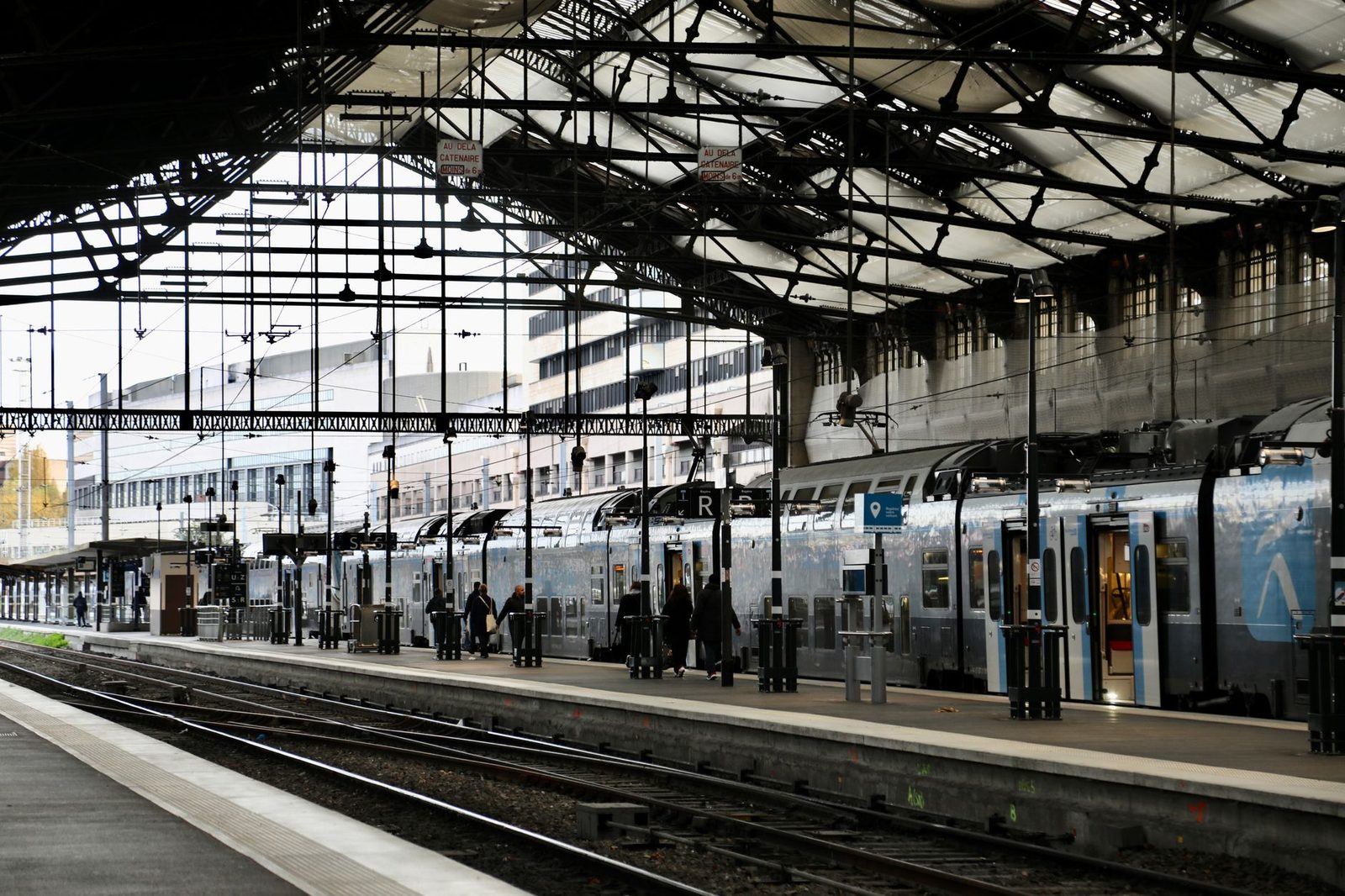
4. Discounted tickets: the route nobody exploits enough
Supersaver: –20% to –70%, with no card at all
Sparbillette / Supersaver Tickets are the Swiss equivalent of SNCF's Prem's or DB's Sparpreis. They appear in the SBB Mobile app as soon as sales open, generally 60 days before departure, and gradually lose their discount. The reduction is shown as a percentage, journey by journey, and stacks with the Halbtax: a Zurich–Lugano at a full fare of around 65 CHF can drop to 20 CHF with half-fare + a –40% Supersaver.
The trade-off: the ticket is tied to one specific train, non-exchangeable and non-refundable. Taking the next train amounts to travelling without a valid ticket, and Swiss conductors have a reputation for being inflexible — the fine starts around 100 CHF.
Saver Day Pass: the variable-price day card
The Saver Day Pass gives unlimited access to the national network for one day. Its price varies with the date and how far ahead you book: expect anywhere from 29 CHF (very early, with Halbtax) to 88 CHF and up (without Halbtax, close to the date). As soon as you plan two intercity journeys on the same day, it's almost always the cheapest option.
The golden rule of timetables
The best fares cluster outside peak hours: before 6:30 a.m., between 9 a.m. and 4 p.m., and after 7 p.m. A Lausanne–Zurich at 10 a.m. on a Tuesday is structurally cheaper than the same journey at 5 p.m. on a Friday. A paper travel notebook helps jot down the time slots you've spotted when comparing several dates — in Switzerland, a one-hour shift can be worth 25 CHF.
5. Building the right combo for your profile
You're coming as a tourist for 4 to 8 days
Go for the Swiss Travel Pass if your itinerary strings together the scenic lines. The great classics — Glacier Express (Zermatt–Saint-Moritz, 8 hrs), Bernina Express (Chur–Tirano), GoldenPass (Montreux–Interlaken) — are included in the pass, but the seat reservation still costs extra: around 49 CHF on the Glacier Express in high season, 20 to 32 CHF on the Bernina. Budget these supplements separately; it's the most common nasty surprise.
You live near the border or come back often
Halbtax + Supersaver, no hesitation. The card pays for itself in three or four trips, and the discounted tickets do the rest. If you're coming from France, weighing up TGV Lyria against alternatives is worth some thought: our pointers for finding a cheap train ticket in Europe apply perfectly to French–Swiss routes.
You're making a single long journey
Neither card nor pass: a Supersaver bought 4 to 8 weeks ahead is enough. With just one Geneva–Zurich return, no card will pay for itself.
You're travelling as a family
The Junior-Karte (around 30 CHF/year) makes all journeys free for 6- to 16-year-olds accompanied by a parent. Pound for pound, it's the best deal on Swiss rail. Families moving from stop to stop will also appreciate a well-compartmented cabin-size travel backpack: Swiss platforms are short, connections tight (often 4 minutes at Olten or Zurich HB) and hard-shell suitcases slow everyone down.
6. Hidden costs and mistakes to avoid
- Mountain railways and cable cars are almost never included. Jungfraujoch, Pilatus, Gornergrat: with the Swiss Travel Pass you get 25% to 50% depending on the line, not free travel. The Jungfraujoch still costs around 120 CHF even discounted.
- 1st class is very expensive in Switzerland (roughly +60% to +70%). It's only justified on long journeys at peak times. A good lightweight sleep mask and noise-cancelling headphones buy more comfort in 2nd class than the 1st-class premium does on a Basel–Lugano.
- International trains require a reservation. On EuroCity services to Italy or ICE trains to Germany, the compulsory or strongly recommended seat adds to the price, pass or no pass.
- Paper tickets at the counter cost more on some regional routes, and several small stations no longer have staff. The SBB Mobile app is effectively the official channel; pack a USB-C power bank, because a ticket inside a dead phone is not a ticket.
- The Swiss Travel Pass is not sold to Swiss residents, and an ID check can happen. A French cross-border worker living in Switzerland isn't eligible.
7. What about long-distance buses in Switzerland?
The domestic long-distance coach market is very limited in Switzerland: the law protects rail services, and internal cabotage is tightly regulated. FlixBus mainly serves cross-border routes (Zurich–Milan, Geneva–Lyon, Basel–Freiburg im Breisgau). For overnight links to Spain or the Netherlands, the most credible Swiss alternative remains the lie-flat seat coach we compared with the night train in our article on Twiliner versus the night train.
In other words: in Switzerland, the choice isn't "train or bus", it's "which rail ticket".
Frequently asked questions
Is the Halbtax valid on mountain trains?
Partly. It gives 50% off most lines integrated into the network (Rhätische Bahn, MOB, Matterhorn Gotthard Bahn) but only 25% to 50% on private funiculars and cable cars, and sometimes nothing at all. Check line by line before you set off.
Can you buy the Halbtax from France?
Yes. The purchase is made online on sbb.ch with a foreign address, and the card is held digitally in the SBB Mobile app. It's the right option for regular travellers to Geneva, Basel or Zurich.
Swiss Travel Pass or Eurail/Interrail for Switzerland?
For a Switzerland-only trip, the Swiss Travel Pass is better: it includes urban transport, boats and museums, which Interrail does not cover. For a multi-country itinerary, Interrail regains the edge, but Switzerland imposes supplements on scenic trains.
Can Supersaver tickets be combined with the half-fare card?
Yes, and it's the most powerful combination in the Swiss system: the discount percentage applies to a price that's already been halved. That's how you find cross-country journeys for under 30 CHF.
What happens if I miss the train on my Supersaver ticket?
The ticket becomes invalid. It is neither exchangeable nor refundable, unless you took out cancellation insurance when buying. If a previous CFF-operated train was delayed, customer service will generally agree to move the passenger, but it isn't an automatic right.
Is there a senior card in Switzerland?
No. Unlike Spain or Italy, CFF has no dedicated senior card: everyone goes through the Halbtax. To compare with what neighbouring countries offer, see our overview of senior rail cards in Europe.
In summary
- Halbtax at ≈ 190 CHF/year: the best option from 380 CHF of annual journeys, buyable from abroad, stackable with discounted tickets.
- Swiss Travel Pass from ≈ 244 CHF (3 days): unbeatable for a highly mobile tourist stay, with museums and urban transport included, but restricted to non-residents.
- Supersaver: –20% to –70% with no card, booking 60 days ahead, a fixed train and no exchanges possible.
- Saver Day Pass: the answer as soon as you make two intercity journeys in the same day.
- Scenic train reservations cost extra (Glacier Express, Bernina) even with a pass: budget for them separately.
- Mountain railways and cable cars remain mostly outside any pass.
- Still torn between itineraries and operators? Compare your options on Gopaxo before buying any card at all.