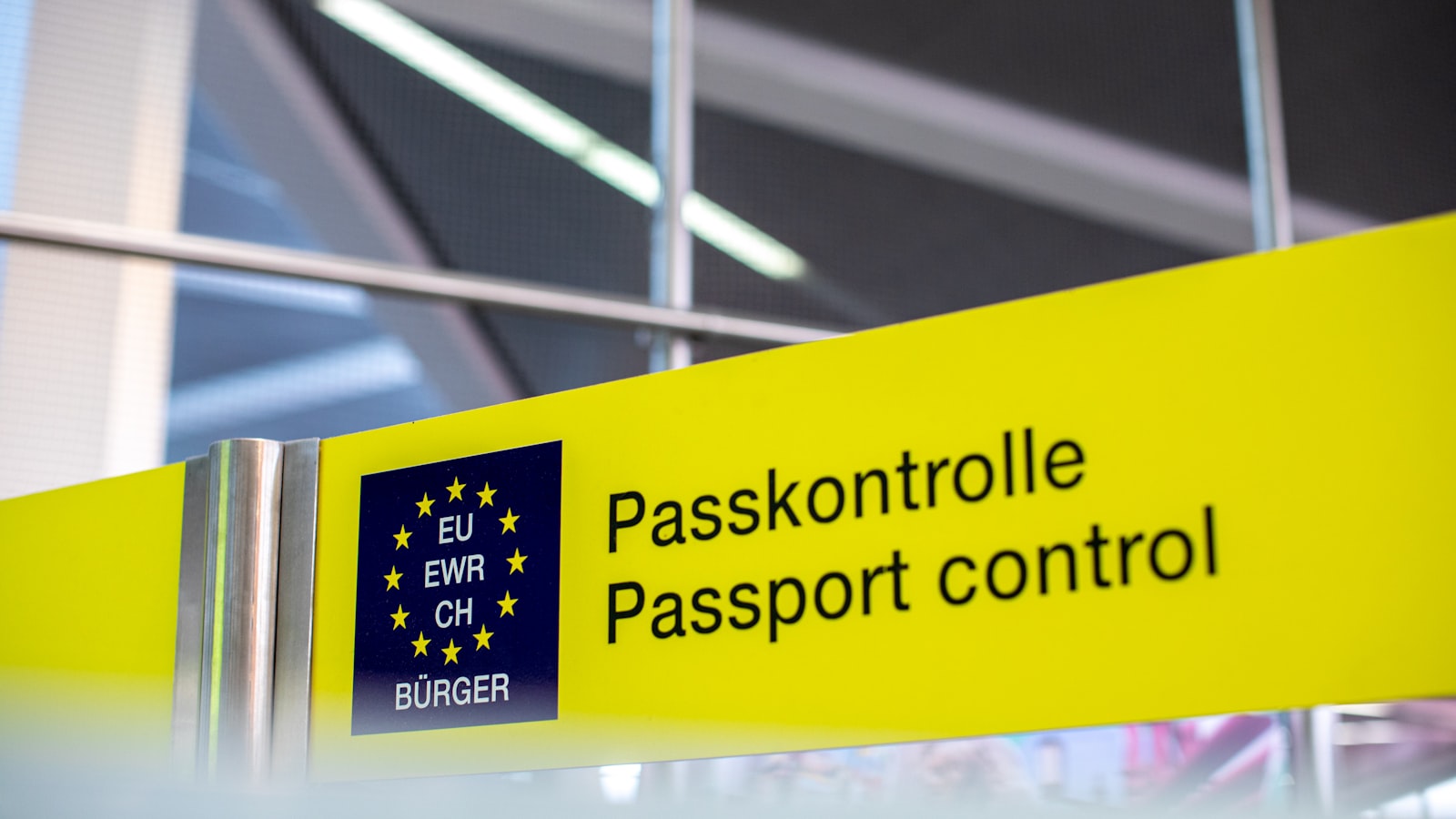
Short answer: the EU Entry/Exit System (EES) is the new biometric border system that replaces passport stamping for non-EU travellers on short stays. It became fully operational across all Schengen external borders on 10 April 2026, after a phased rollout that began on 12 October 2025. The first time you cross, you register your face and fingerprints; later crossings are quicker. EES applies by air, sea and land — so it touches Eurostar, Eurotunnel and international coaches too, but not journeys that stay inside the Schengen area.
If you are planning a European trip this summer, the EES border checks are the single biggest change at the frontier in years. Here is what the system is, who it affects, and how train and bus travellers can keep their crossing smooth.
What the Entry/Exit System (EES) actually is
EES is a centralised EU database that records every entry, exit and refused entry of non-EU nationals crossing the external borders of the Schengen area. Instead of an officer stamping your passport, the system digitally logs your crossing along with your facial image, fingerprints and passport data.
The goal is to enforce the 90/180 rule automatically: non-EU visitors — including British, American, Canadian and Australian travellers — may stay up to 90 days in any rolling 180-day period without a visa. EES counts those days precisely, so overstays are far easier to detect than they were with ink stamps.
The rollout was deliberately gradual. The phased introduction started on 12 October 2025 and the European Commission confirmed the system became fully operational on 10 April 2026, with all 29 Schengen states applying it at their external borders. To absorb the summer rush, member states keep limited flexibility to partially suspend EES for up to 90 days after the rollout, with a possible 60-day extension, if queues get out of hand.
How EES affects train and bus travellers
This is where it matters for rail and coach passengers. EES is not an airport-only system — it applies at every external Schengen border, including land crossings by car, bus and train.
The key thing to understand is the difference between internal and external Schengen journeys:
- Inside Schengen — Paris to Milan, Amsterdam to Vienna, Berlin to Madrid — there is no EES check at all. You cross internal borders freely, exactly as before.
- Into or out of Schengen — London to Paris, or any trip from a non-Schengen country — triggers an EES registration or update.
For most travellers the headline case is the Eurostar and the Channel. Because the UK uses juxtaposed border controls, your EES biometrics are captured before you board on the British side. Eurostar has installed self-service pre-registration kiosks in three areas of London St Pancras International, where you scan your passport and register your face and fingerprints before the ticket gates. Eurotunnel Le Shuttle at Folkestone has built a dedicated pre-registration area for the same purpose. Once you arrive in France, you do not register again until you next leave the EU. For check-in times, luggage rules and on-board classes, our Eurostar travel guide has the details.
If you are weighing the train against flying for that crossing, our breakdown of London–Paris by plane vs train compares the real door-to-door times now that biometric checks apply to both.
What to expect at the border in 2026
The early weeks were bumpy. Some airports reported queues of up to three hours during the phased period, and on 10 April 2026 several UK rail terminals had not yet switched on full EES registration for every traveller, citing problems connecting to the French-side software. Expect the system to settle through the summer as staff and travellers get used to the kiosks.
A few practical points for rail and coach passengers:
- Your first crossing is the slow one. Capturing fingerprints and a photo takes a couple of minutes; later crossings within the three-year data window are much faster.
- Arrive earlier than usual at Eurostar and Eurotunnel terminals during peak summer dates, especially for the first trip of your season.
- EES is free. There is no fee to register, and no app replaces the border kiosk for the first registration.
- A separate scheme, ETIAS, a pre-travel authorisation for visa-exempt visitors, is expected to follow once EES is fully bedded in — it is not yet in force, so do not pay any site claiming to sell it.
Because the checks only bite when you enter or leave Schengen, one easy way to dodge the busiest border points is to compare your whole route first. Compare trains, buses, flights and carpooling on Gopaxo to see which option crosses the frontier where queues are shortest — and whether an internal Schengen leg avoids a second check altogether.
In short
- EES is the EU's biometric Entry/Exit System; it replaces passport stamps for non-EU travellers on short stays.
- It became fully operational on 10 April 2026, after a phased start on 12 October 2025, across all 29 Schengen states.
- It records your face, fingerprints and passport data and enforces the 90/180-day limit automatically.
- It applies by air, sea and land — including Eurostar, Eurotunnel and international coaches — but not inside Schengen.
- Eurostar pre-registration kiosks sit at London St Pancras; Eurotunnel has a kiosk area at Folkestone.
- Your first crossing is slowest; budget extra time at peak summer dates.
Frequently asked questions
Does EES apply to train journeys?
Yes, when the train crosses an external Schengen border. Eurostar and Eurotunnel crossings between the UK and France register you for EES. Trains that stay inside the Schengen area, such as Paris–Milan, are not affected.
Do EU citizens need to register for EES?
No. EES applies to non-EU nationals on short stays. EU, EEA and Swiss citizens use their normal lanes and are not enrolled in the system.
How long does EES registration take?
The first registration — scanning your passport and capturing your fingerprints and photo — takes a couple of minutes per person. After that, your data is stored for three years, so subsequent crossings are much quicker.
Is EES the same as ETIAS?
No. EES records your border crossings with biometrics. ETIAS is a separate, not-yet-active pre-travel authorisation for visa-exempt visitors, expected to launch after EES is fully running. Ignore any website that claims to sell ETIAS today.
How can I avoid long border queues?
Register early, travel mid-week where possible, and arrive ahead of time at Eurostar and Eurotunnel terminals. Comparing your full route also helps — a search on Gopaxo shows trains, buses, flights and carpooling side by side so you can pick the smoothest crossing.
Borders are changing, but the smart move is the same as ever: plan the route, compare every mode, and leave a little extra time for that first biometric check.