Short answer: in Greece, trains are now good for only two things — the Athens–Thessaloniki corridor (about 4 hr 15 min on an InterCity, €25 to €45 with Hellenic Train) and a handful of Peloponnese services; everything else is done by KTEL coach (Athens–Patras ≈ 3 hr, €22) or by ferry. In Turkey it is the opposite: TCDD's YHT high-speed trains link Istanbul–Ankara in 4 hr 30 min for 500 to 700 TRY (€12 to €18), and the long-distance coach (Metro Turizm, Kâmil Koç, Pamukkale) remains king, with comfort well above the European average. Between the two countries, no train runs directly: the link is made by coach, Thessaloniki–Istanbul in 10 to 12 hr for €35 to €60. Golden rule: book Turkish YHT trains 7 to 10 days ahead (they fill up) and buy your Greek KTEL tickets straight at the bus station counter when the regional website rejects your card.
Greece and Turkey are the two south-eastern extremities of overland travel in Europe, and the two countries where the habits you picked up in France, Germany or Spain simply stop working. Here, the train is not necessarily the default option: it can be excellent (Turkish high speed is one of the cheapest on the continent) or almost non-existent (the Greek network has lost half of its commercial lines in fifteen years).
The real problem is not the price — it stays low on both sides — but how hard the offer is to read. Greek coaches are run by dozens of separate regional cooperatives, each with its own website. Turkish timetables change without notice in the low season. And most international search engines display, at best, half of the departures that actually run.
This guide goes through, operator by operator, what can actually be booked in November 2026.
1. Greece: Hellenic Train, a network stripped back to the essentials
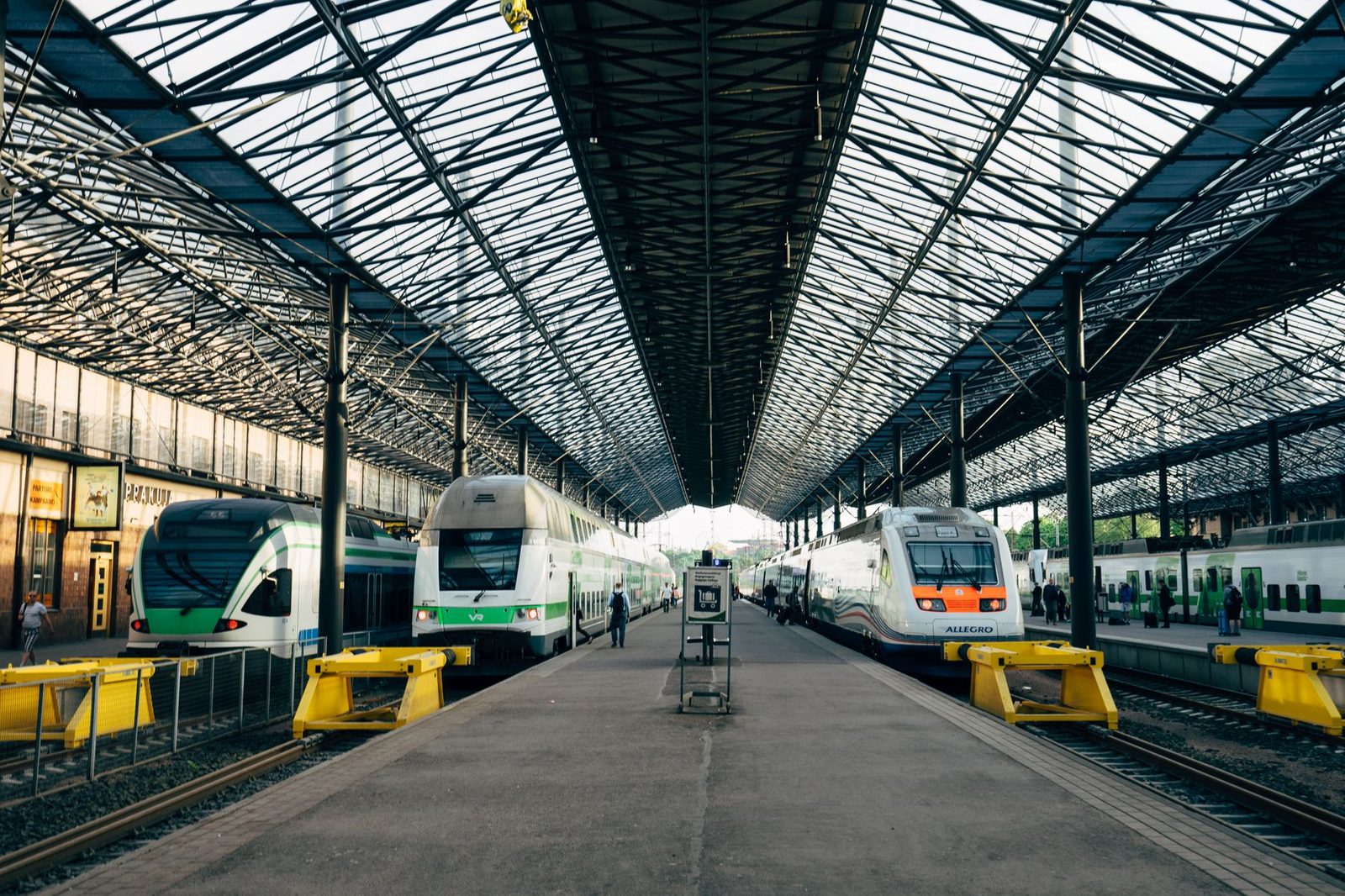
Hellenic Train (formerly TrainOSE, a subsidiary of the Italian group Ferrovie dello Stato) runs almost all of the country's passenger trains, on a commercial network that has shrunk considerably. Three categories to know:
- InterCity (IC): the fast trains on the main corridor, compulsory seat reservations, 1st and 2nd class, a power socket at every seat.
- Regional / Proastiakos: stopping and suburban trains, tickets bought at the station or on board, no reservation.
- Suspended lines: several branches in the Peloponnese and central Greece are replaced by Hellenic Train replacement buses, sold on the same ticket.
The Athens–Thessaloniki corridor
This is the backbone and, honestly, the only Greek rail link that stands comparison with the coach. Departure from Athens Larissa (Stathmos Larissis), arrival at Thessaloniki Neos Sidirodromikos Stathmos.
| Route | Mode | Typical duration | Typical price |
|---|---|---|---|
| Athens–Thessaloniki | InterCity | 4 hr 15 min – 5 hr 15 min | €25–45 |
| Athens–Thessaloniki | KTEL coach | 6 hr – 7 hr | €45–50 |
| Athens–Patras | KTEL coach | 3 hr | ≈ €22 |
| Athens–Kalambaka (Meteora) | Direct IC train | ≈ 4 hr 30 min | €20–30 |
| Thessaloniki–Alexandroupoli | Train | 6 hr – 7 hr | €20–30 |
Booking is done on tickets.hellenictrain.gr or at the station. The site accepts foreign cards, but requires 3-D Secure validation that can be temperamental from abroad: if the payment fails twice, switch to the mobile app, which is more forgiving. Tickets are issued in the passenger's name and the conductor asks for ID on IC services.
One thing travellers find out too late: Greek trains are unevenly air-conditioned, and delays of 20 to 40 minutes remain common off the main corridor. Bring something to keep you busy, and for overnight journeys or early-morning connections, a sleep mask with earplugs makes a real difference on ICs where seat recline is limited.
The Peloponnese and the Odos line
The Peloponnese metre-gauge network is today reduced to the Patras–Aigio section and the Proastiakos line from Athens to Kiato, extended towards Aigio. For Olympia, Nafplio, Kalamata or Sparta: it's the KTEL coach, full stop.
2. KTEL: making sense of the Greek coach mosaic
KTEL is not a company, it is a system. Each prefecture (nomos) has its own coach operators' cooperative: KTEL Attikis, KTEL Achaias, KTEL Messinias, KTEL Lasithiou in Crete, and so on. The upshot: there is no single reliable website covering the whole country.
The practical rules that do work:
- In Athens, two terminals: Kifissos (Terminal A) for the west, the north and the Peloponnese (Patras, Igoumenitsa, Thessaloniki, Kalamata); Liosion (Terminal B) for the centre (Delphi, Lamia, Trikala). Don't get the wrong terminal: they are 25 minutes apart by taxi.
- The website of the departure cooperative is the authoritative one. For Athens–Delphi, that's ktel-fokidas.gr; for Athens–Patras, ktelachaias.gr.
- Online payment often fails with non-Greek cards. The counter takes cash and, increasingly, contactless.
- One piece of hold luggage + one piece of hand luggage is the norm; beyond that, the driver charges case by case, in cash.
- No reliable on-board Wi-Fi on most regional lines. USB sockets are spreading on newer vehicles, but a 20,000 mAh power bank is still the sensible reflex on a 7-hour Athens–Igoumenitsa run.
For the islands, the logic changes completely: the coach takes you to the port (Piraeus, Rafina, Igoumenitsa), and the ferry does the rest, with Blue Star Ferries, Minoan Lines or Anek. Winter timetables are markedly thinner from November onwards.
3. Turkey: TCDD and bargain-price high speed
TCDD Taşımacılık runs Turkey's trains, and its YHT (Yüksek Hızlı Tren) high-speed offer is one of the best rail bargains in Europe, broadly defined.
The genuinely useful routes in November 2026:
- Istanbul (Söğütlüçeşme or Halkalı) – Ankara: about 4 hr 30 min, several departures a day, 500 to 700 TRY in economy class.
- Ankara – Konya: 1 hr 45 min to 2 hr, around 300 TRY.
- Ankara – Sivas: about 5 hr, a line opened in 2023, still lightly used.
- Ankara – Izmir: the route is still served by conventional trains and by air; the high-speed line is not in commercial service.
- Doğu Ekspresi (Ankara–Kars): the scenic night train to eastern Anatolia, about 24 hr, sleeping compartments (yataklı) to be booked well in advance, especially in winter when it becomes a tourist attraction in its own right.
Booking is done on ebilet.tcddtasimacilik.gov.tr or in the TCDD Taşımacılık app. Two things that baffle foreigners:
- The site requires an ID number: non-residents enter their passport number in the relevant field. It works, but the form is in Turkish by default — switch the language at the top right.
- Sales generally open 15 to 30 days before departure, not six months. There's no point looking for a March ticket in November.
YHT prices barely vary with the purchase date: there is no aggressive yield management as at SNCF or Renfe. What you gain by booking early is the seat, not the fare — logic close to the one described in our guide to Dutch trains.
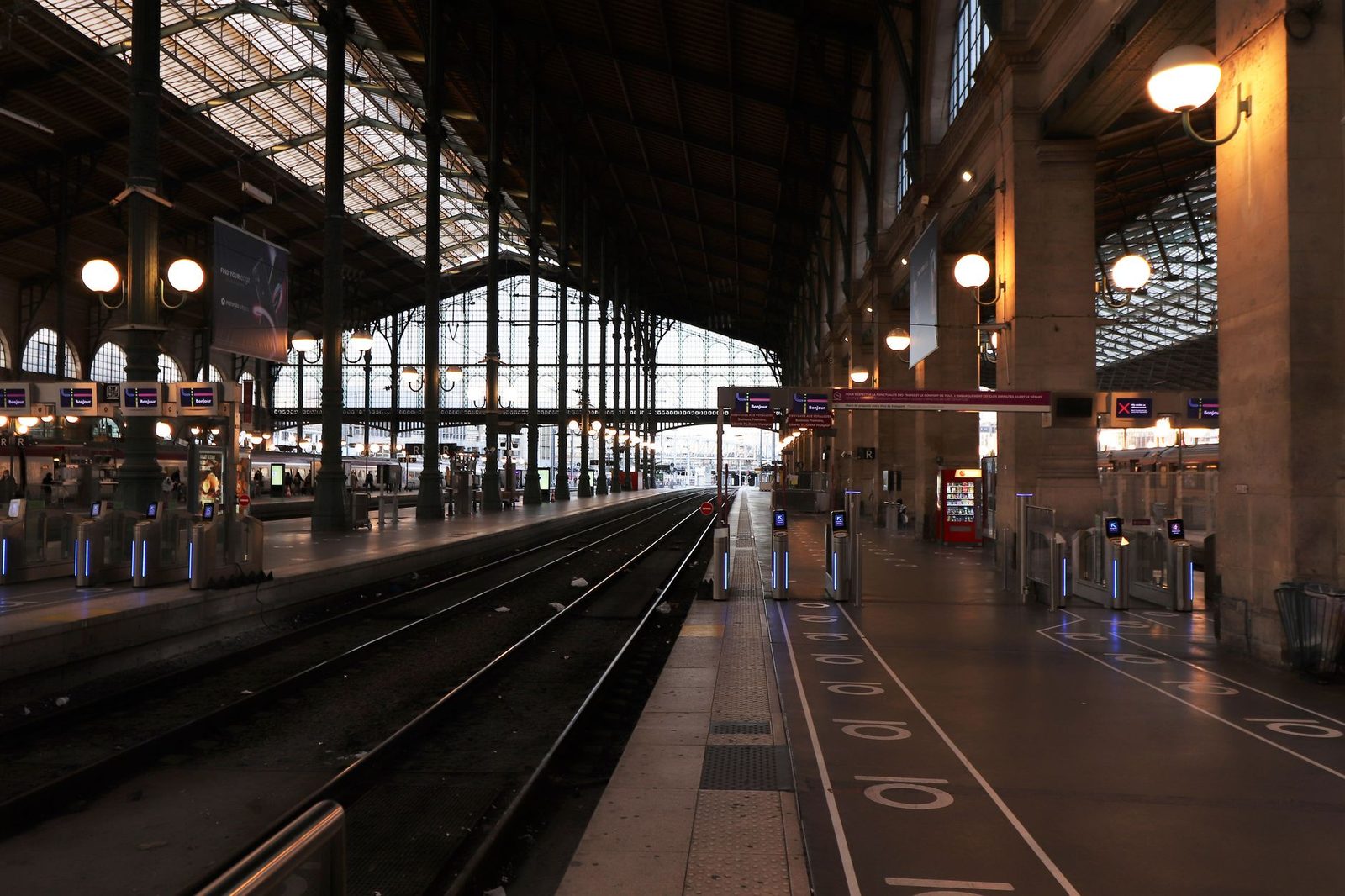
4. Turkish coaches: the benchmark for long-distance comfort
Turkey remains one of the countries where the long-distance coach is a genuine transport product, not a low-cost fallback. The major operators — Metro Turizm, Kâmil Koç (owned by FlixBus since 2019), Pamukkale Turizm, Ulusoy — offer 2+1 seating vehicles on their premium lines, with drinks service and an individual screen.
Ballpark figures for November 2026:
| Route | Duration | Typical price |
|---|---|---|
| Istanbul – Ankara | 6 hr – 7 hr | 700–1,100 TRY |
| Istanbul – Izmir | 8 hr – 9 hr | 800–1,300 TRY |
| Istanbul – Antalya | 11 hr – 12 hr | 1,000–1,500 TRY |
| Ankara – Cappadocia (Göreme) | 4 hr 30 min | 500–800 TRY |
Bookings go through obilet.com or biletall.com, two aggregators that accept foreign cards without trouble — often simpler than the companies' own websites. Kâmil Koç is also sold on the FlixBus platform for certain routes.
Two local customs worth knowing:
- Coach stations (otogar) are out of town. Istanbul's otogar (Bayrampaşa / Esenler) is 30–45 minutes from the centre on the M1 metro. Factor that into your journey time.
- Many companies offer a free servis: a shuttle that drops passengers in the city centre on arrival. Ask for it explicitly at the counter, it is never mentioned on the online ticket.
On overnight journeys, the air conditioning is often set very low. A compact merino wool neck warmer is just as useful on an Anatolian coach as on a European night train.
5. Greece ↔ Turkey: crossing the border
There is no direct passenger train between Greece and Turkey in 2026. The legendary Istanbul–Thessaloniki service has been suspended and attempts to revive it have, to date, never gone on sale. The real options:
The Thessaloniki–Istanbul coach
This is the dominant solution. Metro Turizm, Ulusoy and several Greek-Turkish operators run daily departures.
- Duration: 10 to 12 hr, including 1 to 2 hr of checks at the Kipi / İpsala border crossing (on the Evros side) or Promachonas if you go via Bulgaria.
- Price: €35 to €60 depending on the company and the season.
- Formalities: everyone must get off the coach and walk through the Greek then the Turkish check, with their luggage. Bring a passport (an ID card is not enough for Turkey from the EU, outside specific arrangements) and, where applicable, the Turkish e-Visa for the nationalities concerned.
Ferries to the islands
Far more pleasant and often quicker for reaching the Aegean coast: the short crossings from the Greek islands to mainland Turkey, running mainly from April to October.
- Lesbos – Ayvalık: ≈ 1 hr 30 min
- Chios – Çeşme: ≈ 1 hr
- Samos – Kuşadası: ≈ 1 hr 15 min
- Rhodes – Fethiye / Marmaris: 1 hr 30 min to 2 hr
Beware: frequencies collapse in winter, sometimes to two departures a week, and some routes stop altogether from November to March. Check with the operator before building an itinerary around them.
Going via Bulgaria
A third route, useful if you are combining several countries: Thessaloniki → Sofia (coach, 4 to 5 hr) then Sofia → Istanbul (overnight coach, 9 to 10 hr). It's longer, but the connections are easier to change. For fares and Bulgarian operators, our Romania–Bulgaria guide details the ticketing sites that actually work.
Since European biometric checks came into force, allow extra time at every crossing; our pointers on EES checks for rail travellers apply to international coaches too.
6. Currency, cards and discounts
On the Greek side, tickets are paid for in euros, and there are few discount cards a visitor can realistically use. Hellenic Train applies reductions on return tickets, groups of 4 or more and over-65s (around 25%). Interrail and Eurail passes are valid on the Hellenic Train network, with a compulsory reservation supplement on ICs — but the network is so short that it rarely pays off.
On the Turkish side, the country is not part of the Interrail area. Prices are so low anyway that the question doesn't really arise. TCDD grants discounts to over-65s and students on presentation of proof.
The real question in Turkey is currency exchange. Two tips:
- Pay by card whenever you can: the bank rate is better than the one at coach-station exchange bureaux.
- Keep some cash for the servis, KTEL counters or small rural operators. An RFID-blocking travel wallet saves you from laying out all your payment methods in a crowded otogar.
To weigh up the options on a specific route before booking, compare journeys on Gopaxo: the tool shows train, coach and plane side by side, which is exactly what you need on a corridor where rail doesn't always win.
Frequently asked questions
Can you travel from Athens to Istanbul without flying?
Yes, but in two stages. Athens → Thessaloniki by InterCity train (4 hr 15 min to 5 hr 15 min, €25 to €45), then Thessaloniki → Istanbul by coach (10 to 12 hr, €35 to €60). Allow a full day door to door, or one night if you take the overnight coach from Thessaloniki.
Is the Greek railway reliable in 2026?
The Athens–Thessaloniki corridor works properly, with several return services a day. Secondary lines, on the other hand, suffer frequent cancellations and bus replacements. Check the timetable on the Hellenic Train website the day before departure, not just when you book.
Do you need to book KTEL coaches in advance?
On the main routes (Athens–Patras, Athens–Thessaloniki, Athens–Delphi), buying at the counter on the day is enough outside holiday periods. In August and around Orthodox Easter, book two to three days ahead.
How much luggage can you take on a Turkish coach?
In practice, Turkish companies are among the most relaxed in Europe: two reasonably sized bags in the hold go without extra charge on Metro Turizm or Kâmil Koç. The written rules are rarely applied to the letter, but don't count on that for moving house.
Is an Interrail pass worth it in Greece?
Rarely. With a network reduced to a few corridors and point-to-point tickets at €25–45, the pass only pays for itself if Greece is one leg of a wider European itinerary. Our analysis of whether Interrail pays off gives the break-even figures.
In short
- Greece: trains are limited to the Athens–Thessaloniki corridor (4 hr 15 min, €25–45) and a few local services; everything else is done by KTEL coach, booked with the regional cooperative at the departure end.
- Athens has two coach stations, Kifissos (west/north/Peloponnese) and Liosion (centre) — check which one before you set off.
- Turkey: TCDD's YHT trains are an excellent deal (Istanbul–Ankara in 4 hr 30 min for €12 to €18), to be booked 7 to 10 days ahead since sales only open 15 to 30 days in advance.
- Turkish coaches (Metro Turizm, Kâmil Koç, Pamukkale) offer comfort above the European average; book through obilet.com, which accepts foreign cards.
- No direct Greece–Turkey train: Thessaloniki–Istanbul coach (10–12 hr, €35–60), ferries from Lesbos, Chios, Samos or Rhodes (heavily reduced timetables in winter), or a detour via Sofia.
- Passport compulsory for Turkey, e-Visa depending on nationality, and longer border checks since the European biometric systems came in.