Short answer: in Ireland, the train is really only useful on three corridors — Dublin–Cork (2 hr 30, from €17.99 on a Web Fare to €78 at full fare with Iarnród Éireann), Dublin–Galway (2 hr 20) and Dublin–Belfast (the Enterprise service, now hourly, 2 hr 15, from €12); everything else is done by coach, where Bus Éireann, Citylink and Dublin Coach slash prices (Dublin–Galway from €12). In Scotland, ScotRail is the backbone of the country — Edinburgh–Glasgow in 42 min for £16.80, Glasgow–Inverness in 3 hr 20 — supplemented by Scottish Citylink coaches (from £8) and by the Caledonian Sleeper, the London–Scotland night train from £45 in a seat. Golden rule: in Ireland, book your Iarnród Éireann Web Fares at least 5 days ahead; in Scotland, buy ScotRail's Advance no later than the day before, otherwise the ticket office will sell you the "Anytime" at two to three times the price.
The British Isles are the francophone traveller's great blind spot in Europe. You fly in, rent a car, and miss two perfectly usable rail networks — one very compact (Ireland has just a handful of lines, all radiating from Dublin), the other surprisingly dense and spectacular (Scotland, whose Highland lines are among the most beautiful on the continent).
The problem isn't coverage: it's the fare vocabulary. Where SNCF talks about Prem's and DB about Sparpreis, Ireland talks about Web Fare and Scotland about Advance, Off-Peak, Super Off-Peak and Anytime. Four words that, for the very same seat, separate £16 from £55. And in Ireland, an urban transport card — the Leap Card — caps your daily spending in Dublin far better than any single ticket.
This guide takes stock, operator by operator, of what you can actually book in November 2026.
1. Ireland: Iarnród Éireann, a hub-and-spoke network around Dublin
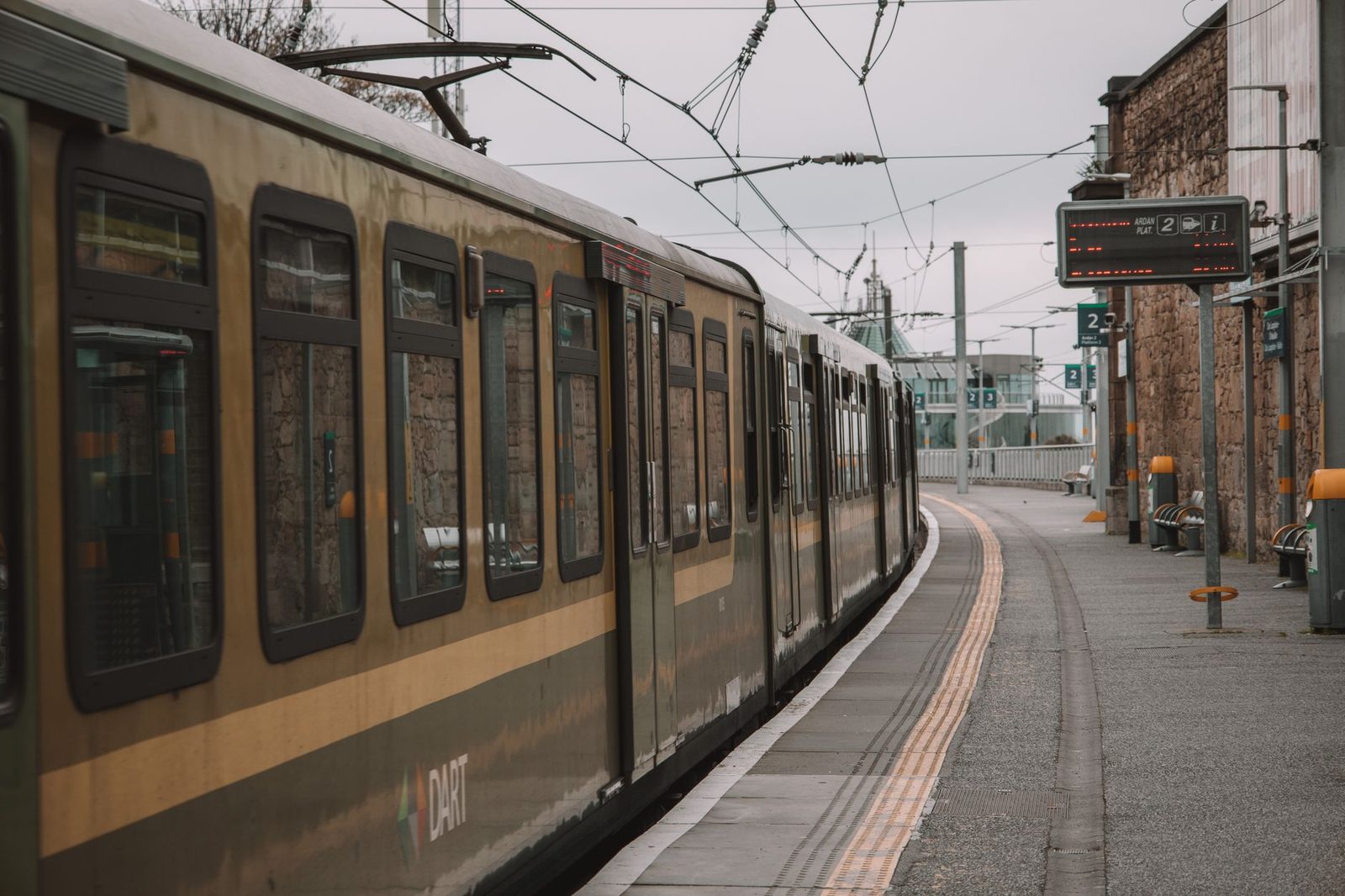
Iarnród Éireann (Irish Rail) runs almost the entire network of the Republic of Ireland. Forget any idea of a grid: everything starts in Dublin, and two neighbouring towns in the south-west may well be connected… via Dublin.
The routes that matter, departing from Dublin Heuston (except Belfast and Rosslare, which leave from Connolly):
| Route | Duration | Web Fare (one way) | Full fare |
|---|---|---|---|
| Dublin–Cork | 2 hr 30 | from €17.99 | ~€78 |
| Dublin–Galway | 2 hr 20 | from €14.99 | ~€45 |
| Dublin–Limerick | 2 hr 15 | from €14.99 | ~€45 |
| Dublin–Waterford | 2 hr 20 | from €12.99 | ~€32 |
| Dublin–Belfast (Enterprise) | 2 hr 15 | from €12 | ~€35 |
| Dublin–Sligo | 3 hr | from €14.99 | ~€38 |
Two things to understand:
- Web Fares are capacity-controlled and must be bought at least 5 days before departure on irishrail.ie or the Irish Rail app. After that cut-off, the site will only offer you the "Standard" fare, far more expensive and flexible. This is foreign travellers' mistake number one.
- Seat reservation is not automatically included on InterCity services, but it is free on most departures when you buy online: tick the box. Friday evening trains to Cork and Galway, and Sunday afternoon trains back to Dublin, leave full.
Dublin–Belfast: the Enterprise now runs hourly
This is the genuinely good news of the past two years. The Enterprise service, jointly operated by Iarnród Éireann and Translink (Northern Ireland), has moved to an hourly frequency between Dublin Connolly and Belfast Grand Central, Belfast's new bus and rail station opened in 2024–2025 and now fully operational.
Practical points to know:
- The journey crosses a border with no checks at all (the Ireland–UK Common Travel Area), but bear in mind: the Republic of Ireland is in the EU, Northern Ireland is not. No passport control on the train, but keep ID with you.
- Two currencies: euro in the south, pound sterling in the north. The onboard bar usually takes both, Belfast shops do not. Bring a card with no exchange fees rather than cash.
- Tickets bought on the Irish side are priced in euros, on the Translink side in pounds. Compare the two: depending on the rate, the gap can reach 10%.
DART and commuter trains
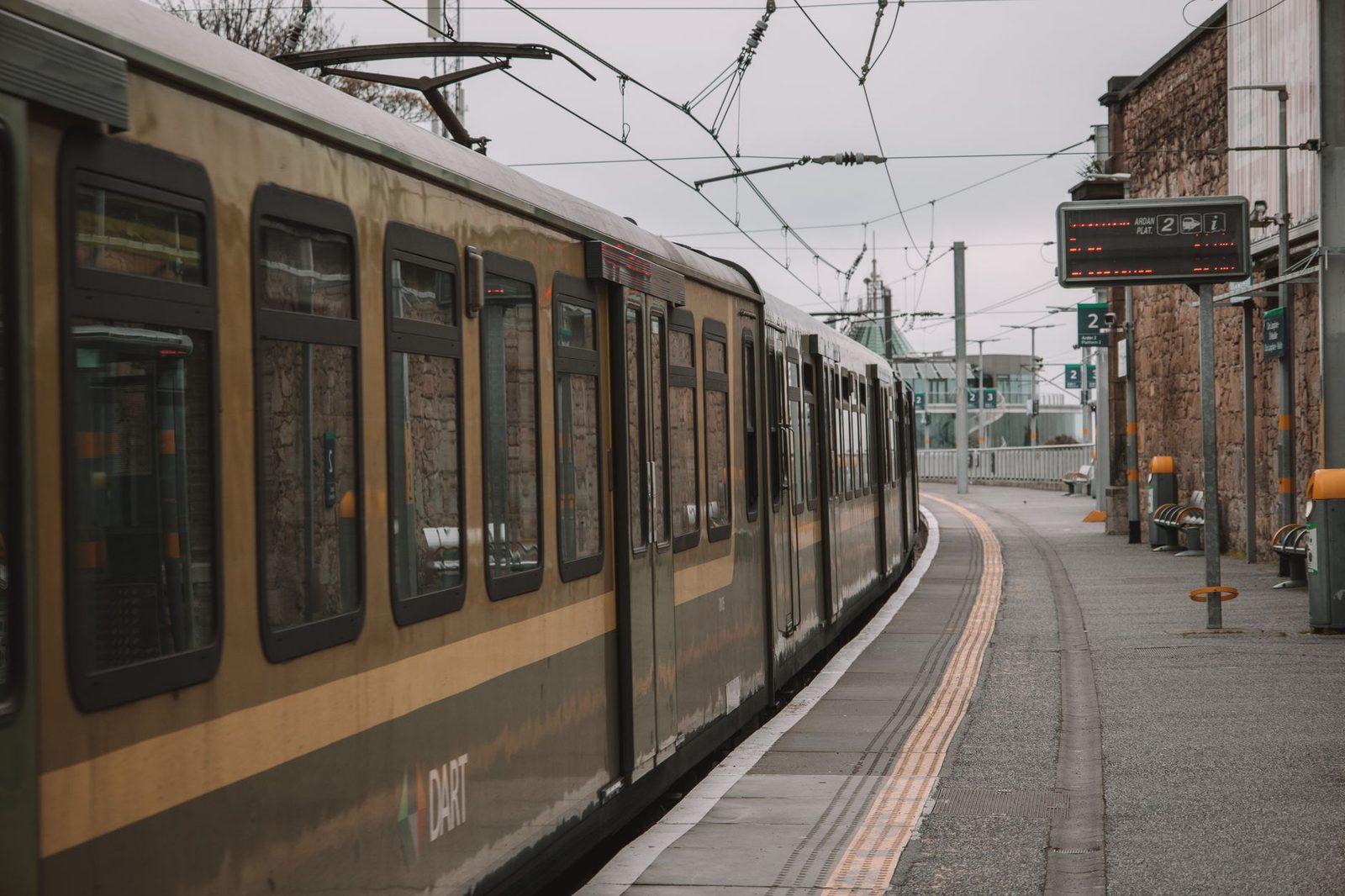
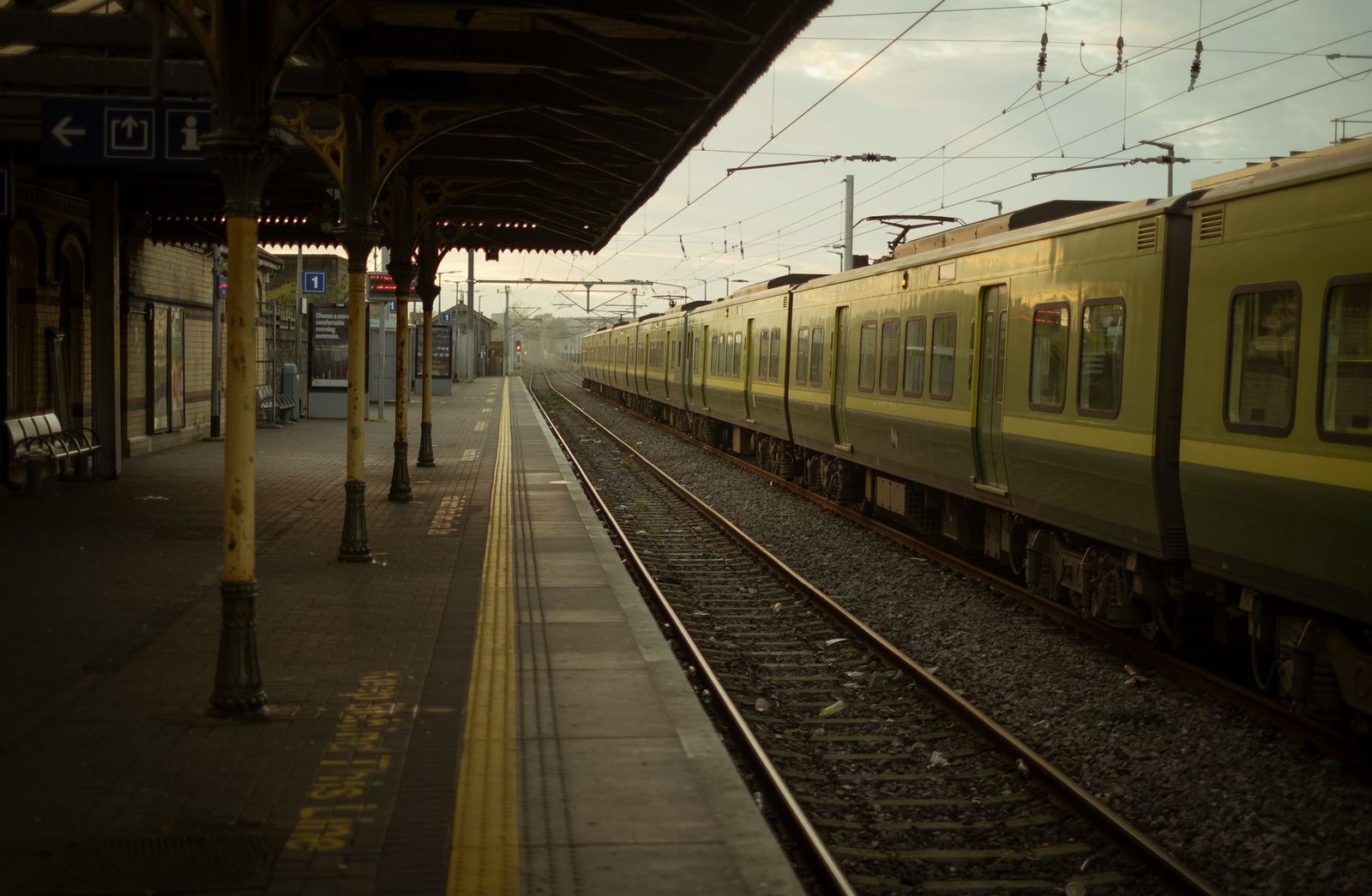
The DART (Dublin Area Rapid Transit) runs along Dublin Bay from Malahide to Greystones. It's an excellent way to visit Howth or Dún Laoghaire for a few euros. It works with the Leap Card, Dublin's rechargeable transport card, which applies a daily cap: beyond a certain amount, the rest of the day's journeys are free. For a 3- to 5-day stay in Dublin, it's by far the best option — far better value than tourist passes.
Worth remembering: the Leap Card can be topped up in Spar/Centra shops and at stations. The "Leap Visitor Card" version (unlimited for 1, 3 or 7 days) only pays off if you make more than four journeys a day.
2. Ireland: the coach, the country's real backbone
Let's be honest: for many Irish destinations, the coach isn't a plan B, it's the only mode available. Donegal, Connemara, the Dingle peninsula, the Giant's Causeway: no train.
Three families of operators:
- Bus Éireann — the national public operator. The most comprehensive network, including the long-distance Expressway routes. Dublin–Donegal, Dublin–Killarney, Cork–Galway. Tickets from €10–15 online.
- Citylink and Dublin Coach — private, fast, often cheaper on the main corridors. Dublin–Galway from €12 in 2 hr 30, Dublin–Limerick and Dublin–Cork in direct competition with the train.
- Aircoach — specialised in Dublin Airport: links to the city centre, to Cork and Belfast, 24/7 on some routes. Budget around €8–9 for airport → Dublin city centre, or take the public Dublin Express/route 16 bus for less.
For Dublin Airport, the logic is the same as in big Italian cities where private shuttles run alongside public transport: our comparison of airport–city centre buses in Italy explains that mechanism, which applies here too.
On luggage, Irish coaches are generous: one hold bag plus one piece of hand luggage with no surcharge on Bus Éireann and Citylink, with no systematic weighing. That's more relaxed than the European rules we break down carrier by carrier in our guide to luggage on European trains. That said, holds fill up quickly on Friday departures: a hard-shell cabin case fits in the cabin and saves you waiting on arrival.
3. Scotland: ScotRail and the four-fare headache
ScotRail, nationalised and under the Scottish Government's control since 2022, runs almost all domestic Scottish trains. The network is dense, broadly punctual, and far more extensive than people imagine.
The benchmark routes, indicative one-way prices:
| Route | Duration | Advance | Anytime (full fare) |
|---|---|---|---|
| Edinburgh–Glasgow | 42 min – 1 hr | from £8 | £16.80 |
| Glasgow–Inverness | 3 hr 20 | from £15 | ~£50 |
| Edinburgh–Aberdeen | 2 hr 20 | from £15 | ~£48 |
| Glasgow–Fort William | 3 hr 50 | from £14 | ~£44 |
| Inverness–Kyle of Lochalsh | 2 hr 35 | from £12 | ~£30 |
The British fare system rests on four ticket families, and that's the only thing you need to grasp to avoid paying double:
- Advance: tied to a specific train, non-exchangeable, capacity-controlled. On sale up to 12 weeks before departure, often still available the day before. This is the fare to aim for.
- Off-Peak / Super Off-Peak: valid all day outside peak hours (roughly before 6.30am, between 9.15am and 4.30pm, after 6.30pm — times vary by route). Flexible, mid-range price.
- Anytime: valid at any time, refundable, the most expensive. It's what the ticket office sells you if you don't specify anything.
Since 2024–2025, ScotRail has scrapped peak-time surcharges across much of its network for domestic journeys: check at the time of purchase, as the measure has been extended and then made permanent on many routes. The upshot: an Edinburgh–Glasgow return has become very affordable, around £16.80 one way in standard class.
The Railcard, the discount card that pays for itself in two trips
British Railcards cost £30 a year (26–30, 16–25, Senior 60+, Two Together, Family & Friends) and give one third off most tickets, Advance included. Two Glasgow–Inverness returns and it has paid for itself.
- The Senior Railcard (60 and over) works across the whole British network — the same reasoning we apply to senior railcards in Europe.
- The Two Together Railcard is aimed at two adults who always travel together (both names are on the card, and both must travel).
- They can be bought online in a few minutes and come in digital form on the app.
Note: a Railcard is not valid on Irish trains. The two systems are completely separate.
The scenic lines: West Highland Line and Kyle Line
Two journeys justify the trip on their own:
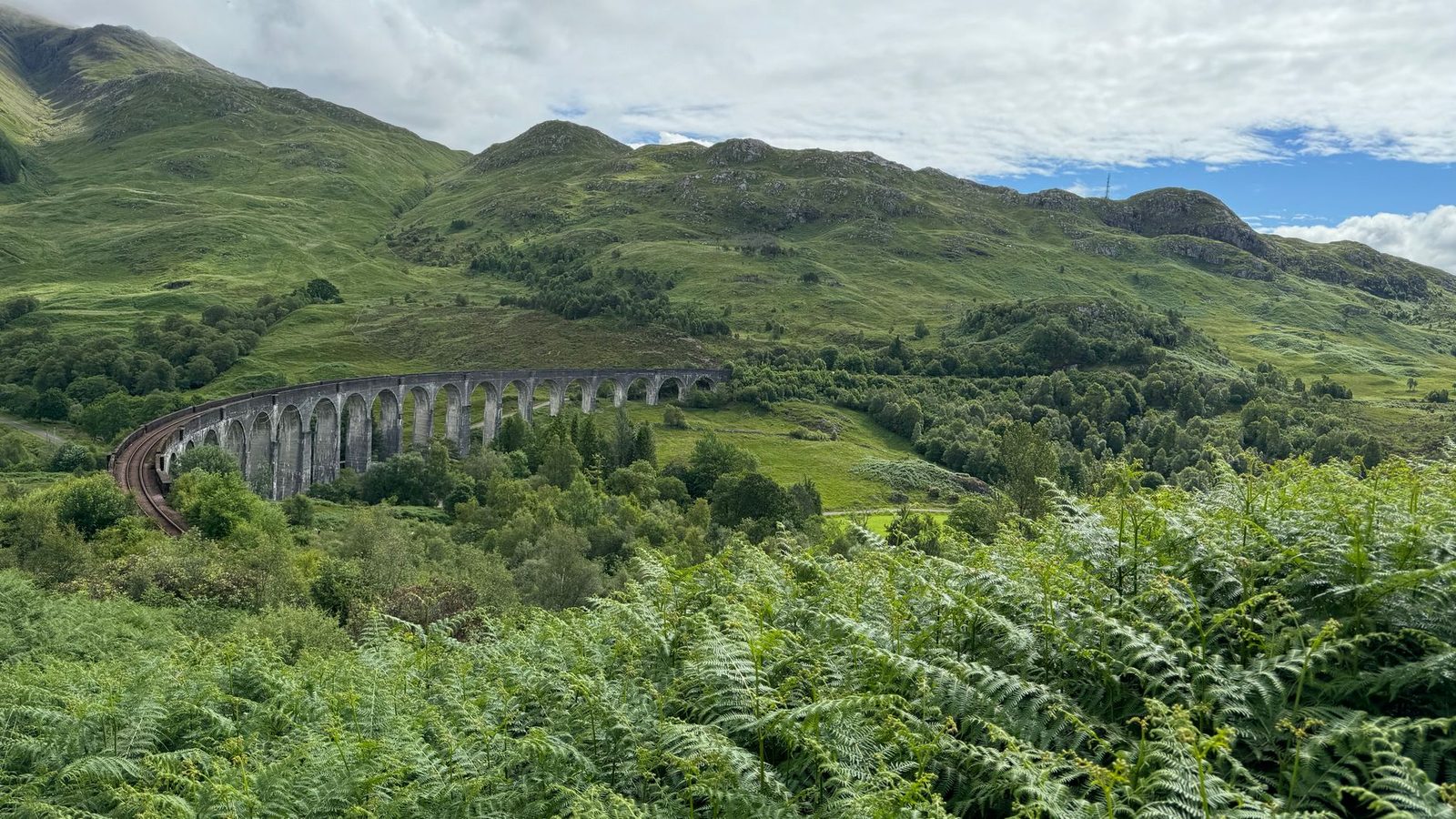
- The West Highland Line Glasgow → Fort William → Mallaig, which crosses the Glenfinnan viaduct. This is the regular ScotRail service, not a tourist train: you pay the normal fare. Don't confuse it with the seasonal steam train that runs on the same track at a much higher price.
- The Kyle Line Inverness → Kyle of Lochalsh, the gateway to Skye.
On both lines, sit on the left-hand side in the uphill direction for the loch views, and bring supplies: onboard catering is minimal. An insulated bottle and a snack will do. Mobile coverage is very patchy in the Highlands, so a Scotland hiking guidebook is more reliable than an offline map that won't load.
4. Caledonian Sleeper: the London–Scotland night train
The Caledonian Sleeper is, alongside the Night Riviera, one of only two night trains in the United Kingdom. Every night (except Saturdays) it links London Euston to Edinburgh, Glasgow, and — via the "Highlander" portion that splits en route — Aberdeen, Inverness and Fort William.
Three levels of comfort:
- Reclining seat (Seated): from around £45. Fine for a night, but it's a seat, not a bed.
- Classic Room: single or twin cabin with a washbasin, from around £150 for a shared cabin.
- Club Room: cabin with a private shower and breakfast served, from around £250.
The format has become entirely "private cabin": you no longer share a cabin with a stranger, which changes everything for solo travellers. Prices work like airline yield management: book 8 to 12 weeks ahead for the headline fares.
For a night in a seat or a shared cabin, the basics make all the difference: a sleep mask and some foam earplugs beat any £30 upgrade. Our detailed tips are in the article on sleeping well on night trains in Europe.
The Sleeper reaches Fort William around 9.55am, which lets you connect straight onto the West Highland Line towards Mallaig the same morning — one of the finest rail itineraries in Western Europe, and a combination few travellers know about.
5. Scotland: coaches, ferries and the islands
Scottish Citylink is the Scottish equivalent of Bus Éireann: a national coach network, low prices, and above all access to the places the train doesn't reach.
- Edinburgh–Glasgow from £8 (slower than the train: 1 hr 15 to 1 hr 30).
- Glasgow–Oban, Glasgow–Skye (Portree), Inverness–Ullapool: essential for the Hebrides.
- Edinburgh–Inverness in 3 hr 30–4 hr, often half the train fare.
For the islands, the CalMac (Caledonian MacBrayne) network runs the ferries. Citylink coaches are timed to connect with crossings to Mull, Islay or Harris. Book the ferry in advance in high season if you're taking a vehicle; as a foot passenger, same-day travel is usually fine.
Getting between Ireland and Scotland
No train, no bridge. Two real options:
- Ferry Belfast or Larne → Cairnryan (Stena Line, P&O Ferries), 2 hr to 2 hr 15, then a Citylink/Scottish coach to Glasgow. Allow a full day, from £25–30 as a foot passenger.
- Flight Dublin or Belfast → Glasgow/Edinburgh, 1 hr in the air, often under €40. On this particular route, and unlike most European links, the plane remains unbeatable on both time and price.
A multi-port USB charger and a type G British plug adapter are essential on both sides of the Irish Sea: Ireland and the UK both use the three rectangular-pin plug, not the European one.
Frequently asked questions
Is the Interrail pass valid in Ireland and Scotland?
In Ireland, yes: Iarnród Éireann accepts Interrail, and a one-country Ireland pass exists. In Scotland and the UK, no: the British network has left Interrail. You'll need Advance tickets or a ScotRail Spirit of Scotland Travelpass (4 days out of 8 or 8 days out of 15, trains + some CalMac ferries + Citylink coaches included). Our analysis of whether passes pay off is in the article Interrail 2026.
Do I need a visa or an authorisation for Scotland?
The UK applies the ETA (Electronic Travel Authorisation) to European nationals: an online authorisation, valid two years, to be applied for before departure. It does not apply to entering the Republic of Ireland, which remains within the Common Travel Area. For Ireland, an ID card or passport is enough depending on nationality.
Does the Dublin–Belfast train involve a border check?
No. There are no systematic checks on the Enterprise. But random immigration checks do exist on the British side, and the ETA applies if you enter Northern Ireland from Dublin other than within the Common Travel Area — in all cases, keep ID on you.
Which discount card is best if I'm only travelling for a week?
In Scotland, none: Advance tickets bought online almost always beat a Railcard amortised over a week, unless you're doing three long journeys back to back. In Ireland, the Leap Card in Dublin, and Web Fares for InterCity services.
Can you take a bike on Irish and Scottish trains?
Yes, but reservation is compulsory and spaces are very limited (2 to 6 bikes per train on ScotRail, 2 to 3 on Irish InterCity services). On the West Highland Line, spaces go weeks in advance in summer. Country-by-country details are in our guide to taking bikes on European trains.
In summary
- Ireland: hub-and-spoke network from Dublin. Iarnród Éireann Web Fares must be bought at least 5 days ahead (Dublin–Cork from €17.99). Everywhere else, the coach — Bus Éireann, Citylink, Dublin Coach, from €10–12.
- Dublin–Belfast: the Enterprise now runs hourly in 2 hr 15 from €12, to Belfast's new Grand Central station. Two currencies, no systematic border checks.
- Scotland: ScotRail covers the whole country. Aim for Advance, never Anytime. Edinburgh–Glasgow 42 min for £16.80, Glasgow–Inverness 3 hr 20.
- A £30/year Railcard (one third off) pays for itself in two long-distance returns. It does not work in Ireland.
- The Caledonian Sleeper London–Scotland starts at £45 in a seat, private cabins from around £150, to be booked 8 to 12 weeks ahead.
- Interrail works in Ireland, not in the UK: on the Scottish side, consider the Spirit of Scotland Travelpass.
- Between the two countries: Belfast–Cairnryan ferry (2 hr) or a short flight. There is no rail link.
To build an itinerary combining train, coach and ferry across several countries, compare the options on Gopaxo and take a look at the carrier profiles before booking.