Short answer: a rail replacement bus (replacement coach, Schienenersatzverkehr in Germany, rail replacement bus in the United Kingdom) is a coach chartered by the rail operator to replace a train on a closed section of line — engineering works, a landslide, a signalling failure. It runs on your train ticket, at no extra charge, but it makes the journey longer (expect +30 to +60 minutes per replaced section), takes neither unpacked bicycles nor large animals in most countries, and offers neither seat reservations nor guaranteed toilets. The "bus" icon appears in the itinerary details before you buy: that's where you need to look.
It's the most common trap in end-of-year and summer weekend timetables: a journey advertised as "direct" on a comparison site, and at the station a queue of travellers in front of three coaches parked on the forecourt. Nothing illegal, nothing unusual — but a string of practical consequences that nobody explains to you at the payment stage.
With the timetable change on 13 December 2026 and the wave of worksites that comes with it in Germany, France and Italy, the odds of running into a "bus" section rise sharply this winter.

How do I know if my ticket includes a rail replacement bus?
The replacement coach is always flagged in the itinerary details, never in the price or in the journey title. You have to expand the journey and read the segments one by one.
The signals to look for:
- a coach icon next to a segment, in the middle of an otherwise rail-based journey;
- a text mention: "car SNCF" (SNCF coach), "autocar de substitution" (replacement coach), "Bus (Schienenersatzverkehr)" at Deutsche Bahn, "replacement bus service" on National Rail, "autobus sostitutivo" in Italy;
- an abnormally long journey time between two stations you know to be close together (Mâcon–Bourg, Hanover–Göttingen, etc.);
- a connection of 25 to 40 minutes at an intermediate station for no apparent reason: that's often the transfer time built into the schedule.
Classic mistake: buying on a comparison site that only shows total duration, then discovering the coach at the station. Before confirming, open the full itinerary and, if in doubt, check the operator's "engineering works" page — Deutsche Bahn publishes its Baustellen (worksites) line by line, SNCF Voyageurs its works by route, and National Rail a weekend-by-weekend calendar of engineering works.
Why do operators put coaches on instead of trains?
Because you can't get around a closed track: the capacity has to be replaced, and the coach is the only mode that can be mobilised within a few days. Three causes account for most cases.
| Cause | Typical duration | Predictability |
|---|---|---|
| Planned works (track renewal, overhead lines, station) | from one weekend to several months | announced months in advance |
| Infrastructure incident (landslide, flooding, signalling) | from a few days to several seasons | none, sometimes overnight |
| Strike or shortage of train crew | a few days | announced 48 hours in advance |
| Winter closure of a mountain section | seasonal | announced at the timetable change |
The big German worksites (Generalsanierung, the full overhaul of main corridors) close an entire line for several months with complete bus substitution: this is no longer a weekend nuisance, it's an itinerary to rethink. Mountain closures, for their part, shape certain routes for the long term: that's the case on several France–Italy links, detailed in our guide France–Italy through the Alps.
Is my ticket still valid, and am I entitled to compensation?
Yes, your ticket remains valid on the coach: replacement transport is part of the contract, with no supplement and no exchange needed. Compensation, however, depends on what the operator announced before your purchase.
What you need to distinguish:
- Substitution built into the timetable (planned works integrated into the transport plan). The displayed schedule already includes the coach. You are entitled to nothing if that lengthened journey is respected: the reference train is the published timetable, not the "normal" timetable of another period.
- Substitution decided at the last minute (incident, cancelled train). Here the European regulation on rail passengers' rights applies just as it would for any delay: compensation thresholds at 60 minutes (25% of the fare) and 120 minutes (50%), plus assistance and re-routing. The reference text is Regulation (EU) 2021/782, applicable since 7 June 2023.
- Announcement between purchase and departure: if the operator substantially alters your journey (significantly longer duration), ask for a refund or a rebooking before you travel — it's simpler than claiming afterwards.
Keep a screenshot of the original timetable on your ticket: that's the evidence proving the difference. The details of thresholds, forms and deadlines are in our guide train delays in Europe: your rights and compensation.
Remember: a replacement coach that keeps to the published timetable creates no entitlement at all, even if it gets you in two hours later than the usual train.
Bike, big suitcase, pet: what won't go on the coach
This is the most painful consequence, and the least well flagged: the replacement coach has no bike space, no luggage platform and no consistent rules.
What we observe across countries and operators in 2026:
- Unpacked bicycle: refused in the vast majority of cases. Some operators charter a bike trailer on tourist sections, with no guarantee and often by reservation only. A bike in a transport bag, dismantled, goes in the hold as oversized luggage.
- Number of bags: limited by the hold, not by a rulebook. Two large suitcases per person may be refused on a busy day.
- Animals: small dogs in a carrier are usually accepted; large dogs are at the driver's discretion. A soft muzzle for dogs saves you the argument as you board.
- Wheelchair: an accessible coach is supposed to be provided, but they are often few in number and must be booked. Contact the operator's assistance service 48 hours in advance, not on the day.
- Pushchair, skis, bulky instrument: folded and in the hold, with no access during the journey.
The usual rail rules no longer apply: our guides luggage on trains in Europe and taking your bike on the train describe the normal regime — the one that substitution suspends.
How to limit the damage: a six-point method
- Expand the itinerary before you pay. A "bus" segment in the middle of a journey changes everything: duration, luggage, comfort.
- Check the operator's engineering works page for your dates, especially between December and March and on August weekends.
- Prefer an all-rail journey via another route, even if it's 20 minutes longer: going via another line is often better than a transfer.
- Double your connection margin after a coach section: coaches keep poorly to timetables in town and aren't tracked by connection guarantee systems.
- Bring enough to get through without a stop: no bar car, toilets rarely usable, no guaranteed breaks over 90 minutes on the road. A compact insulated water bottle and something to snack on solve the problem.
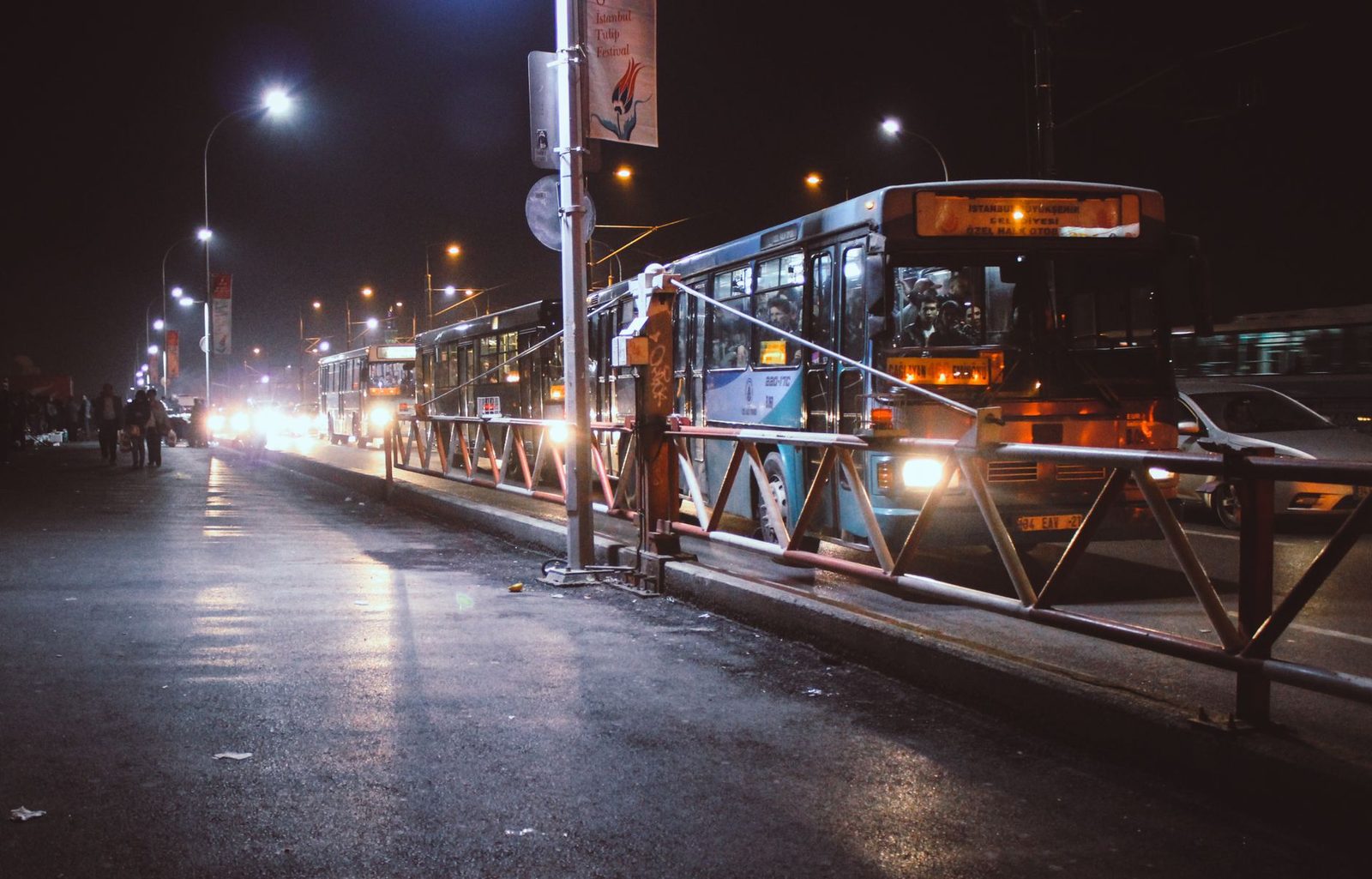
- Board early: seats aren't numbered on a replacement coach, and a queue of 120 people for two 55-seat coaches means another coach has to be chartered — or that you wait for the next one.
For overnight journeys, substitution is even harsher: a coach section in the middle of a night train wakes you at 4 a.m. with your cases in hand. A blackout sleep mask and earplugs don't make up for everything, but they save the second half of the night.
Should I just take the long-distance coach instead?
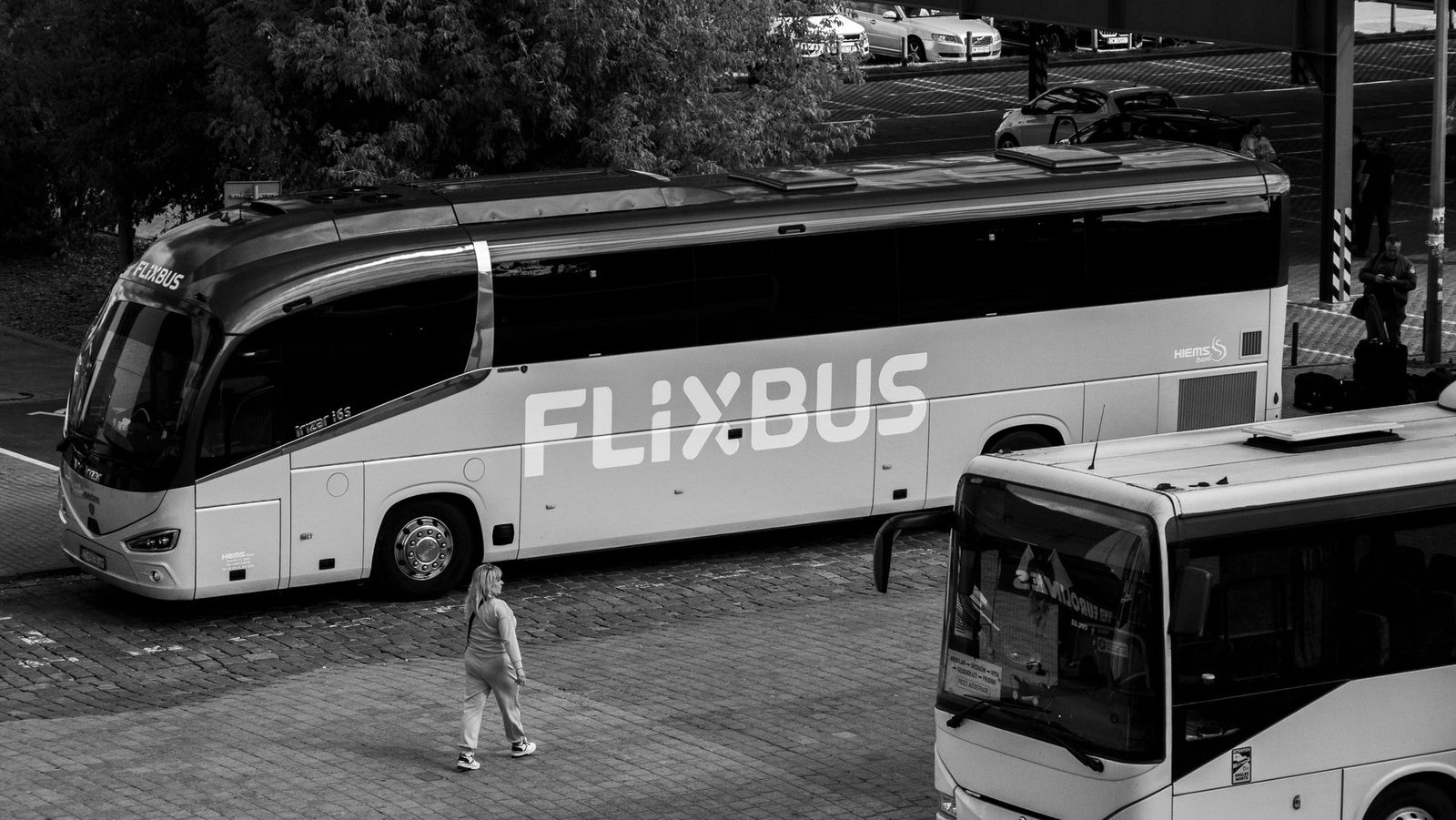
Often yes, when the replaced section accounts for more than a third of the journey. A commercial long-distance coach — FlixBus, Alsa, Itabus, RegioJet — offers what the replacement coach doesn't: a reserved seat, a properly sized hold, Wi-Fi, a price known in advance and a direct schedule with no transfer.
The maths is simple: if your train ticket costs €45 for a journey of which 90 minutes are by replacement coach, and a direct coach links the two cities in 4 hours for €19, the train loses on every count except seat comfort. The reverse is true when the substitution only covers 25 km at the end of the line.
Compare before you buy
The useful habit: simulate the same journey by train and by coach on the same date, then compare door-to-door duration rather than the duration displayed. You can compare train, coach and ride-sharing on Gopaxo for a given route, check the carrier profiles for each company's luggage rules, and see whether a discount card makes the train competitive despite the coach section.
Frequently asked questions
Is a rail replacement bus free?
It's included in your train ticket: no supplement, no new ticket to buy. If an operator asks you to pay, it isn't a replacement coach but a commercial service.
Can I refuse the coach and ask for a refund?
If the substitution was decided after your purchase and makes the journey noticeably longer, yes: ask for a refund or a rebooking before departure. If it was already shown in the timetable when you bought, the operator isn't obliged to refund beyond the ticket's fare conditions.
Can my bike go on a replacement coach?
Rarely, unless it's dismantled. Bring a transport bag and remove the front wheel, or look for an alternative rail route on the day of the substitution.
Does the coach run to the train's timetable?
No. The coach generally leaves a few minutes after the train arrives and takes longer than the train it replaces. The published timetable accounts for that extra time, but with no margin for traffic jams.
Do replacement coaches also run at night?
Yes, including on night trains and the first trains of the morning, where they are common during overnight works. It's the most uncomfortable scenario, and the one where you should read the itinerary details most carefully.
In summary
- The replacement coach is flagged in the itinerary details, not in the total duration: always expand the journey before you pay.
- Your train ticket is valid with no supplement, but the journey is 30 to 60 minutes longer per section.
- No compensation if the substitution was in the published timetable; standard rights (25%/50% beyond 60 and 120 minutes) if it results from an incident.
- Unpacked bike, large dog, multiple bags: rail rules no longer apply, the hold decides.
- Beyond a third of the journey by coach, a direct long-distance coach is often faster and cheaper.