Short answer: for crossing Spain, high-speed rail has become the cheapest option in Western Europe thanks to three operators competing on the same tracks — Renfe (AVE and its low-cost brand Avlo), Ouigo España (an SNCF subsidiary) and Iryo (Trenitalia + Air Nostrum). On Madrid–Barcelona, reckon on 2 hr 30 by AVE and fares ranging from €7 to €19 with Avlo and Ouigo up to €60–145 for a flexible AVE bought on the day. The same pattern applies on Madrid–Valencia (1 hr 50), Madrid–Seville (2 hr 20) and Madrid–Alicante (2 hr 20). On the other side, Alsa coaches remain unbeatable wherever the train doesn't go (Extremadura, the Cantabrian coast, secondary routes in Asturias) and on overnight journeys, from €10–25. Golden rule: in Spain, the price doesn't depend on the time of the train but on the operator and the purchase date — open all three websites, never just one.
Spain has more high-speed track than any other country in Europe — over 3,900 km according to Adif, the infrastructure manager — and it is also the only one where three companies have been competing commercially on the same corridors since liberalisation in 2021. The result: fares you won't find anywhere else on the continent.
But travellers often arrive with the wrong instincts. They search for "AVE Madrid Barcelona", land on the Renfe website, see €96 and conclude it's expensive. Yet on the same day, at almost the same time, Ouigo España is selling a seat for €19 and Iryo for €25. They aren't on Renfe's website, and they don't all show up in generalist comparison tools.
This guide reviews operator by operator and corridor by corridor what is actually bookable in November 2026, ahead of the timetable change on 13 December.
1. Understanding how Spanish fares work
Three ideas are all you need.
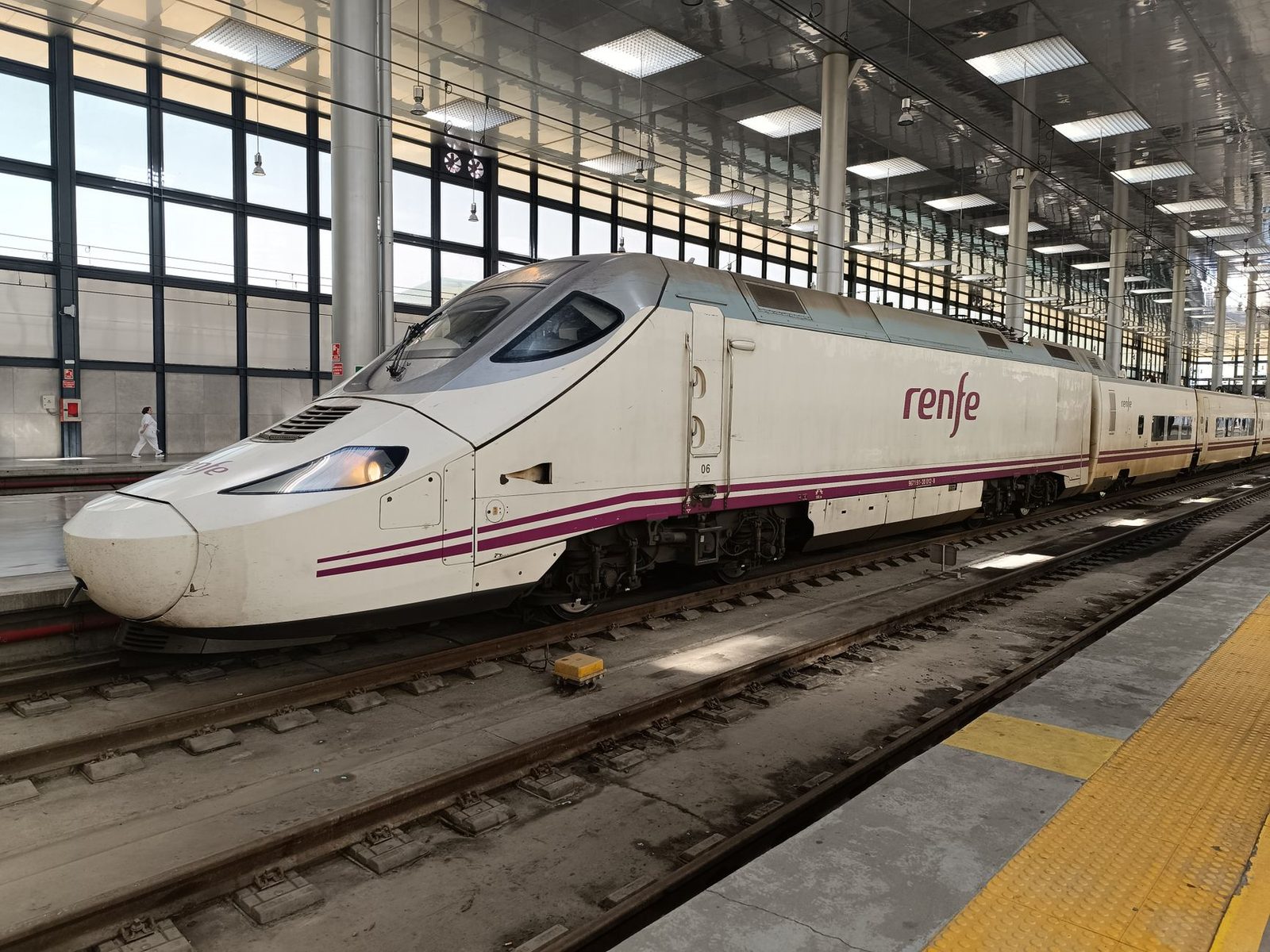
The operator sets the floor. Avlo (Renfe) and Ouigo España are low-cost products: denser seating, one piece of hand luggage plus a suitcase, little or no bar car on board, and departures sometimes from secondary stations. Iryo plays the mid-market with four classes (Inicial, Singular, Infinita, Infinita Bistró). Renfe's classic AVE remains the premium product with Básico, Elige and Prémium.
The purchase date sets the real price. Renfe opens sales up to six or seven months before departure depending on the line, Ouigo España around six months, Iryo between four and six months. On all three, the cheapest allocation behaves the same way: it sells first, then vanishes. Buying three weeks ahead instead of three days ahead often cuts the price by two thirds.
Regional trains can't be reserved. Cercanías (suburban) and Media Distancia (regional) services run on fixed or near-fixed fares, with no allocations. There's no point planning ahead: the price won't move. To make the most of them over several days, a travel notebook in your pocket is more useful than an app: Spanish regional timetables are sparse and easy to jot down.
Worth knowing: Renfe offers the Multiviaje and, above all, the Tarjeta Dorada for over-60s (about €6 a year, up to 40% off AVE fares depending on the day). We covered it in detail in our comparison of senior railcards in Europe.
2. Madrid–Barcelona: Europe's most competitive corridor
621 km, three operators, more than 60 trains a day in each direction on weekdays. This is the system's showcase.
| Operator | Journey time | Price range | Stations in Barcelona |
|---|---|---|---|
| AVE (Renfe) | 2 hr 30 – 3 hr 10 | €35 – 145 | Sants |
| Avlo (Renfe) | 2 hr 45 – 3 hr | €7 – 45 | Sants |
| Ouigo España | 2 hr 45 – 3 hr | €9 – 49 | Sants |
| Iryo | 2 hr 30 – 2 hr 55 | €18 – 75 | Sants |
| Alsa (coach) | 7 hr 30 – 8 hr 15 | €20 – 40 | Estació del Nord |
Three practical consequences.
First, the coach no longer makes sense on this corridor except in very specific cases (oversized luggage, an overnight departure, a last-minute ticket on a peak day). Eight hours to save €10 compared with an Avlo booked a month ahead simply doesn't add up.
Second, the €145 AVE still exists and still sells. That's the flexible Prémium fare, exchangeable, with lounge access and a meal served at your seat. It's aimed at business travellers. Tourists have no reason to pay it.
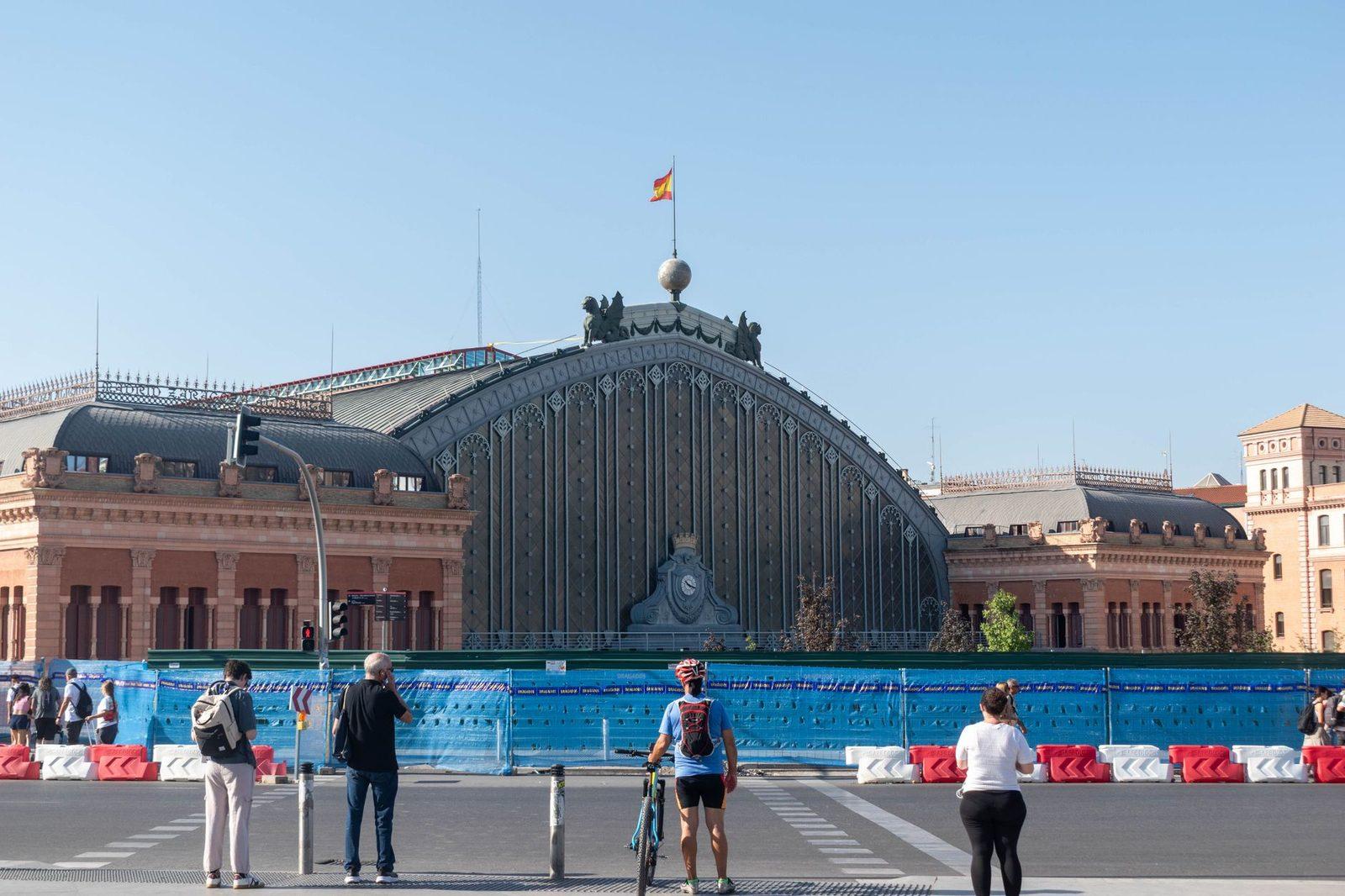
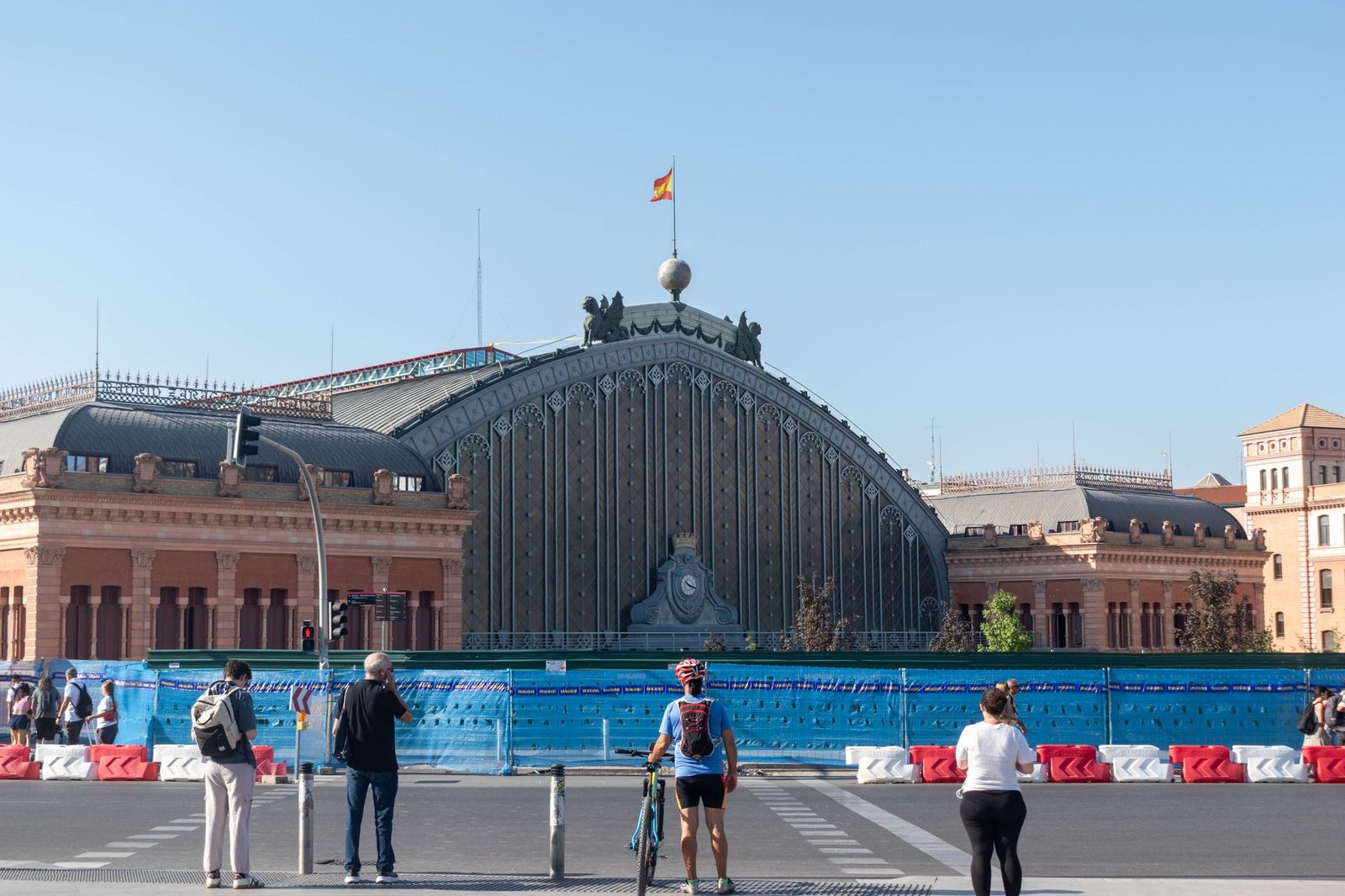
Finally, Avlo and Ouigo leave from Madrid-Atocha just like the AVE, which isn't the case everywhere: always check the exact station on your ticket, as Madrid also has Chamartín, which serves the north and north-west.
3. The other high-speed corridors
Madrid–Valencia and Madrid–Alicante (Levante corridor)
Madrid–Valencia takes about 1 hr 50 by AVE, a little longer on Avlo and Ouigo. All three operators serve the route, with entry fares around €9–18 if you book ahead. Iryo continues to Alicante (2 hr 20) and also serves Albacete.
Madrid–Seville and Madrid–Málaga (southern corridor)
This is Spain's oldest high-speed line (1992). Madrid–Seville in 2 hr 20, Madrid–Málaga in 2 hr 30. Lead-in fares hover around €15–25 and climb very fast on long weekends and during Holy Week, when Seville fills up completely. We covered Ouigo's Málaga–Barcelona service, launched in summer 2026 without going via Madrid, in a dedicated article.
Madrid–Zaragoza and the north-east
Zaragoza is 1 hr 15 from Madrid and 1 hr 30 from Barcelona: it's the cheapest stopover in the country, often under €12 from either city.
The north-west: Galicia, Asturias, León
This is where 2026's real novelty happened. Ouigo España opened its lines to Asturias, Galicia and León from €9 last summer, taking on markets that had until then been 100% Renfe. Madrid–Oviedo comes in under 3 hr, Madrid–Santiago de Compostela around 3 hr 10 by AVE via Ourense. On these lines the low-cost allocation is tighter than on Barcelona: book further ahead.
4. Where the train doesn't go: Alsa territory
Spain has a spectacular high-speed network… and some big gaps. Three regions are far easier to reach by coach than by train.
Extremadura. Mérida, Cáceres, Badajoz: the line exists but remains slow and infrequent despite modernisation works. Alsa runs Madrid–Cáceres coaches in 3 hr 30 to 4 hr for €20–30, with more departures than the train.
The Cantabrian coast. Renfe's metre-gauge line (the former FEVE) between Bilbao, Santander, Oviedo and Ferrol is one of Europe's most beautiful, but it takes a full day for a journey a coach covers in a few hours. Take it for the scenery, not to get from A to B.
The interior and smaller towns. Teruel, Soria, Cuenca away from the high-speed line, Jaén, the villages of inland Andalusia: the coach is often the only option. Alsa, Avanza, Monbus and Damas divide up the map by region.
For these journeys, two details make all the difference: on Spanish overnight coaches the air conditioning stays fierce, and a travel neck pillow plus a blackout sleep mask transform the night. Booking details, Alsa's Supra and Premium classes and its luggage rules are all in our Alsa in Spain guide.
5. Booking without mistakes: the method
Always open three tabs
Renfe (which sells both AVE and Avlo), Ouigo España and Iryo can't see each other. None of the three will show you a competitor's offer. Even comparison sites don't systematically cover all three in real time. That's the number one reason travellers overpay for a Spanish train.
Check the station, not just the city
In Madrid: Atocha (south, east, Levante, Andalusia, Barcelona) and Chamartín (north, north-west, some Avlo services). In Barcelona: Sants for high-speed trains, Estació del Nord for coaches. In Seville: Santa Justa. Getting the station wrong in Madrid costs you 30 minutes on the metro.
Luggage, the low-cost trap
- AVE and Iryo: generous, three bags tolerated in practice, limits rarely enforced.
- Avlo: one piece of hand luggage plus one medium-sized bag included; a surcharge for an extra suitcase.
- Ouigo España: same logic, one piece of hand luggage plus a suitcase; dimensions are displayed at boarding.
On Spanish low-cost services as elsewhere, a travel luggage scale settles the argument before you get to the station rather than in front of the conductor. Our detailed rules by company are in our guide to luggage on trains in Europe.
Security checks at boarding
Unlike France, Spanish high-speed stations run luggage scanners before you reach the platforms, and close boarding 2 to 5 minutes before departure. Arriving 20 to 25 minutes ahead is the minimum at Atocha or Sants at peak times. A shoulder travel bag with your ticket and passport within easy reach speeds things up noticeably.
6. What a week in Spain by train costs
Take a classic November itinerary, booked three to four weeks in advance:
| Journey | Service | Duration | Realistic price |
|---|---|---|---|
| Madrid → Seville | AVE Básico | 2 hr 20 | €25 |
| Seville → Córdoba | AVANT | 45 min | €15 |
| Córdoba → Madrid | Avlo | 1 hr 50 | €12 |
| Madrid → Valencia | Ouigo | 2 hr | €14 |
| Valencia → Barcelona | Euromed | 3 hr | €28 |
| Barcelona → Madrid | Iryo Inicial | 2 hr 35 | €22 |
Total: about €116 for six journeys and more than 2,000 km. No rail pass will beat that figure in Spain — which is precisely why Interrail rarely pays off there, as we explained in our Interrail 2026 analysis: compulsory reservations in Spain cost extra even with a pass, and the low-cost operators' lead-in fares are already below the pass's daily cost.
To put together this kind of itinerary, a travel guide to Spain is still useful for settling the order of the cities before you buy tickets: in Spain, the cheapest route depends on which direction you travel it.
7. What 13 December 2026 could change
The annual timetable change takes effect on Sunday 13 December 2026 across Europe, Spain included. Three things to watch:
- The timetables of all three high-speed operators are reloaded that day; a ticket bought for January before the update may see its departure time shift by a few minutes.
- The regulated fares on Cercanías and Media Distancia, after several years of heavily subsidised season tickets funded by Spain's transport ministry, are readjusted at the start of the calendar year.
- Some secondary services in the north-west are being recalibrated as Ouigo ramps up.
We're tracking these developments in our article on the timetable change of 13 December 2026.
Frequently asked questions
Which is the cheapest train between Madrid and Barcelona?
Avlo (Renfe) and Ouigo España battle it out for the floor, with lead-in tickets at €7–9 when you book several weeks ahead. Iryo starts a little higher but offers more comfort. The classic AVE remains the most expensive.
Do you need to reserve Spanish regional trains?
No. Cercanías and Media Distancia tickets are bought at the counter or from machines on the day, at a fixed fare. Only high-speed services, AVANT and Euromed/Alvia trains require a named reservation.
Is an Interrail pass worth it in Spain?
Rarely. Compulsory reservations on AVE and Alvia cost extra on top of the pass, and Ouigo and Avlo's low-cost fares are already below the daily cost of a Global Pass. Spain is the country where buying separate tickets wins most often.
How early should you get to the station?
20 to 25 minutes for a high-speed train at Atocha, Sants or Santa Justa: there's a luggage scanner and boarding closes a few minutes before departure. For an Alsa coach, 15 minutes is enough.
Are coaches still useful in Spain?
Yes, but not on the main corridors any more. Alsa, Avanza and Monbus remain essential in Extremadura, inland Andalusia, for the small towns of Castile and along the Cantabrian coast, where the train is absent or too slow.
Can you buy an AVE ticket from France?
Yes, directly from Renfe, Ouigo España or Iryo with a French bank card. Remember to enter your passport or ID card number: it's compulsory when booking Spanish high-speed trains and is checked on board.
In summary
- Three operators, three websites: Renfe (AVE + Avlo), Ouigo España and Iryo can't see each other. Always compare all three.
- Madrid–Barcelona in 2 hr 30, from €7 to €145 depending on the operator and purchase date: it's the cheapest corridor in Western Europe.
- Book 3 to 6 weeks ahead on high-speed services; there's no point booking early on regional trains, their fares are fixed.
- Alsa and the coaches keep the edge in Extremadura, inland Andalusia and along the Cantabrian coast.
- Check the station: Atocha or Chamartín in Madrid, Sants in Barcelona.
- Arrive 20 to 25 minutes early: luggage scanning is compulsory and boarding closes before departure.
- A six-leg, 2,000 km itinerary comes in at around €116 with separate tickets.
To compare trains, coaches, carpooling and flights on a specific Spanish route on a single screen, compare on Gopaxo or browse our carrier profiles and discount cards.