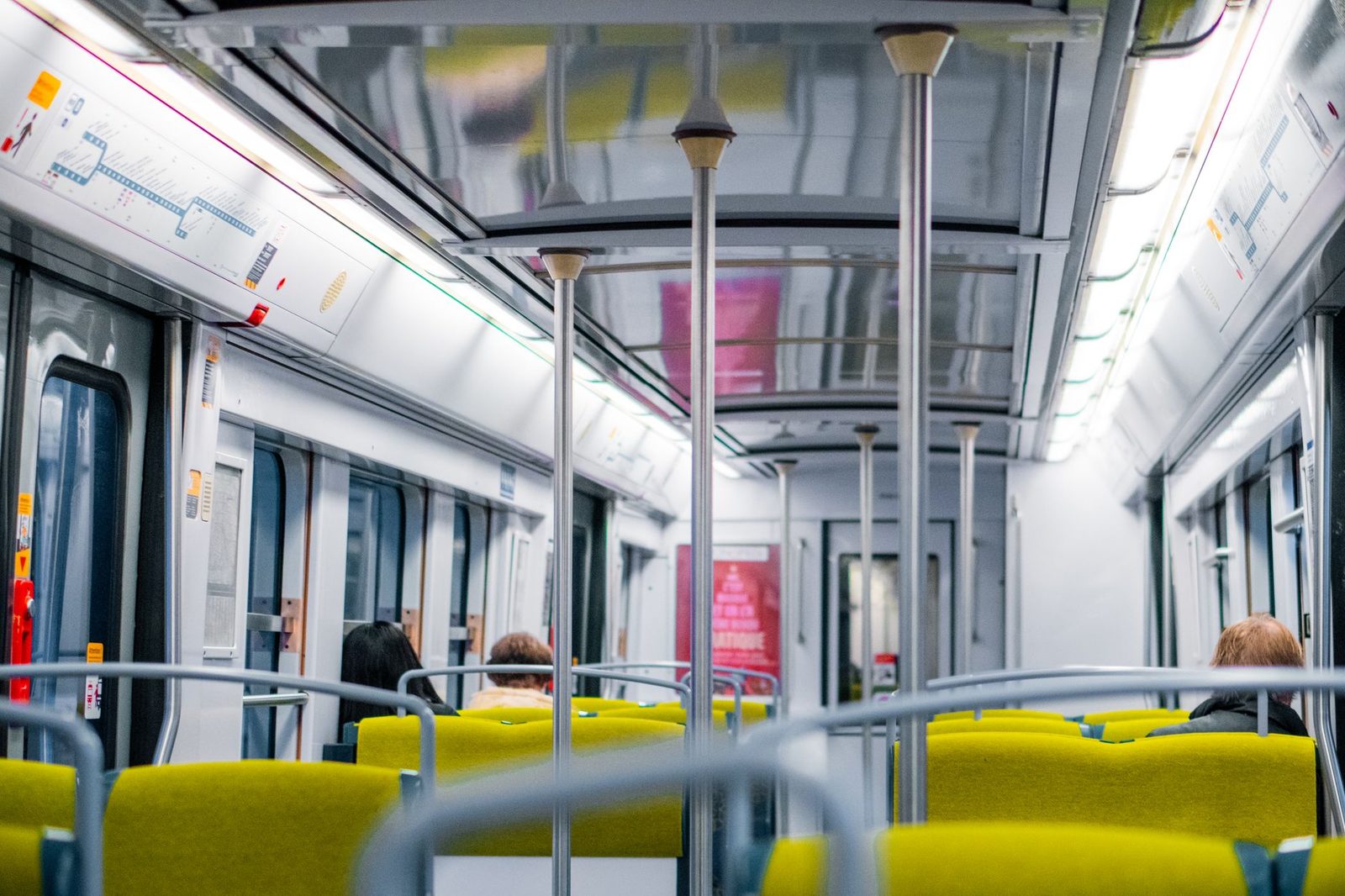
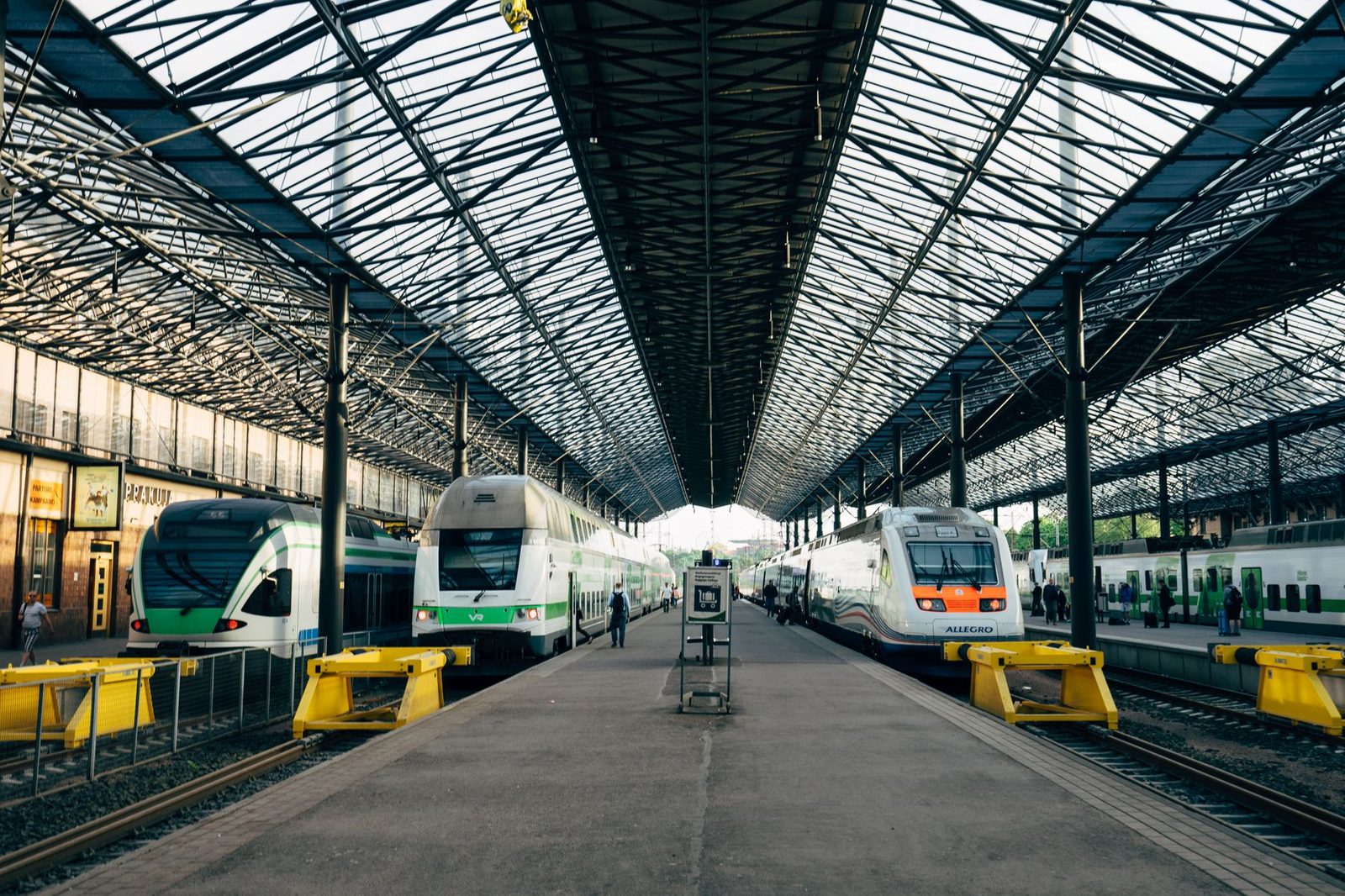
Short answer: to cross Germany from north to south or east to west, Deutsche Bahn's ICE remains the fastest option — Berlin–Munich in 3 h 55, Hamburg–Cologne in 4 h, Frankfurt–Berlin in 3 h 55 — but the price ranges from €17.90 (Super Sparpreis booked 3 to 6 months ahead) to more than €160 (Flexpreis bought on the day of departure) for exactly the same seat. The Sparpreis is the key: it opens 6 months before departure and it is the only way to pay coach prices for a German train. On the other side, FlixTrain charges €12.99 to €40 on a limited number of corridors (Berlin–Cologne, Hamburg–Stuttgart, Berlin–Munich) with 1 to 2 hours extra travel time, and FlixBus drops below €10 on the same routes in 7 to 10 hours. Golden rule: never buy a German long-distance ticket at the counter on the day of travel — it is the highest fare in Western Europe.
Along with Spain, Germany is the European country where the same journey can cost ten times more or ten times less depending on when you buy. It is also the one where French-speaking travellers get it wrong most often, because they apply SNCF reflexes: look for "the 8 a.m. high-speed train", check the displayed price, conclude that it is expensive.
The German system does not work that way. It rests on a distinction between a flexible fare (valid all day, refundable, very expensive) and a quota-based fare (tied to one specific train, all but non-exchangeable, very cheap). Add to that a private operator, FlixTrain, which is nibbling market share on a handful of corridors, a network of IC Bus coaches run by DB itself, and a nationwide pass, the Deutschlandticket, which is useless on main lines but formidable on certain regional itineraries.
This guide goes route by route through what is actually bookable in November 2026, before and after the timetable change on 13 December.
1. Understanding Deutsche Bahn's four fares
This is where everything is decided. DB sells the same seat under four labels:
| Fare | Indicative Berlin–Munich price | Exchange / refund | Availability |
|---|---|---|---|
| Super Sparpreis | €17.90 to €39.90 | No exchange, no refund | Very limited quota, opens 6 months ahead |
| Sparpreis | €29.90 to €69.90 | Exchange for a fee (€10) until the day before | Limited quota |
| Flexpreis | €130 to €165 | Unrestricted, any train that day | Always available |
| Flexpreis Plus | ~€180 | Unrestricted + free cancellation | Always available |
Three practical consequences:
- The Sparpreis opens six months ahead. For a trip in April 2026, you could book from October 2025. For an Easter 2027 trip, sales open at the end of October 2026. This is lever number one.
- The Sparpreis is tied to one specific train. If you miss it, your ticket is no longer valid — unlike the Flexpreis. A connection missed because of DB is still covered, but a delay that is your own fault is not.
- Prices climb in steps, not gradually. It is not unusual to see Berlin–Cologne at €29.90 on the 7:34 train and €119 on the 8:34 the same day. Shifting by an hour is often worth €80.
Seat reservation: optional but not pointless
Unlike the French TGV, the ICE does not automatically reserve your seat. A reservation costs €5.50 in 2nd class (free in 1st). On Berlin–Munich on a Friday evening, the difference between a guaranteed seat and three hours standing by the toilets is well worth €5.50. Regulars on overnight or weekend journeys bring a neck travel pillow, which makes all the difference when the train is packed and you are sitting for four hours.
Worth noting: IC (InterCity) and EC (EuroCity) trains are slower than the ICE but fall under the same fare scale. On some corridors (Hamburg–Berlin, Cologne–Hanover), the IC is only 20 to 30 minutes slower for a Sparpreis that is often easier to find.
2. The main corridors, route by route
Berlin–Munich
The flagship route since the new Erfurt–Nuremberg line opened in 2017.
- Direct ICE: 3 h 55 to 4 h 30, roughly one departure per hour. Sparpreis €29.90 to €59.90, Flexpreis ~€160.
- FlixTrain: 1 to 2 return trips a day depending on the season, 6 h 30 to 7 h, €19.99 to €39.99.
- FlixBus: 8 h to 9 h 30, €12.99 to €29.99, plenty of overnight departures.
- Plane (Lufthansa, easyJet, Eurowings): a 1 h 15 flight, but 4 hours door to door with BER and Munich Airport. The train wins on real time as soon as you count the transfers.
Hamburg–Cologne
- ICE: around 4 hours, with very frequent departures via Bremen, Osnabrück, Münster and Duisburg. Sparpreis €24.90 to €49.90.
- FlixTrain: operates this corridor (extended to Stuttgart), 5 h 15 to 6 h, from €14.99.
- FlixBus: 6 h 30 to 7 h 30, from €9.99.
Frankfurt–Berlin
- ICE: 3 h 55 to 4 h 20 via Erfurt (new line) or 4 h 30 via Hanover. Sparpreis €29.90 to €59.90.
- Note: since the Stuttgart 21 underground station opened on 6 December 2026, several ICE rotations in the south-west have been reorganised — check train numbers after the timetable change.
Berlin–Hamburg
The best time-to-price ratio in the country: 1 h 45 to 2 h by ICE or IC, up to two departures per hour. Sparpreis €17.90 to €29.90, Flexpreis ~€91. No reason to take the coach here: FlixBus takes 3 h 30 to save you €5.
One caveat, though: the Berlin–Hamburg line is undergoing a sweeping upgrade (Generalsanierung) as part of DB's corridor programme. Full closure periods force diversions via Stendal or Uelzen, adding 40 to 60 minutes. Always check the routing offered, not just the departure time.
Frankfurt–Dresden and the east-west diagonals
This is where the German network shows its limits. Frankfurt–Dresden takes 5 h 30 to 6 h 30 with one change (often at Leipzig or Fulda), for €39.90 to €79.90 on a Sparpreis. Cologne–Dresden: around 7 hours. On these diagonals, the FlixBus coach becomes competitive again: Frankfurt–Dresden in 7 hours for €19.99, with no change.
3. FlixTrain: when it is worth it, when it is not
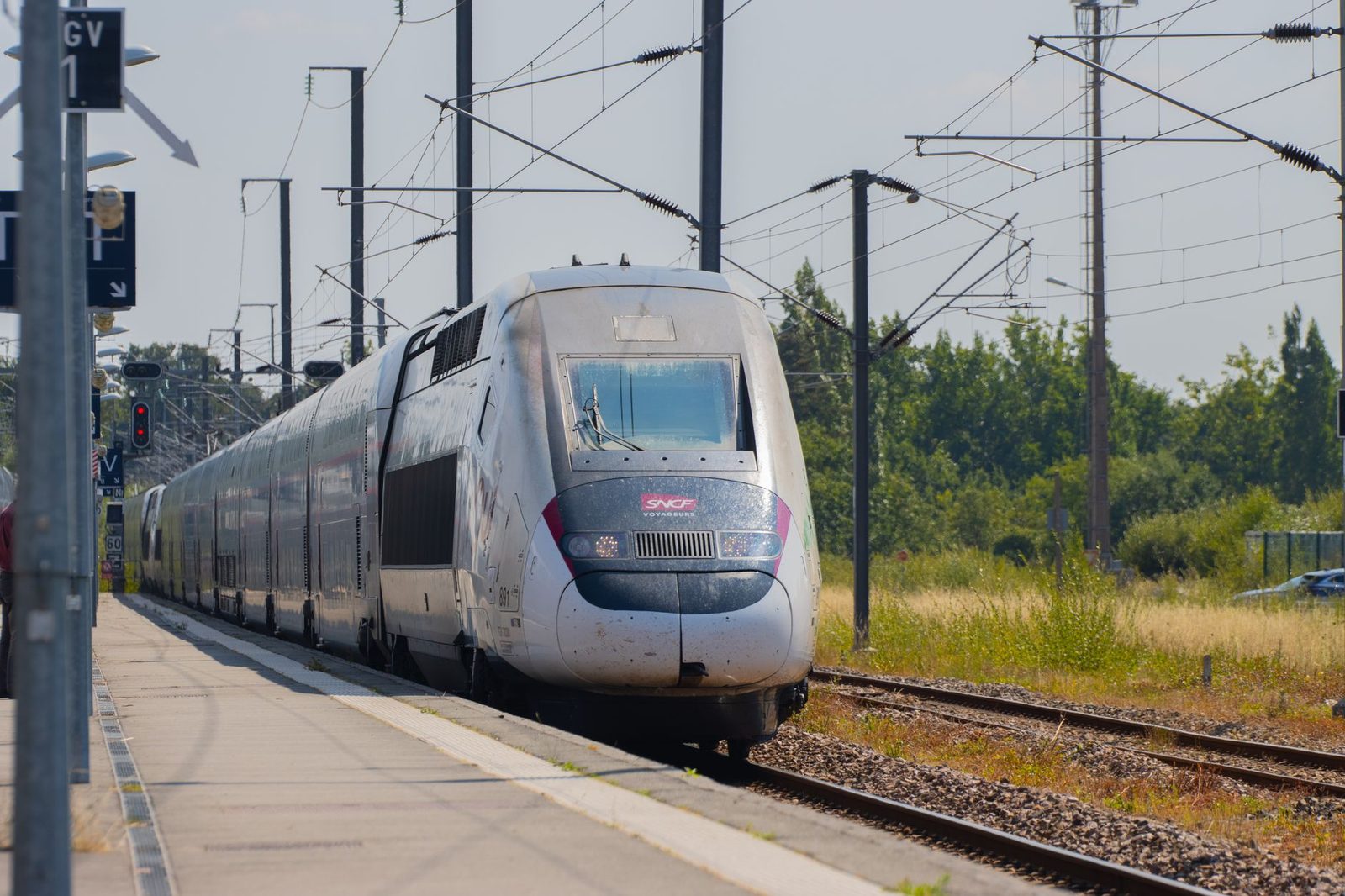
FlixTrain remains DB's only competitor on German long-distance rail. Its model: second-hand, refurbished carriages, a limited number of services (a few return trips per day per corridor), a low headline price and an always-allocated seat — unlike the ICE, where reservation costs extra.
What you need to know:
- No catering on board in the DB sense: a minimal service, sometimes nothing at all. Bring your own water and something to eat; a reusable insulated water bottle saves you buying three bottles at the station at €3.50 each.
- Luggage is included (one piece of hand luggage + one large bag), but bike spaces are rare and must be booked separately.
- No cross-validity. A FlixTrain ticket is never accepted on an ICE, even in case of delay. If FlixTrain cancels, it reroutes you on its own trains — which may mean the next day.
- Delays: FlixTrain's punctuality depends on the DB InfraGO network, which it does not control. On a journey with an unmissable connection (flight, ferry, night train), leave at least two hours' margin.
Our detailed comparison of the two operators — lines, prices, luggage, delay handling — is here: FlixTrain or Deutsche Bahn.
4. IC Bus, Deutsche Bahn's forgotten coach service
Few international travellers know it: DB runs its own long-distance coaches, the IC Bus, integrated into the rail booking system. They mainly serve international links and gaps in the network: Munich–Prague, Nuremberg–Prague, Mannheim–Nancy–Strasbourg depending on the season.
Their appeal is twofold:
- They are sold as trains: same ticketing, same Sparpreis fares, and above all the same rights in case of delay, since the ticket is issued under DB rail conditions with a guaranteed connection onto an ICE.
- On Munich–Prague, the IC Bus takes 4 h 30 to 5 h for €19.90 to €29.90 — faster than any train, since the rail link via Furth im Wald takes more than 5 h 30.
If your itinerary combines a German train and a coach, the question of who compensates what when a connection is missed is covered in detail in our guide to missed train connections.
5. The Deutschlandticket: useful, but not for crossing the country
At €63 a month in 2026, the Deutschlandticket gives access to all regional and urban transport in Germany: RE, RB, S-Bahn, U-Bahn, trams, city buses. It is not valid on ICE, IC, EC, FlixTrain or FlixBus.
Can you cross Germany with it? Technically yes, by chaining REs together. Berlin–Munich on regional trains takes roughly 11 hours and 5 to 6 changes. That is an ordeal, not a journey — unless you already hold the pass and travel light.
It becomes unbeatable in three cases, however:
- A stay of several days in one region (Bavaria, the Ruhr, the Rhineland) with daily journeys.
- Medium-distance trips such as Cologne–Düsseldorf–Essen, Munich–Augsburg, Hamburg–Lübeck: the REs are almost as fast as the ICs.
- Getting to an airport or a major station: Frankfurt, Düsseldorf and Berlin BER are all reachable by S-Bahn.
The details and the break-even calculation are in our article on the Deutschlandticket 2026.
6. BahnCard: the question to ask before any purchase
If you make more than two long-distance return trips in Germany in a year, the BahnCard 25 (around €62.90 in 2nd class, December 2026 price) pays for itself quickly: it also applies to Sparpreis fares, which is rare among European discount schemes. The BahnCard 50 (around €249), by contrast, only applies to the Flexpreis — so it only makes sense for travellers who book at the last minute.
Our numbers-based comparison: BahnCard 25, 50 or 100, plus an overview of European discount cards.
7. The real pitfalls of domestic travel in Germany
Same-name stations. Frankfurt am Main (Frankfurt (Main) Hbf) and Frankfurt an der Oder (Frankfurt (Oder)) are 600 km apart. Same trap with Halle (Saale) and Halle (Westf.), or Neustadt — there are about a dozen of those. Always check the full name in brackets.
"Hbf" is not always the right station. In Berlin, many ICEs also call at Südkreuz, Spandau and Gesundbrunnen. Leaving from Südkreuz can save 25 minutes on the metro. In Munich, some trains towards Austria stop at Munich-Pasing.
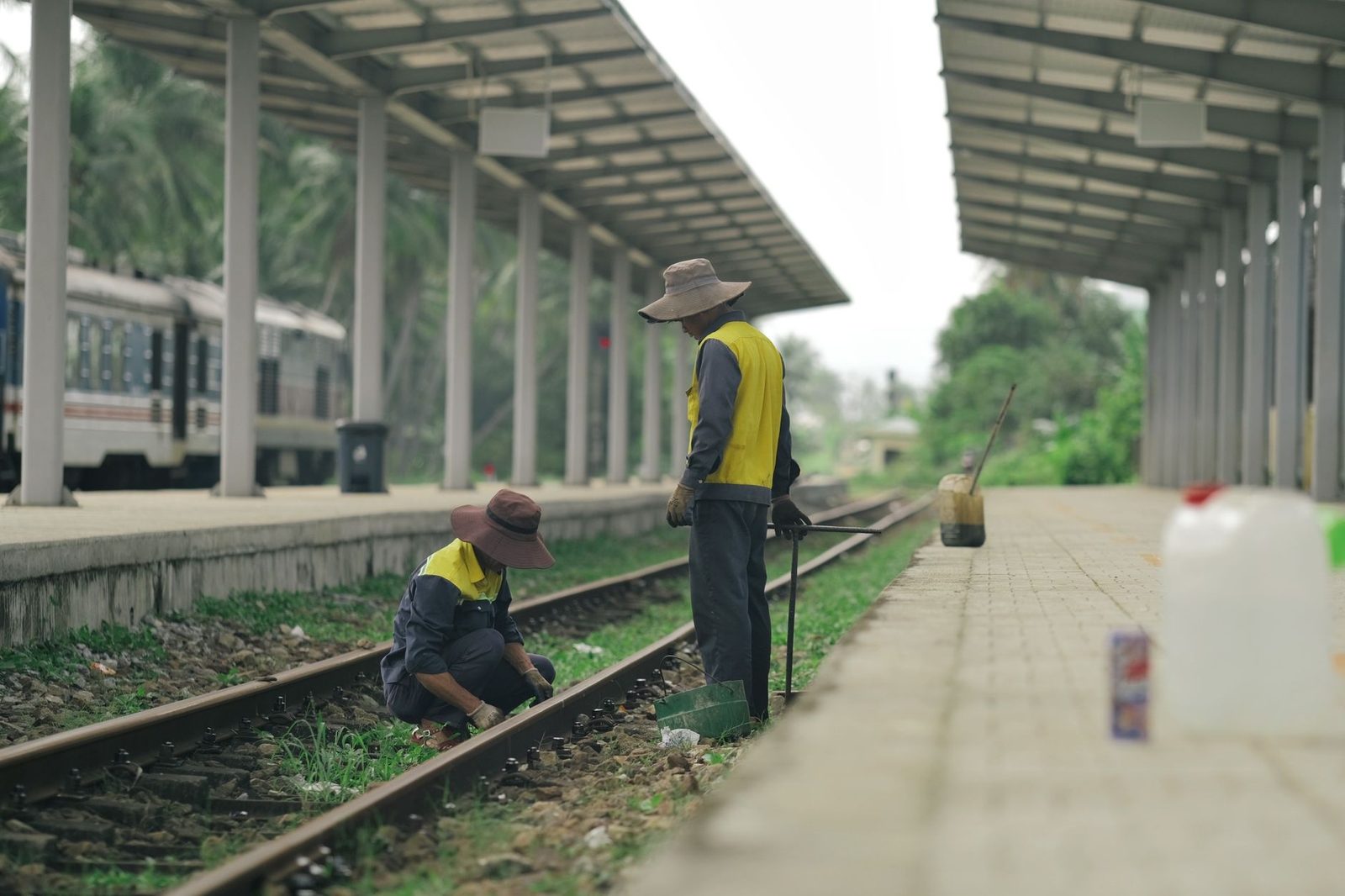
Corridor works. DB has launched a line-by-line full renovation programme (Riedbahn Frankfurt–Mannheim, Hamburg–Berlin, Emmerich–Oberhausen, and more). Each closure lasts weeks and creates diversions or replacement buses. Timetables shown six months ahead do not always hold: recheck your train 10 days before departure.
Power sockets. ICEs have them everywhere, FlixTrain carriages not systematically, FlixBus coaches yes but often only one USB socket per seat. A 20,000 mAh power bank covers a full day of travel with a phone and a laptop.
Noise. New-generation ICEs are quiet, older carriages far less so, and overnight coaches never. A good noise-cancelling headset is the purchase that transforms a five-hour journey the most.
Border checks. If your German itinerary continues into Poland, the Czech Republic or Austria, checks linked to the EES system apply to non-EU nationals. See our file on EES checks.
8. The five-step method
- Fix your date early. Six months ahead means the full Super Sparpreis quota.
- Compare three neighbouring departure times: the same journey an hour earlier often costs €60 less. A simple spreadsheet, or a comparison tool, is enough — compare on Gopaxo.
- Check whether FlixTrain serves your corridor. If it does, DB's floor price often adjusts downwards: competition benefits DB customers too.
- Only choose the coach on the diagonals (Frankfurt–Dresden, Cologne–Leipzig) or if you are after the absolute lowest price.
- Recheck 10 days before because of engineering works, then the day before for the platform.
For the practical side of the journey itself — sleep, luggage, meals — a travel document organiser keeps paper tickets, refund receipts and printed timetables in one place, which still comes in handy when mobile coverage drops between Fulda and Würzburg.
Frequently asked questions
When do ICE tickets go on sale?
Six months before departure, but the full grid for a timetable year is only published once the schedule is finalised, in mid-October. In practice: for travel after 13 December 2026, sales have been open since mid-October 2026.
Is a Sparpreis really non-refundable?
The standard Sparpreis can be exchanged for €10 until the day before departure; the Super Sparpreis cannot. In both cases, if DB is more than 60 minutes late, European compensation rights apply as normal.
Does the Deutschlandticket cover journeys to the airport?
Yes in almost every case (S-Bahn in Frankfurt, Düsseldorf, Munich, Berlin BER), no for private shuttles such as the Lufthansa Express Bus and no on ICEs calling at Frankfurt Airport.
Do you need to reserve a seat on the ICE?
It is not compulsory, but strongly advised on Fridays, Sunday evenings, during school holidays and on Berlin–Munich / Hamburg–Munich. €5.50 in 2nd class.
FlixBus or FlixTrain: which to choose?
FlixTrain if the corridor is covered and the price gap is under €10: you save 1 to 2 hours and a lot of comfort. FlixBus otherwise, or for the diagonals with no direct train.
In summary
- The ICE is fast and can be cheap: €17.90 to €39.90 on a Super Sparpreis, €130 to €165 on a Flexpreis. It all depends on when you buy.
- The Sparpreis opens 6 months ahead. It is the only real way to save.
- Seat reservation at €5.50: essential at weekends.
- FlixTrain: from €12.99, seat included, but few services and no fallback onto an ICE if something goes wrong.
- FlixBus: the floor price, especially on the east-west diagonals poorly served by rail.
- DB's IC Bus: the pleasant surprise towards Prague, with rail passenger rights.
- Deutschlandticket (€63/month): useless for crossing the country, unbeatable for staying in it.
- Corridor works: recheck your routing 10 days before departure.